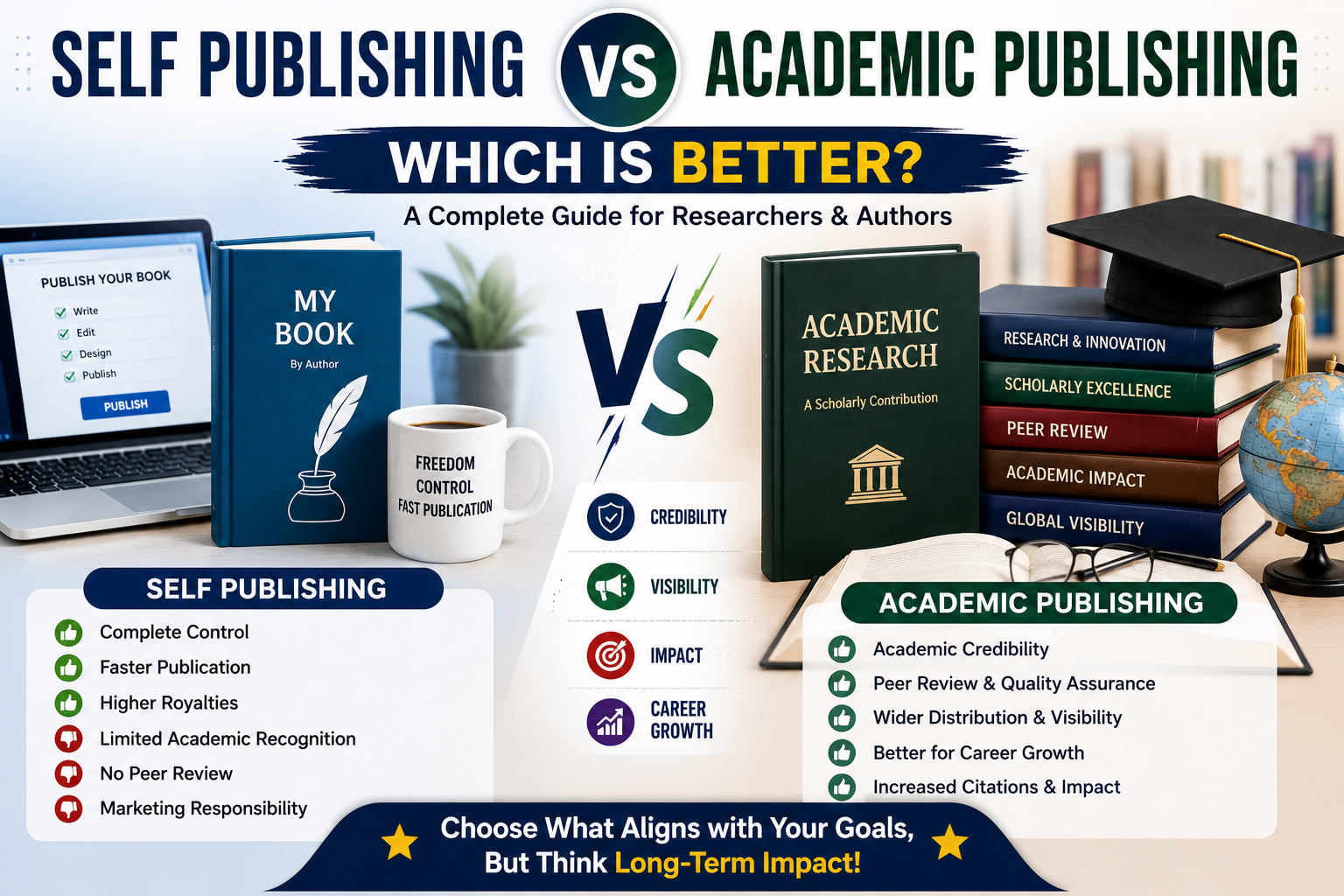
For authors, researchers, educators, and scholars, publishing a book is an important milestone. However, one of the first decisions authors face is choosing between self-publishing and academic publishing. Both options offer unique advantages and challenges, and the right choice depends on your goals, target audience, and long-term academic aspirations.
As academic publishing continues to evolve in 2026, understanding the differences between these publishing models can help authors make informed decisions and maximize the impact of their work.
What Is Self Publishing?
Self-publishing allows authors to publish their books independently without relying on a traditional or academic publisher. Authors maintain complete control over the publication process, including editing, design, pricing, and marketing.
In self-publishing, the author is responsible for managing most aspects of the book's production and promotion.
Advantages of Self Publishing
- Complete creative control
- Faster publication timeline
- Higher royalty percentages
- Flexible pricing options
- Freedom to choose publishing platforms
Challenges of Self Publishing
- Limited academic recognition
- Responsibility for editing and formatting
- Marketing costs fall on the author
- Reduced credibility in academic circles
- Limited scholarly distribution channels
While self-publishing may work well for general-interest books, it may not always provide the academic credibility researchers seek.
What Is Academic Publishing?
Academic publishing involves working with a specialized publisher that focuses on scholarly books, research monographs, textbooks, conference proceedings, and academic content.
Academic publishers typically provide professional editorial support, peer review, ISBN registration, production services, and distribution networks designed for scholarly audiences.
Advantages of Academic Publishing
- Enhanced academic credibility
- Peer-review opportunities
- Professional editing and production
- Wider academic distribution
- Better visibility among researchers
- Increased opportunities for citations
Challenges of Academic Publishing
- Longer publication process
- Editorial review requirements
- Manuscript revisions may be necessary
- Publishing standards must be met
Despite these requirements, academic publishing remains the preferred choice for researchers seeking professional recognition.
Academic Recognition Matters
One of the biggest differences between self-publishing and academic publishing is academic acceptance.
Universities, research institutions, and scholarly communities often place greater value on books published through established academic publishers because they undergo professional editorial and quality-control processes.
Academic publications can contribute to:
- Faculty promotions
- Academic evaluations
- Research impact
- Professional reputation
- Institutional recognition
For scholars and educators, these factors are often more important than publication speed.
Peer Review: A Key Difference
Peer review is a cornerstone of academic publishing.
During peer review, experts in the field evaluate the manuscript's:
- Research quality
- Methodology
- Academic contribution
- Accuracy
- Relevance
This process helps ensure that published work meets scholarly standards.
Most self-published books do not undergo formal peer review, which can affect their credibility in academic environments.
Distribution and Visibility
Academic publishers often have established relationships with:
- Universities
- Research institutions
- Academic libraries
- Book distributors
- Scholarly databases
These networks help ensure that books reach the audiences most likely to benefit from the research.
Professional academic publishing can significantly improve discoverability and long-term impact.
Researchers interested in academic publishing opportunities can learn more through World Academic Press:
ISBN, Metadata, and Professional Publishing Support
Successful academic publishing involves much more than simply printing a book.
Professional publishers often assist with:
- ISBN allocation
- Metadata management
- Academic indexing
- Editorial services
- Publication standards
- Global distribution
These services help maximize the reach and credibility of scholarly work.
Which Option Is Best for Researchers?
For researchers, professors, PhD scholars, and academics, academic publishing is generally the stronger option.
Academic publishing offers:
- Greater scholarly recognition
- Professional quality assurance
- Better research visibility
- Long-term academic value
- Enhanced career opportunities
Self-publishing may be suitable for personal projects, niche audiences, or non-academic content, but academic publishing remains the preferred route for scholarly works.
How World Academic Press Supports Academic Authors
World Academic Press supports researchers, educators, and scholars throughout the publication journey by providing professional academic publishing services.
Authors can benefit from:
- Editorial guidance
- Academic publishing expertise
- ISBN support
- Quality publication standards
- Research-focused distribution
Learn more about the organization and its mission:
https://worldacademic.press/about-us/
Final Thoughts
Choosing between self-publishing and academic publishing depends on your goals. If your primary objective is academic recognition, research visibility, professional credibility, and long-term scholarly impact, academic publishing is often the better choice.
While self-publishing offers flexibility and control, academic publishing provides the quality assurance, professional support, and scholarly recognition that researchers need to build lasting academic influence.
For authors seeking to share valuable research with the global academic community, working with a trusted academic publisher can make a significant difference in the success and impact of their work.