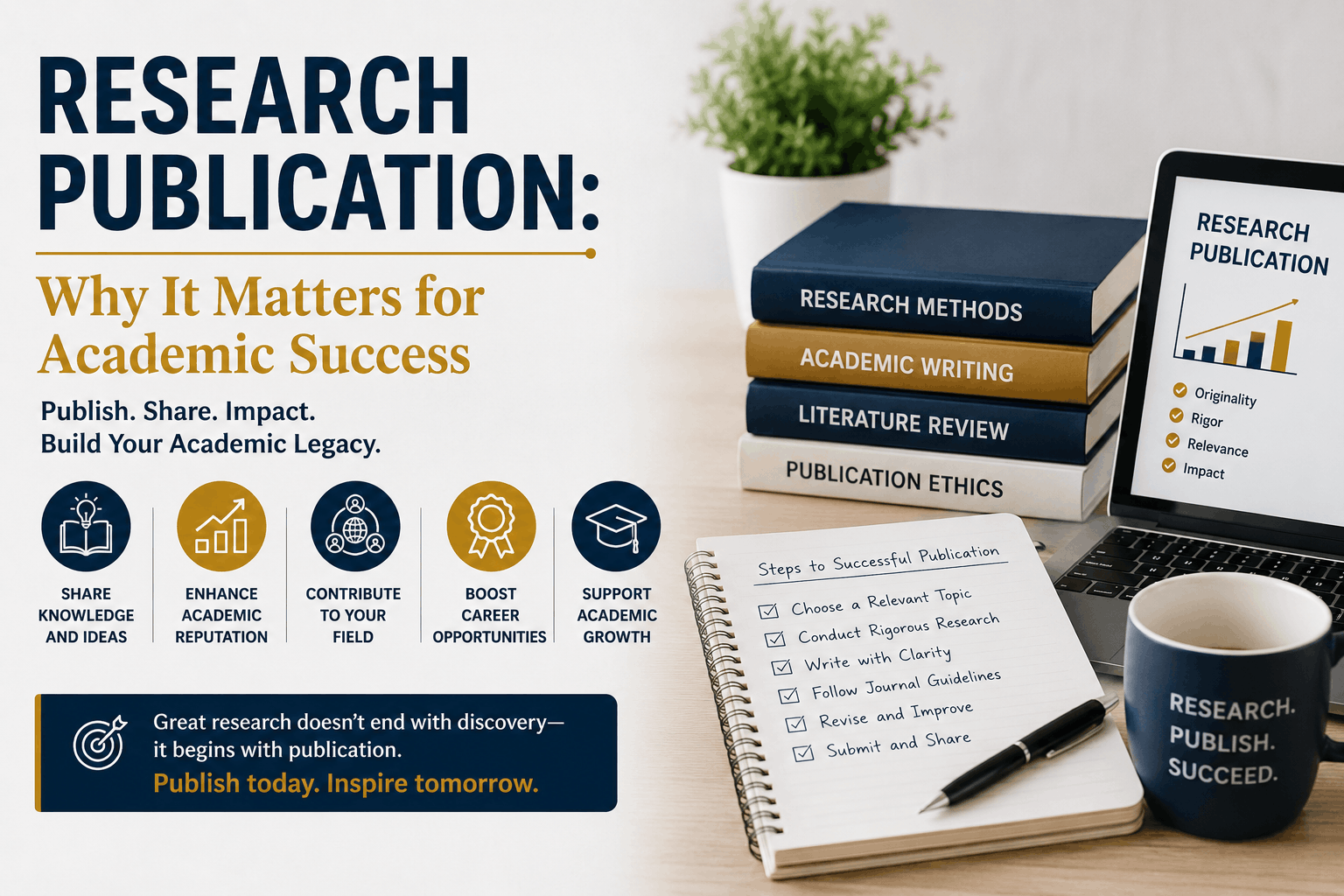
Research publication is one of the most important pillars of academic growth and scholarly development. Whether you are a faculty member, researcher, PhD scholar, or academic professional, publishing research allows you to contribute to knowledge, build credibility, and expand your influence within the academic community.
In today's competitive academic environment, research publication is no longer optional for many scholars. It has become an essential component of career progression, institutional recognition, and long-term academic success.
What Is Research Publication?
Research publication is the process of sharing original research findings through academic books, journal articles, conference proceedings, and scholarly publications.
The primary goals of research publication are to:
- Advance knowledge
- Share discoveries
- Encourage scholarly discussion
- Support evidence-based practices
- Contribute to academic development
Published research becomes part of the global body of knowledge and can influence future studies for years.
Why Research Publication Is Important
Enhances Academic Reputation
Publishing research demonstrates expertise and establishes credibility within a specific field.
Researchers who publish regularly often gain recognition as subject matter experts and thought leaders.
Increases Research Visibility
Research that remains unpublished has limited impact.
Publishing allows scholars to:
- Reach international audiences
- Increase citations
- Improve academic visibility
- Support future collaborations
Greater visibility often leads to stronger academic influence.
Supports Career Advancement
Many academic institutions evaluate publication records when considering:
- Promotions
- Tenure decisions
- Leadership opportunities
- Research grants
- Professional awards
A strong publication portfolio can significantly enhance career prospects.
Research Publication and Academic Impact
One of the primary reasons researchers publish is to create impact.
Published work can:
- Influence future research
- Inform policy decisions
- Improve educational practices
- Support innovation
- Address societal challenges
The more visible and accessible research becomes, the greater its potential impact.
Different Types of Research Publications
Researchers can publish in various formats depending on their objectives.
Common publication types include:
Academic Books
Academic books allow researchers to explore topics in depth and establish long-term scholarly influence.
Related Reading:
Academic Book Publishing: A Complete Guide for Researchers and Faculty Members
Journal Articles
Journal publications remain one of the most recognized forms of scholarly communication.
Conference Proceedings
Conference papers help researchers share findings quickly and engage with academic communities.
Edited Volumes
Edited books bring together contributions from multiple experts on a specific topic.
Common Challenges in Research Publication
Researchers often encounter obstacles such as:
- Manuscript preparation
- Peer review requirements
- Citation management
- Publisher selection
- Publication delays
Understanding these challenges can help authors prepare more effectively.
Related Reading
Common Mistakes That Delay Book Publication
This guide explains how authors can avoid common publishing errors and improve publication outcomes.
The Role of Peer Review
Peer review is a critical component of research publication.
It helps ensure:
- Academic quality
- Research validity
- Methodological rigor
- Scholarly integrity
Peer-reviewed publications generally carry greater academic credibility and recognition.
Related Reading
Academic Publishing Process Explained: From Manuscript to Publication
Understanding the publishing process helps researchers navigate publication requirements successfully.
ISBN and DOI in Research Publication
Modern research publications often require identifiers that improve discoverability and accessibility.
These include:
- ISBN (for books)
- DOI (for digital scholarly content)
Proper identifiers help researchers increase the visibility of their work.
Related Reading
ISBN vs DOI: What Every Researcher Must Know
This article explains how these identifiers support scholarly publishing.
How World Academic Press Supports Research Publication
World Academic Press helps researchers, educators, and scholars publish high-quality academic work through:
- Editorial guidance
- Academic publishing support
- ISBN assistance
- Publishing consultation
- Professional publication services
Explore publishing opportunities:
Learn more about the organization:
https://worldacademic.press/about-us/
Benefits of Publishing Regularly
Researchers who publish consistently often experience:
- Greater academic recognition
- Stronger professional networks
- Improved funding opportunities
- Increased citation potential
- Enhanced career growth
Regular publication helps establish a sustainable and influential academic presence.
Related Reading
Why Faculty Members Should Publish Regularly
This guide explores the long-term benefits of maintaining a consistent publication record.
Related Articles
Continue exploring academic publishing:
Final Thoughts
Research publication is one of the most effective ways to share knowledge, build academic credibility, and contribute to scholarly advancement. Whether publishing books, journal articles, or conference papers, researchers who actively engage in scholarly publishing create opportunities for professional growth and lasting academic impact.
As research continues to drive innovation and education worldwide, publishing remains a fundamental responsibility and opportunity for scholars seeking to make meaningful contributions to their fields.