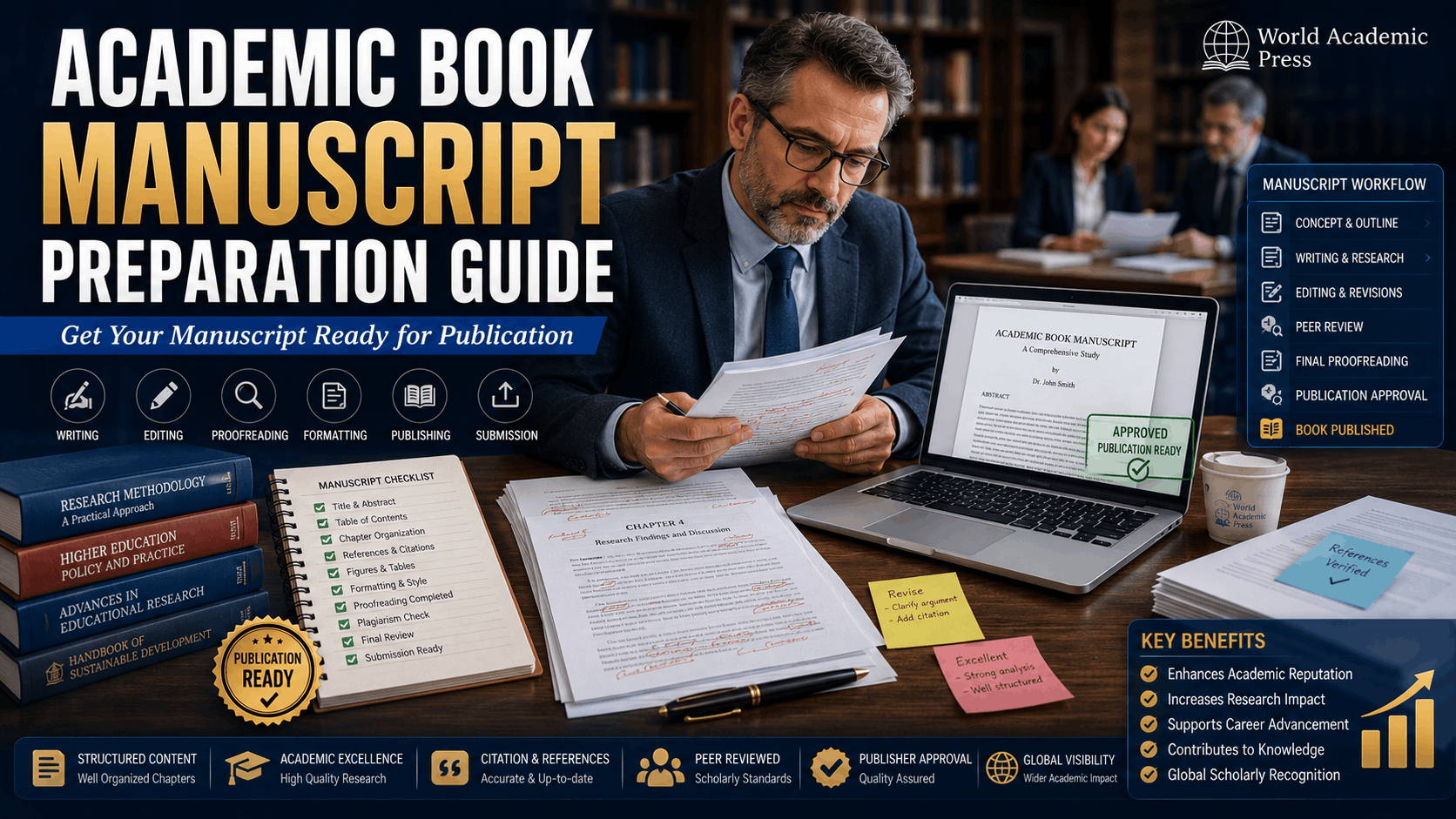
Publishing an academic book begins long before the manuscript reaches a publisher. One of the most important factors influencing publication success is the quality and organization of the academic book manuscript. A well-prepared manuscript helps publishers evaluate your work efficiently and increases the likelihood of a smooth review and publication process.
Whether you are a researcher, faculty member, PhD scholar, or independent academic author, understanding manuscript preparation is essential for successful academic book publishing.
What Is an Academic Book Manuscript?
An academic book manuscript is the complete draft of a scholarly book prepared for editorial review and publication. It contains the research, analysis, references, and supporting materials that form the foundation of the final published work.
A professional manuscript demonstrates academic rigor, originality, and clear organization.
Why Manuscript Preparation Matters
Many high-quality research projects face publication delays because manuscripts are poorly organized or fail to meet publishing standards.
Proper manuscript preparation helps:
- Improve editorial evaluation
- Reduce revision requests
- Enhance readability
- Increase publication efficiency
- Present research professionally
A strong manuscript creates a positive first impression with publishers and reviewers.
Essential Components of an Academic Book Manuscript
Most academic publishers expect manuscripts to include:
Title Page
The title page should contain:
- Book title
- Subtitle (if applicable)
- Author name
- Institutional affiliation
Table of Contents
A clear table of contents allows editors and reviewers to understand the structure of the book.
Preface or Introduction
The introduction should explain:
- Research objectives
- Scope of the book
- Intended audience
- Scholarly contribution
Main Chapters
The core content should be logically organized and clearly connected.
Each chapter should contribute directly to the overall purpose of the book.
References
Accurate references are critical for academic credibility and scholarly integrity.
Appendices
Supporting materials, datasets, questionnaires, or supplementary content can be included when necessary.
Formatting Best Practices
Publishers may have specific formatting requirements, but general best practices include:
- Consistent heading structure
- Uniform citation style
- Proper page numbering
- Clear tables and figures
- Professional language
- Standardized references
Consistency throughout the manuscript improves readability and professionalism.
Common Manuscript Preparation Mistakes
Authors frequently encounter problems due to:
- Inconsistent formatting
- Missing references
- Weak chapter organization
- Poor proofreading
- Unclear research objectives
Addressing these issues before submission can significantly improve publication prospects.
Preparing for Editorial Review
Before submitting your manuscript:
- Review every chapter carefully
- Verify citations and references
- Check figures and tables
- Ensure logical chapter flow
- Correct grammatical errors
A thorough final review helps prevent avoidable delays.
How Professional Publishers Support Authors
Experienced academic publishers often provide:
- Editorial guidance
- Manuscript assessment
- Formatting recommendations
- Publication consultation
- ISBN support
These services help authors prepare publication-ready manuscripts.
Researchers seeking academic publishing guidance can explore:
Learn more about World Academic Press:
https://worldacademic.press/about-us/
Final Thoughts
A well-prepared academic book manuscript is the foundation of successful academic publishing. By organizing content effectively, following professional standards, and carefully reviewing your work before submission, you can improve publication outcomes and increase the impact of your scholarly contribution.