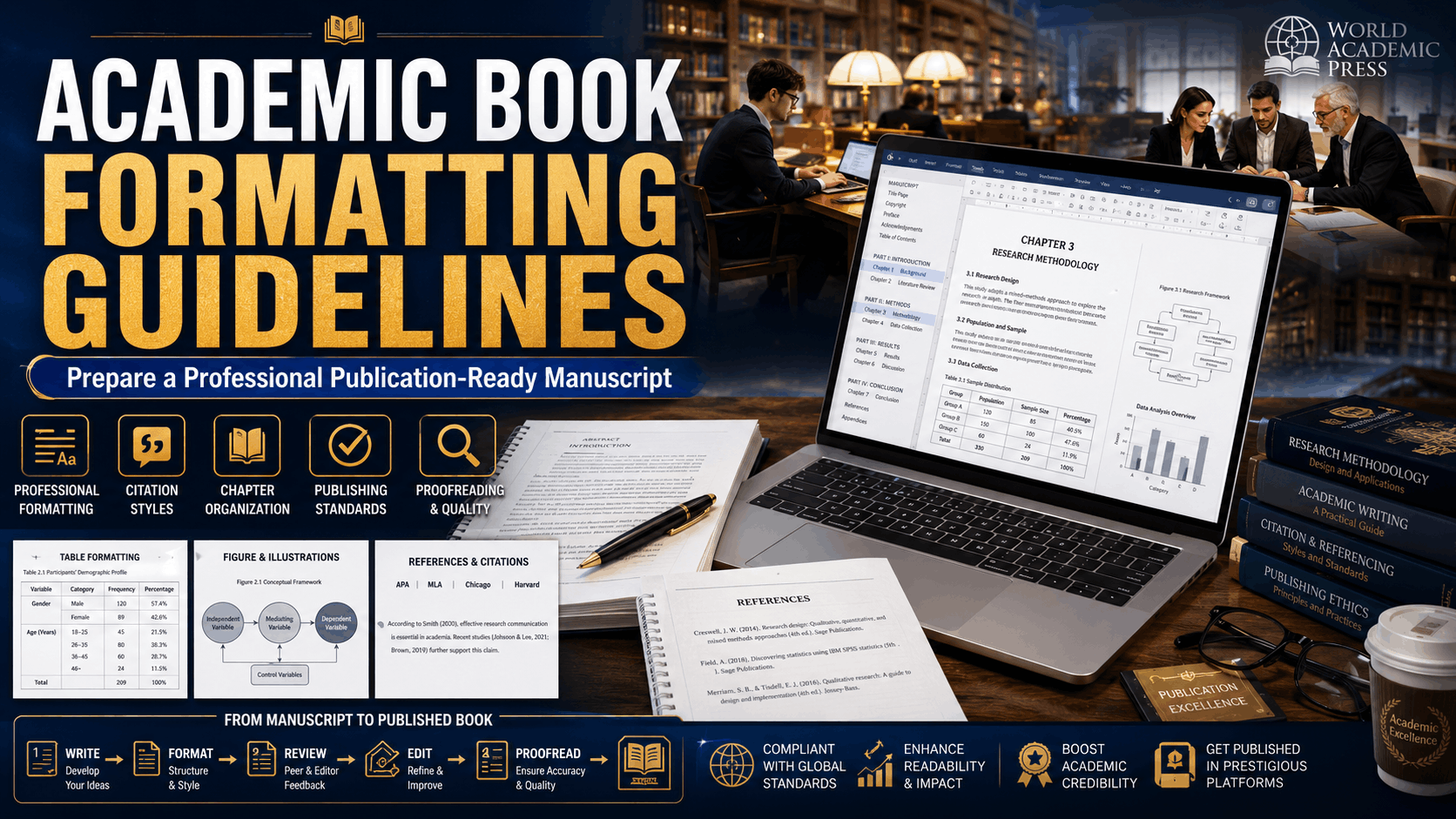
Proper formatting is one of the most overlooked aspects of academic book publishing. While strong research and original ideas are essential, publishers also expect manuscripts to meet professional formatting standards. A well-formatted manuscript improves readability, simplifies editorial review, and creates a strong first impression.
Understanding academic book formatting guidelines can help researchers and authors prepare manuscripts that are ready for professional publication.
Why Academic Book Formatting Matters
Formatting is more than appearance. It helps publishers, reviewers, and readers navigate content efficiently.
Proper formatting provides:
- Professional presentation
- Better readability
- Consistent structure
- Easier editorial review
- Faster publication processing
Even outstanding research may require revisions if formatting standards are not followed.
Essential Components of an Academic Book
Most academic books include the following sections:
Front Matter
Front matter generally contains:
- Title Page
- Copyright Page
- Dedication (optional)
- Preface
- Acknowledgments
- Table of Contents
Main Content
The core manuscript usually includes:
- Introduction
- Chapters
- Case Studies
- Research Findings
- Discussion
- Conclusion
Back Matter
The final section may contain:
- References
- Bibliography
- Appendices
- Glossary
- Index
Maintaining a clear structure helps improve the reading experience.
Chapter Formatting Best Practices
Each chapter should follow a consistent structure.
Recommended practices include:
- Clear chapter titles
- Logical heading hierarchy
- Consistent font styles
- Uniform spacing
- Proper paragraph alignment
Consistency across chapters improves professionalism and readability.
Heading and Subheading Structure
A clear heading structure helps readers understand the organization of the book.
Example:
- Chapter Title
- Main Heading
- Subheading
- Supporting Section
Avoid excessive heading levels that may confuse readers.
Tables, Figures, and Illustrations
Academic books often include visual content.
Best practices include:
- Number all tables and figures
- Add descriptive captions
- Reference visuals within the text
- Maintain consistent formatting
Properly formatted visuals improve clarity and presentation.
Citation and Reference Formatting
References are among the most important elements of scholarly publishing.
Authors should:
- Use a consistent citation style
- Verify all references
- Match in-text citations with the reference list
- Follow publisher requirements
Accurate references strengthen academic credibility.
Related Reading
Why Academic Book Editing Is Essential Before Publication
Editing and formatting work together to create a professional publication-ready manuscript.
Common Formatting Mistakes Authors Should Avoid
Many manuscripts require revisions because of:
- Inconsistent headings
- Mixed citation styles
- Uneven spacing
- Missing page numbers
- Poor figure labeling
- Incorrect reference formatting
Careful review before submission can prevent these issues.
Formatting Checklist Before Submission
Before sending a manuscript to a publisher, verify:
✓ Chapter titles are consistent
✓ Headings follow a logical structure
✓ References are complete
✓ Tables and figures are labeled correctly
✓ Formatting is consistent throughout
✓ Page numbering is accurate
✓ Author information is included
Using a checklist helps improve submission quality.
Publisher Formatting Requirements
Different publishers may have specific formatting guidelines.
Authors should always review:
- Submission instructions
- Template requirements
- Citation preferences
- File format specifications
Following publisher requirements can reduce delays during review.
Researchers seeking professional publishing support can explore:
How World Academic Press Supports Authors
World Academic Press assists authors throughout the academic publishing process.
Services include:
- Manuscript evaluation
- Editorial support
- Formatting guidance
- ISBN assistance
- Academic publishing consultation
Learn more about World Academic Press:
https://worldacademic.press/about-us/
Final Thoughts
Following proper academic book formatting guidelines helps researchers present their work professionally and improve publication readiness. While formatting may seem like a minor detail, it plays a major role in the overall quality and success of an academic publication.
Authors who invest time in proper formatting create a smoother publishing experience and improve their chances of successful publication.