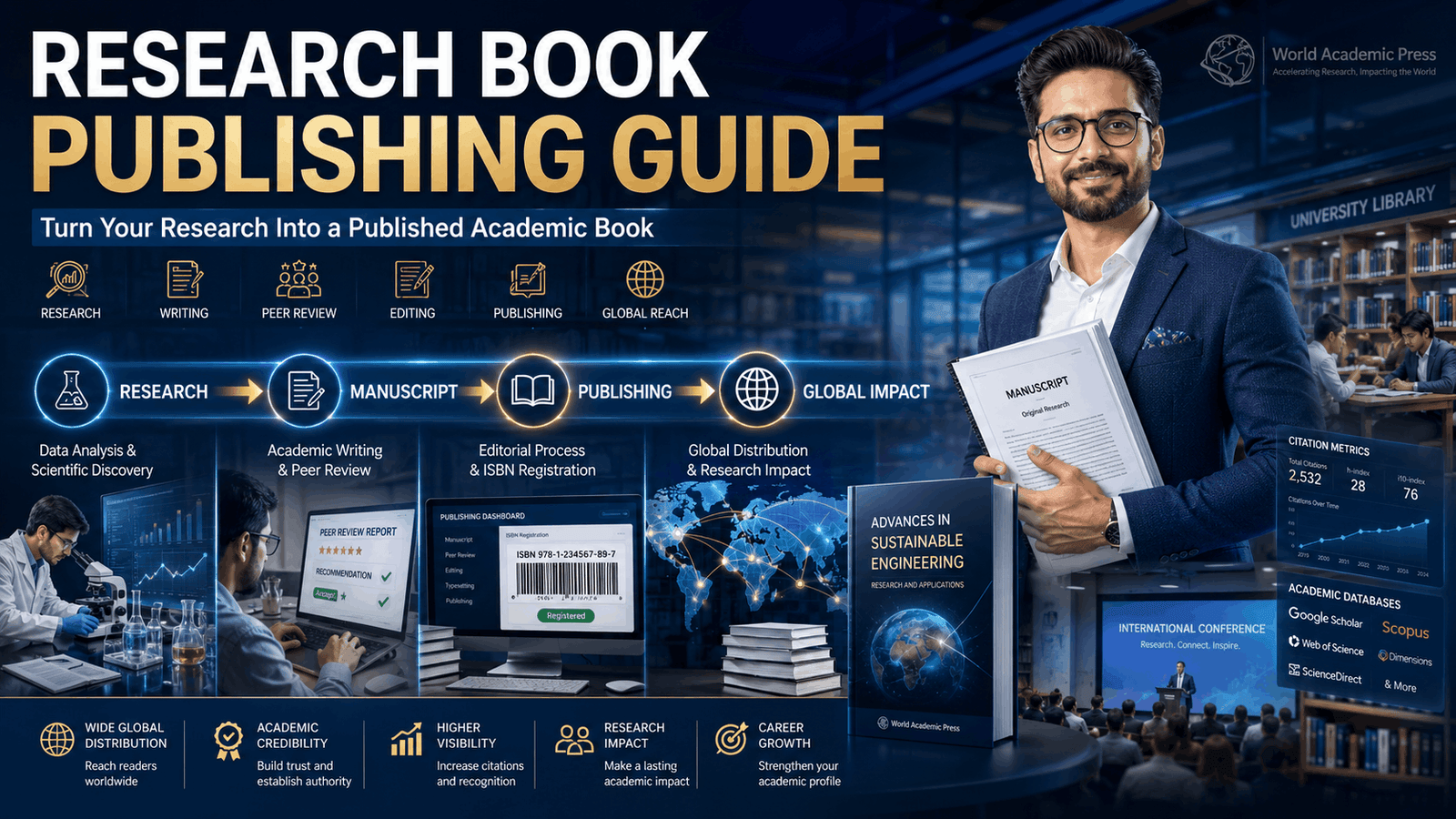
Research is most valuable when it reaches the people who can benefit from it. While journal articles remain important, many researchers choose research book publishing to present comprehensive findings, explore complex topics in depth, and create lasting academic contributions.
For faculty members, PhD scholars, scientists, and independent researchers, publishing a research book can significantly enhance academic visibility and professional credibility.
What Is Research Book Publishing?
Research book publishing involves transforming original scholarly work into a professionally published academic book.
Unlike journal articles that focus on specific findings, research books allow authors to:
- Present detailed investigations
- Explore broader themes
- Discuss methodologies extensively
- Provide comprehensive analysis
- Contribute long-term academic value
Research books often become key resources for students, researchers, and institutions.
Why Researchers Publish Books
Many scholars choose book publishing because it offers opportunities that traditional journal publishing may not provide.
Benefits include:
- Comprehensive presentation of research
- Increased academic recognition
- Greater research visibility
- Long-term scholarly impact
- Enhanced professional reputation
A well-published research book can continue influencing academic discussions for years.
Who Should Consider Research Book Publishing?
Research book publishing is suitable for:
- PhD scholars
- University faculty
- Scientists
- Independent researchers
- Research organizations
- Academic institutions
Anyone with substantial research findings can potentially develop a valuable academic book.
The Research Book Publishing Process
Step 1: Define the Book's Purpose
Before writing, determine:
- Research objectives
- Target audience
- Academic contribution
- Scope of the book
A clear purpose helps shape the entire manuscript.
Step 2: Organize the Research
Successful research books present information in a logical and structured manner.
Most books include:
- Introduction
- Literature review
- Research methodology
- Findings
- Analysis
- Conclusion
- References
A strong structure improves readability and scholarly value.
Related Reading
Academic Book Formatting Guidelines Every Author Should Follow
Proper formatting helps create a professional publication-ready manuscript.
Step 3: Prepare the Manuscript
Before submission, authors should ensure:
- Accurate citations
- Consistent formatting
- Clear chapter organization
- Professional language
- Strong academic standards
Well-prepared manuscripts typically progress through publishing more efficiently.
Related Reading
Why Academic Book Editing Is Essential Before Publication
Professional editing can significantly improve manuscript quality.
Step 4: Publisher Evaluation
Academic publishers evaluate manuscripts based on:
- Originality
- Research quality
- Scholarly contribution
- Audience relevance
- Publication potential
The evaluation process helps maintain academic publishing standards.
Step 5: Editorial Review and Publication
After acceptance, manuscripts generally undergo:
- Editorial review
- Copyediting
- Formatting
- Cover design
- ISBN assignment
- Publication preparation
Each stage contributes to the quality of the final publication.
How Research Books Improve Academic Careers
Publishing a research book can support:
- Faculty promotion
- Academic recognition
- Research visibility
- Professional networking
- Citation growth
Many universities recognize scholarly books as significant academic achievements.
Related Reading
How Academic Books Improve Research Visibility and Citations
Research visibility often increases when scholarly work is published professionally.
Research Book Publishing vs Journal Publishing
Research BooksJournal Articles
Comprehensive research coverage
Focused research findings
Long-term reference value
Faster publication
Broad academic contribution
Specific research contribution
Strong author authority
Frequent publication opportunities
Both formats are valuable and often complement each other.
Choosing the Right Academic Publisher
Researchers should look for publishers that offer:
- Academic expertise
- Editorial support
- ISBN assistance
- Global distribution
- Publishing guidance
A reputable publisher helps maximize the impact and reach of scholarly work.
Explore academic publishing services:
How World Academic Press Supports Researchers
World Academic Press provides professional support throughout the research book publishing journey.
Services include:
- Manuscript evaluation
- Editorial guidance
- ISBN assistance
- Publishing consultation
- Academic publishing support
Learn more about World Academic Press:
https://worldacademic.press/about-us/
Final Thoughts
Research Book Publishing remains one of the most effective ways for scholars to share knowledge, build academic authority, and create lasting contributions to their disciplines. By preparing a strong manuscript and working with a reputable academic publisher, researchers can ensure their work reaches a wider audience and achieves greater scholarly impact.