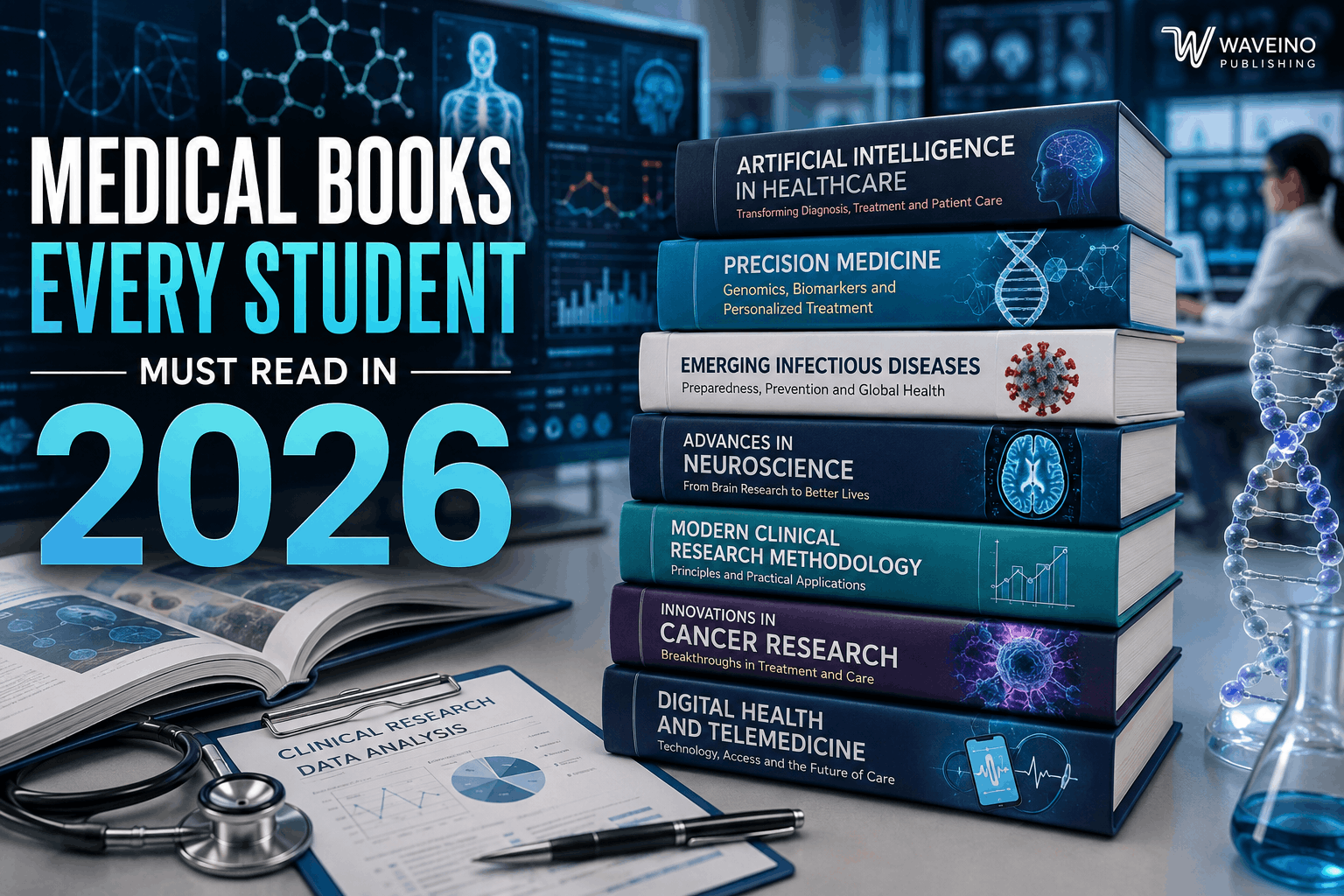
Medical textbooks provide foundational knowledge, but research-focused books offer insights into the latest scientific developments. These publications help students understand emerging healthcare trends, innovative treatment approaches, and the future direction of medicine.
Reading current research books can help students:
- Stay updated with recent medical discoveries
- Improve evidence-based clinical decision-making
- Develop critical thinking and research skills
- Prepare for advanced academic studies
- Gain a competitive edge in healthcare careers
1. Artificial Intelligence and the Future of Clinical Medicine
Artificial intelligence continues to transform healthcare systems worldwide. Several upcoming books in 2026 are expected to explore AI-powered diagnostics, predictive healthcare models, robotic surgery, and machine learning applications in patient care.
Students interested in digital health and medical innovation should pay close attention to publications discussing:
- AI-assisted diagnosis
- Medical imaging technologies
- Predictive analytics in healthcare
- Ethical considerations of AI in medicine
- Personalized treatment recommendations
As hospitals increasingly adopt AI tools, understanding these technologies will become essential for future healthcare professionals.
2. Precision Medicine and Genomic Research
Precision medicine remains one of the fastest-growing areas of medical research. New publications are expected to focus on how genetic information can guide individualized treatment strategies.
Key topics likely to be featured include:
- Human genome advancements
- Pharmacogenomics
- Cancer genomics
- Rare disease diagnosis
- Personalized therapeutic approaches
Medical students pursuing careers in oncology, genetics, or research medicine will find these books particularly valuable.
3. Emerging Infectious Diseases and Global Health
The lessons learned from recent global health crises continue to influence medical research. Upcoming books are expected to examine infectious disease surveillance, pandemic preparedness, vaccine development, and international healthcare collaboration.
Important areas of focus may include:
- Novel viral outbreaks
- Antimicrobial resistance
- Global health policies
- Public health emergency management
- Future pandemic response strategies
Understanding these topics is crucial for students interested in epidemiology and public health.
4. Advances in Neuroscience and Brain Research
Neuroscience research continues to uncover new insights into brain function, mental health disorders, and neurodegenerative diseases.
Several anticipated publications in 2026 are expected to explore:
- Alzheimer's disease research
- Parkinson's disease treatment innovations
- Brain-computer interfaces
- Cognitive neuroscience
- Mental health advancements
These books can provide valuable knowledge for students specializing in neurology, psychiatry, and cognitive sciences.
5. Modern Clinical Research Methodology
Strong research skills are essential for medical professionals. New clinical research books are expected to focus on modern methodologies used in healthcare studies.
Topics may include:
- Evidence-based medicine
- Clinical trial design
- Research ethics
- Data analysis techniques
- Systematic reviews and meta-analysis
For students planning to publish academic papers or pursue postgraduate research, these resources can serve as practical guides.
6. Innovations in Cancer Research
Cancer research remains a major focus of global medical investment. Several upcoming books are anticipated to highlight breakthroughs in cancer detection, treatment, and prevention.
Areas expected to receive significant attention include:
- Immunotherapy advancements
- Targeted cancer therapies
- Liquid biopsy technologies
- Cancer genetics
- Personalized oncology treatment
These developments continue to redefine how healthcare professionals approach cancer care.
7. Digital Health and Telemedicine
Digital healthcare solutions are becoming a permanent part of modern medicine. New research books are expected to analyze how technology is improving patient access and healthcare delivery.
Students can expect discussions on:
- Telemedicine implementation
- Wearable health technologies
- Remote patient monitoring
- Mobile healthcare applications
- Digital patient engagement strategies
As healthcare becomes increasingly connected, digital health knowledge will be a valuable asset for future practitioners.
How Students Can Stay Updated
Medical research publishing moves quickly, making it important to follow trusted academic publishers, medical journals, and research institutions. Students should regularly explore newly released books, attend academic conferences, and engage with scientific communities to stay informed about emerging developments.
Many leading publishers are also expanding access to digital research resources, making it easier than ever for students to access cutting-edge medical knowledge.
Conclusion
The landscape of medical research is evolving at an unprecedented pace. From artificial intelligence and precision medicine to neuroscience and cancer research, the upcoming medical research books of 2026 promise to offer valuable insights into the future of healthcare. Students who actively engage with these emerging publications will be better prepared for academic success, research opportunities, and professional growth in an increasingly innovation-driven medical world.