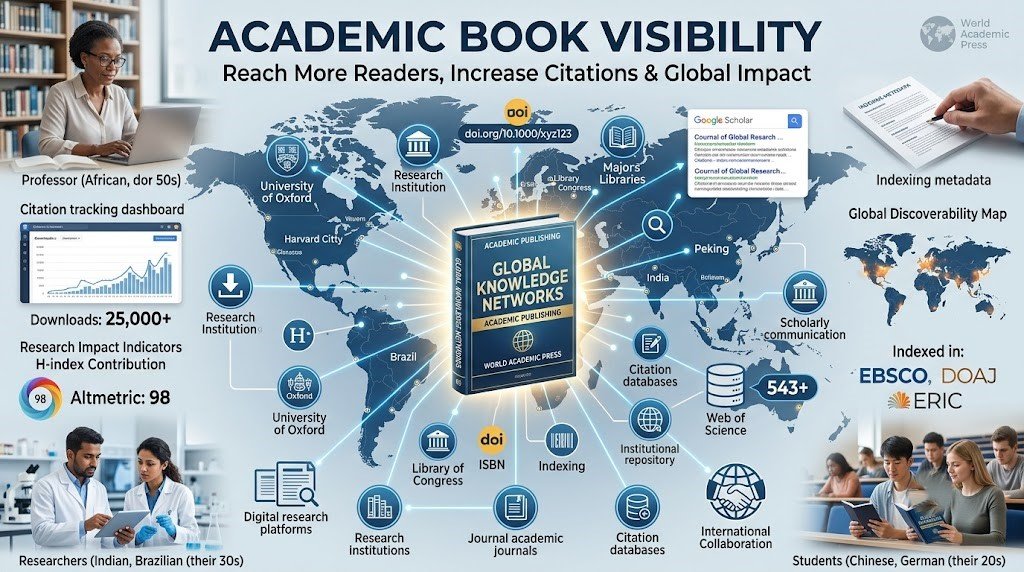
How to Increase the Visibility of Your Published Academic Book 2026
Publishing an academic book is a significant achievement, but publication alone does not guarantee that your work will reach researchers, educators, students, or institutions. Every year, thousands of scholarly books are published worldwide, making discoverability one of the biggest challenges facing academic authors. Without a clear visibility strategy, even high-quality books can remain overlooked.
In 2026, academic book visibility depends on much more than library distribution. Search engines, academic databases, digital repositories, citation indexes, metadata optimization, institutional websites, social media, and researcher profiles all play an essential role in helping readers discover scholarly publications.
This guide explains practical strategies that authors can use to improve the visibility, discoverability, citations, and long-term impact of their published academic books.
Why Academic Book Visibility Matters
An academic book that is difficult to discover will naturally receive fewer readers and citations. Visibility directly influences how widely your research is shared, discussed, referenced, and incorporated into future studies. Greater discoverability also increases opportunities for collaboration, conference invitations, research funding, and professional recognition.
For universities and research institutions, visible publications contribute to institutional reputation and research impact. For authors, improved visibility helps maximize the value of years of research and writing.
1. Obtain an ISBN and DOI Where Applicable
Every academic book should have an ISBN, which serves as its internationally recognized identifier. ISBNs make books easier to catalogue, distribute, and locate through bookstores, libraries, and online platforms.
If your publisher supports Digital Object Identifiers (DOIs) for book chapters or digital editions, they provide additional discoverability and persistent linking, making scholarly content easier to reference.
Learn more in our guide How to Get an ISBN Number in India (2026 Guide).
2. Optimize Your Book Metadata
Metadata is one of the most overlooked factors affecting discoverability. Search engines, online bookstores, library catalogues, and academic databases rely heavily on metadata to index publications accurately.
Ensure your book includes:
- Accurate title and subtitle
- Author information
- Professional author biography
- Relevant keywords
- Detailed abstract or description
- Subject classifications
- ISBN details
- Publisher information
Well-structured metadata significantly improves search visibility across academic platforms.
3. Publish with a Reputable Academic Publisher
Your publisher plays an important role in promoting and distributing your book. Established academic publishers typically have stronger relationships with libraries, indexing services, distributors, and international retailers.
If you're still selecting a publisher, read Low Cost Book Publishers in India: A Complete Guide for First-Time Authors (2026) to understand your publishing options.
4. Create an Author Profile
Readers often search for authors before searching for books. A professional online presence makes your work easier to discover and strengthens your academic credibility.
Maintain updated profiles on:
- University faculty pages
- ORCID
- Google Scholar
- ResearchGate
- Academia.edu
- Personal academic website
Include links to your published books whenever possible.
5. Improve Search Engine Visibility
Academic books increasingly receive traffic through Google Search rather than library catalogues alone. Publishers and authors should ensure book landing pages are optimized for search engines.
Good SEO practices include:
- Keyword-rich titles and descriptions
- Schema markup where supported
- Fast-loading pages
- High-quality book summaries
- Internal linking
- Relevant external citations
SEO benefits both researchers searching for specific topics and readers exploring broader academic fields.
6. Deposit Your Work in Institutional Repositories
Many universities maintain institutional repositories that preserve and showcase faculty publications. Depositing eligible versions of your work can significantly improve discoverability while complying with publisher policies.
Institutional repositories are indexed by academic search engines and often receive substantial organic traffic.
7. Promote Through Academic Networks
Academic communities remain one of the strongest sources of scholarly visibility. Presenting your research at conferences, webinars, seminars, workshops, and departmental events introduces your book directly to interested audiences.
Networking with fellow researchers often leads to citations, collaborations, teaching recommendations, and future publishing opportunities.
8. Encourage Citations Ethically
Citations increase both academic impact and discoverability. While citations cannot be forced, authors can encourage them by producing high-quality research, publishing on relevant topics, sharing accessible summaries, and engaging with academic communities.
Avoid excessive self-citation or unethical citation practices, which may harm credibility.
To understand citation practices better, read Best Citation Styles Explained 2026.
9. Share Research Responsibly
Depending on your publisher's policies, you may be able to share:
- Book previews
- Sample chapters
- Conference presentations
- Research posters
- Accepted manuscripts
- Companion resources
Providing valuable previews often encourages readers to explore the complete publication.
10. Use Social Media Strategically
Professional social media platforms have become valuable tools for academic communication. Rather than simply announcing your book once, share useful insights from your research over time.
Effective platforms include:
- X (formerly Twitter)
- ResearchGate
- Academic blogs
- YouTube lectures
- Podcast interviews
Focus on educating readers instead of constant self-promotion.
11. Build Internal Links Across Your Academic Content
If you maintain an academic website or publisher page, connect related articles and resources. Internal linking improves user navigation and helps search engines understand topical relationships.
For example, readers interested in academic publishing may also benefit from:
- Book Publishing Costs in India: Complete Guide 2026
- Academic Research Visibility: Increase Discoverability, Citations & Global Impact
- How to Avoid Plagiarism in Academic Writing
- Research Ethics Every Scholar Must Follow 2026
12. Track Your Impact
Visibility is not a one-time effort. Monitor how your publication performs using available analytics and academic metrics.
Useful indicators include:
- Citation counts
- Book downloads
- Library holdings
- Research database indexing
- Online mentions
- Conference references
- Book reviews
- Altmetric attention
Regular monitoring helps identify which promotional strategies are working most effectively.
Common Mistakes That Reduce Visibility
- Poor metadata optimization.
- Incomplete author profiles.
- No keyword strategy.
- Ignoring institutional repositories.
- Minimal online promotion.
- No internal linking.
- Publishing without an ISBN.
- Failing to engage with the research community.
Conclusion
Publishing an academic book is only the beginning of its scholarly journey. Long-term success depends on discoverability, accessibility, citations, and continued engagement with the academic community. By optimizing metadata, obtaining proper identifiers, strengthening your online presence, participating in scholarly networks, and applying sound SEO practices, authors can significantly increase the global reach and impact of their work.
In 2026, researchers have more opportunities than ever to connect their publications with readers worldwide. A thoughtful visibility strategy ensures your academic book continues to educate, influence, and contribute to future scholarship for years to come.
For more academic publishing, research writing, and scholarly communication resources, visit World Academic Press.
Related Articles
- Academic Research Visibility: Increase Discoverability, Citations & Global Impact
- How to Get an ISBN Number in India (2026 Guide)
- Book Publishing Costs in India: Complete Guide 2026
- Low Cost Book Publishers in India: A Complete Guide for First-Time Authors (2026)
- Best Citation Styles Explained 2026
- Research Ethics Every Scholar Must Follow 2026
- World Academic Press