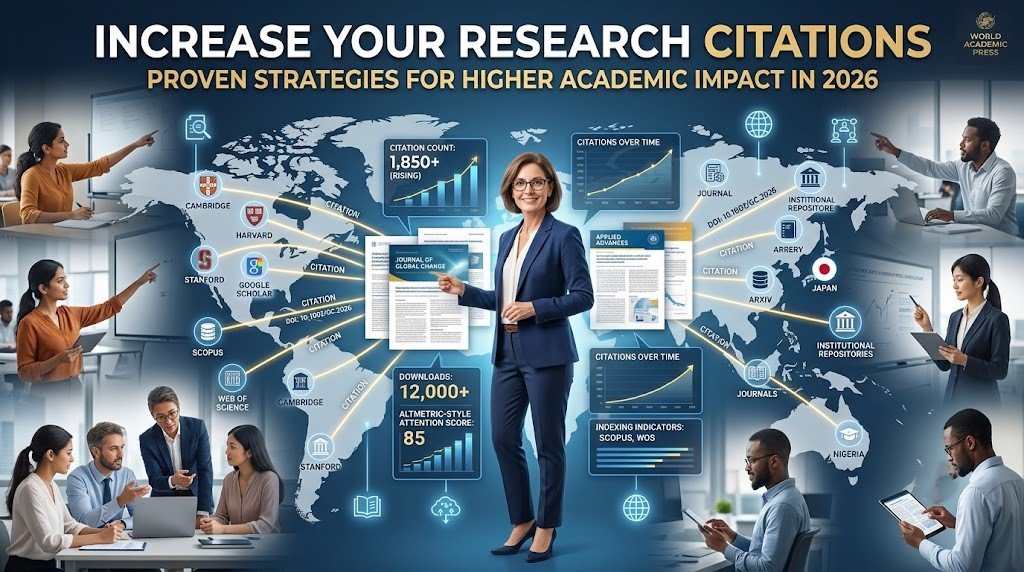
How Researchers Can Increase Citation Counts in 2026
Citations remain one of the most important indicators of research influence in academia. Whether you are applying for research grants, academic promotions, university rankings, or publishing in prestigious journals, citation counts often play a significant role in evaluating the impact of your scholarly work. While publishing quality research is essential, even excellent studies may receive limited recognition if researchers cannot easily discover, access, or reference them.
In 2026, increasing citations requires more than simply publishing papers. Researchers must actively improve discoverability, optimize research metadata, collaborate strategically, promote their work responsibly, and ensure publications are indexed across major scholarly platforms. This guide explains practical, ethical, and sustainable strategies for increasing citation counts while strengthening your long-term academic reputation.
Why Citation Counts Matter
Citations demonstrate that other researchers have found your work valuable enough to reference in their own studies. High citation counts contribute to stronger academic profiles, improved institutional reputation, greater research visibility, and better opportunities for funding and collaboration.
They also influence metrics such as the h-index, journal impact indicators, university rankings, and research assessment exercises used worldwide.
1. Publish High-Quality, Original Research
The most reliable way to earn citations is by producing research that solves meaningful problems, introduces new knowledge, or offers valuable insights. Originality, methodological rigor, and practical relevance naturally attract more scholarly attention over time.
Before submitting your manuscript, ensure your work follows ethical research practices and maintains academic integrity. Read our guide on Research Ethics Every Scholar Must Follow 2026.
2. Choose Relevant Keywords
Researchers often underestimate the importance of keywords. Well-selected keywords improve indexing in academic databases and increase the chances of your work appearing in search results.
Include keywords naturally within:
- Title
- Abstract
- Headings
- Author keywords
- Metadata
Keyword optimization helps both search engines and academic databases understand your research topic.
3. Write Clear Titles and Abstracts
Your title and abstract are often the first elements researchers read. Clear, descriptive, and keyword-rich titles improve discoverability while concise abstracts help readers quickly determine whether your paper is relevant to their research.
4. Publish in Indexed Journals
Selecting reputable journals indexed in major scholarly databases significantly improves visibility. Indexed publications are easier for researchers to discover through literature searches and reference management systems.
Always evaluate journal quality before submission rather than focusing solely on acceptance speed.
5. Create and Maintain Research Profiles
Professional researcher profiles strengthen your online academic presence.
Maintain updated profiles on:
- Google Scholar
- ORCID
- ResearchGate
- Academia.edu
- Scopus Author Profile
- University Faculty Pages
These platforms help researchers discover your publications and monitor citation activity.
6. Increase Research Visibility Beyond Journals
Publishing should not be the final step. Share your research through conferences, webinars, institutional repositories, departmental websites, and professional social media platforms.
Learn more in our article How to Increase the Visibility of Your Published Academic Book 2026.
7. Improve Your Academic SEO
Search engine optimization is becoming increasingly important in scholarly communication. Optimizing research pages with relevant keywords, structured headings, descriptive URLs, and quality metadata improves discoverability through Google and academic search engines.
Researchers with personal websites should also optimize individual publication pages for search engines.
8. Publish Open Access When Possible
Open Access publications are generally easier for researchers worldwide to read without subscription barriers. Greater accessibility often leads to wider readership and increased citation opportunities.
Before selecting an Open Access option, review publisher policies and publication fees carefully.
9. Collaborate with Researchers
Collaborative research frequently reaches broader audiences because multiple institutions and researchers promote the publication. International collaborations also expose your work to larger academic communities.
Meaningful collaboration should focus on genuine research contributions rather than citation gains alone.
10. Present Research at Conferences
Academic conferences remain excellent opportunities to introduce your work before formal publication. Conference presentations increase awareness among researchers working in your field and often lead to future citations.
11. Build Strong Internal Connections Between Publications
Researchers working within a specialized field should naturally connect related studies where appropriate. Ethical self-citation helps readers understand the progression of your research while improving continuity across publications.
Avoid excessive or unnecessary self-citation, as journals may view this negatively.
12. Use Accurate Citation Styles
Incorrect references reduce credibility and make it harder for other researchers to locate your sources. Following recognized citation standards also improves indexing accuracy.
Read Best Citation Styles Explained 2026 to understand major referencing systems.
13. Avoid Plagiarism
Original, ethical research earns trust within the scholarly community. Plagiarism, duplicate publication, and poor citation practices damage both reputation and citation potential.
Our guide How to Avoid Plagiarism in Academic Writing explains best practices for maintaining originality.
14. Obtain Persistent Identifiers
Assigning persistent identifiers such as ISBNs for books and DOIs for eligible publications improves discoverability, citation tracking, and long-term accessibility.
If you're publishing books, read How to Get an ISBN Number in India (2026 Guide).
15. Promote Research Consistently
Many researchers announce new publications only once. Instead, share different aspects of your research over time through blogs, educational posts, interviews, podcasts, webinars, and academic newsletters. Long-term promotion helps publications continue attracting readers years after publication.
Common Mistakes That Limit Citation Counts
- Publishing in low-visibility journals.
- Poor keyword selection.
- Weak research titles.
- Limited online presence.
- No researcher profiles.
- Ignoring metadata optimization.
- Minimal conference participation.
- Failure to share research after publication.
- Ethical violations or plagiarism.
Conclusion
Increasing citation counts in 2026 requires a combination of excellent research, ethical publishing, strategic visibility, and continuous engagement with the academic community. Researchers who optimize their publications for discoverability, publish in reputable journals, maintain professional profiles, participate in scholarly networks, and promote their work responsibly are far more likely to achieve long-term research impact.
Citations should never be viewed as an isolated metric. Instead, they reflect how effectively your research contributes to global knowledge and reaches the scholars who can build upon it. By combining strong scholarship with smart dissemination strategies, researchers can maximize both academic influence and career growth.
For more expert resources on academic publishing, scholarly communication, and research success, visit World Academic Press.
Related Articles
- Academic Research Visibility: Increase Discoverability, Citations & Global Impact
- How to Increase the Visibility of Your Published Academic Book 2026
- Best Citation Styles Explained 2026
- Research Ethics Every Scholar Must Follow 2026
- How to Avoid Plagiarism in Academic Writing
- How to Get an ISBN Number in India (2026 Guide)
- World Academic Press