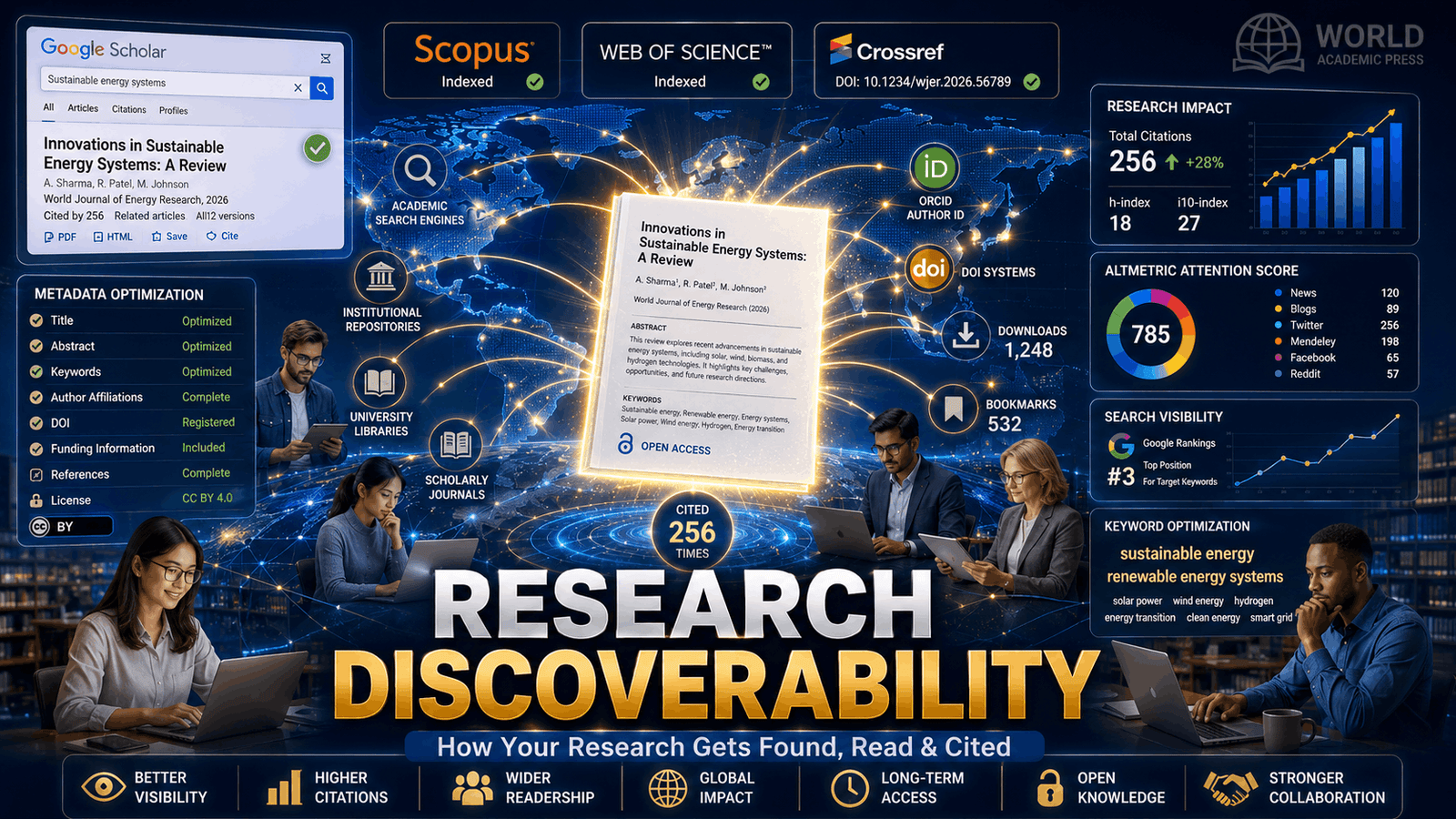
What Makes Research Discoverable Online? A Complete Guide (2026)
Publishing high-quality research is only the first step toward academic success. If your work cannot be easily found by researchers, students, educators, policymakers, and search engines, its potential impact remains limited. In today's digital academic landscape, discoverability has become just as important as the quality of the research itself.
Research discoverability refers to how easily scholarly work can be found through search engines, academic databases, repositories, university libraries, and citation indexes. The easier your research is to discover, the greater its chances of being read, cited, shared, and used in future studies.
This guide explains the key factors that make research discoverable online in 2026 and how authors can maximize the visibility and impact of their publications.
Why Research Discoverability Matters
Discoverability directly influences the reach and influence of scholarly work. Even groundbreaking research can remain unnoticed if it is not properly indexed, described, and promoted.
Improved discoverability leads to:
- Higher citation counts.
- Greater academic impact.
- Increased research collaborations.
- Better funding opportunities.
- Enhanced institutional reputation.
- Long-term preservation of scholarly work.
1. High-Quality Metadata
Metadata is one of the most important factors affecting online discoverability. Academic databases and search engines rely on metadata to understand and categorize research publications.
Your publication should include:
- Accurate title.
- Clear abstract.
- Relevant keywords.
- Author names.
- Institutional affiliations.
- Publication date.
- DOI.
- Funding information (if applicable).
Complete metadata helps Google Scholar, Crossref, library catalogues, and research databases index your work accurately.
2. Search Engine Optimization (Academic SEO)
Academic SEO helps research papers appear in search results when users search for relevant topics.
Good academic SEO includes:
- Keyword-rich titles.
- Descriptive headings.
- Optimized abstracts.
- Structured HTML pages.
- Fast-loading websites.
- Internal linking.
- Mobile-friendly design.
SEO is no longer limited to commercial websites—it is now essential for academic publishing.
3. Digital Object Identifier (DOI)
A DOI provides a permanent and reliable identifier for scholarly publications. Even if a webpage changes, the DOI continues directing readers to the correct publication.
DOIs improve:
- Citation accuracy.
- Long-term accessibility.
- Research tracking.
- Cross-platform discoverability.
Learn more in our guide Why DOI Matters: The Foundation of Research Discoverability & Citations.
4. Indexing in Academic Databases
Indexed publications are significantly easier for researchers to discover.
Important indexing platforms include:
- Google Scholar.
- Scopus.
- Web of Science.
- Crossref.
- PubMed (where applicable).
- Directory of Open Access Journals (DOAJ).
- Institutional repositories.
5. ORCID Researcher Profile
An ORCID ID uniquely identifies researchers and connects all of their publications under one verified profile.
Benefits include:
- Author identification.
- Automatic publication linking.
- Funding application support.
- Publisher integration.
6. Open Access Publishing
Making research freely available removes barriers for readers worldwide.
Open Access publications often receive more downloads and wider readership because researchers do not need journal subscriptions.
Read Gold Open Access vs Green Open Access: What's the Difference? (2026) to understand the different Open Access models.
7. Institutional Repositories
Many universities maintain digital repositories where faculty members deposit accepted manuscripts, theses, dissertations, conference papers, and research reports.
Repositories improve:
- Long-term preservation.
- Search engine indexing.
- Global accessibility.
- Institutional visibility.
8. Strong Citation Practices
Well-cited research becomes increasingly visible as more scholars reference it in their own publications.
Following proper citation styles and ethical referencing practices also helps indexing services accurately connect related research.
Learn more from Best Citation Styles Explained 2026.
9. Research Promotion
Publishing alone is not enough. Researchers should actively promote their work through:
- University websites.
- ResearchGate.
- Google Scholar profiles.
- LinkedIn.
- Academic conferences.
- Research blogs.
- Professional newsletters.
10. Internal Linking Between Academic Content
If your research appears on an academic website, connecting related articles helps both readers and search engines understand your expertise.
For example, readers interested in discoverability may also benefit from:
- Academic Research Visibility: Increase Discoverability, Citations & Global Impact
- How Researchers Can Increase Citation Counts in 2026
- How to Increase the Visibility of Your Published Academic Book 2026
- Gold Open Access vs Green Open Access: What's the Difference? (2026)
Common Mistakes That Reduce Discoverability
- Poor keyword selection.
- Missing metadata.
- No DOI.
- Weak abstracts.
- Not using ORCID.
- Ignoring Open Access opportunities.
- Publishing in poorly indexed journals.
- No promotion after publication.
- Lack of internal linking.
Best Practices for Researchers
- Write descriptive, keyword-focused titles.
- Use structured abstracts.
- Choose indexed journals.
- Obtain persistent identifiers like DOI and ORCID.
- Maintain updated researcher profiles.
- Share publications through repositories.
- Promote research responsibly.
- Monitor citation and download metrics.
Conclusion
Research discoverability is no longer determined solely by journal reputation. In 2026, visibility depends on a combination of quality metadata, search engine optimization, persistent identifiers, indexing, Open Access publishing, repositories, and ongoing scholarly promotion. Researchers who invest in discoverability significantly increase the chances of their work reaching the global academic community.
By following these best practices, authors can maximize citations, strengthen their professional reputation, and ensure that their research contributes meaningfully to future scholarship.
Explore more expert guides on academic publishing, research visibility, scholarly communication, and citation strategies at World Academic Press.
Related Articles
- Academic Research Visibility: Increase Discoverability, Citations & Global Impact
- How Researchers Can Increase Citation Counts in 2026
- How to Increase the Visibility of Your Published Academic Book 2026
- Why DOI Matters: The Foundation of Research Discoverability & Citations
- Gold Open Access vs Green Open Access: What's the Difference? (2026)
- Best Citation Styles Explained 2026
- World Academic Press