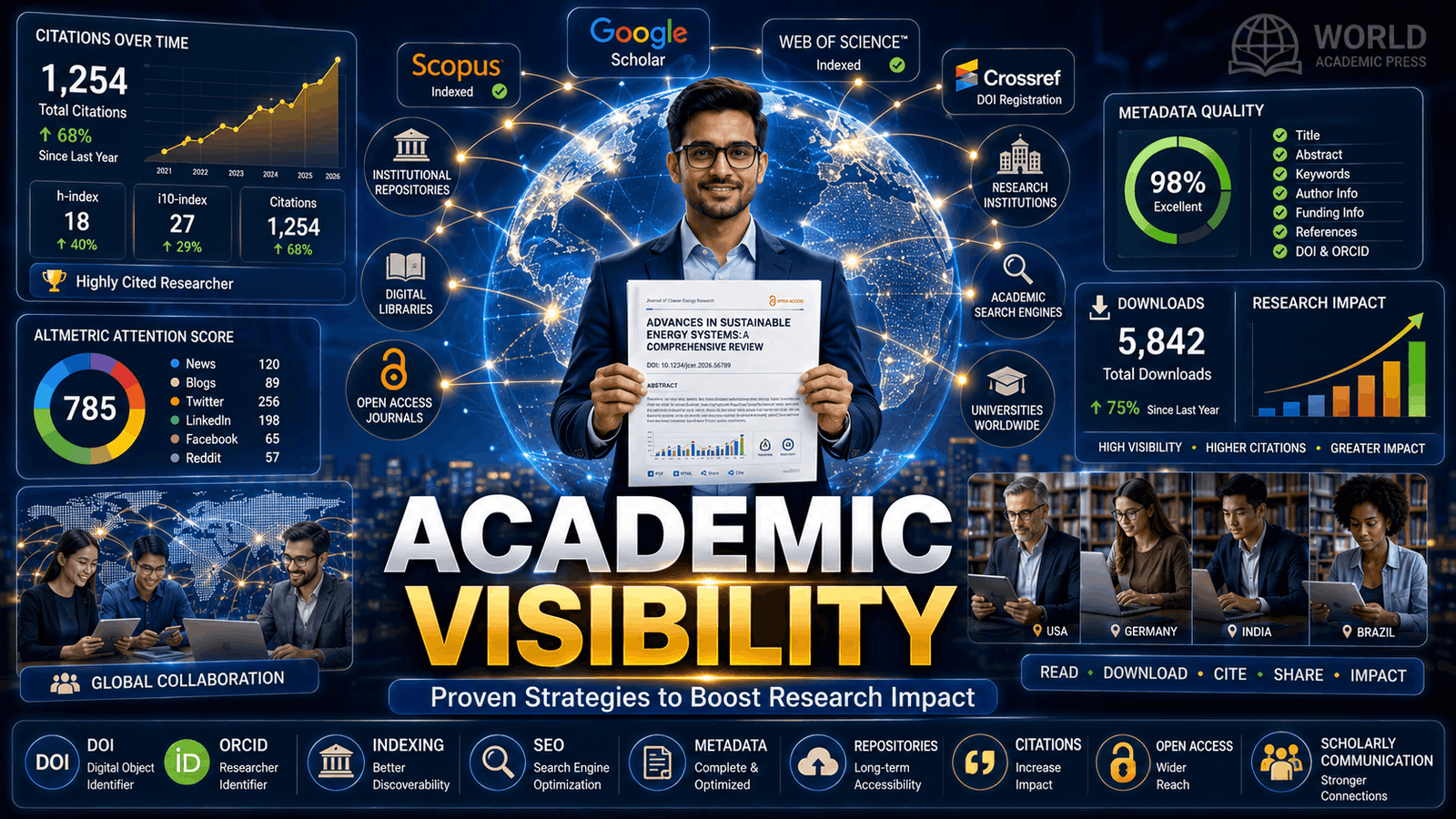
Strategies to Improve Academic Visibility in 2026
Producing high-quality research is only the beginning of a successful academic journey. If your publications cannot be found by researchers, students, educators, funding agencies, and policymakers, their potential impact remains limited. In today's digital research ecosystem, academic visibility has become one of the most important factors influencing citations, collaborations, career advancement, and institutional reputation.
Academic visibility refers to how easily your scholarly work can be discovered, accessed, read, and cited across search engines, academic databases, institutional repositories, digital libraries, and professional research networks. Improving visibility requires a combination of quality publishing, search optimization, metadata management, and continuous promotion.
This guide explores practical strategies researchers can use in 2026 to maximize the visibility and long-term impact of their academic work.
Why Academic Visibility Matters
Greater visibility helps your research reach the right audience faster. It increases the likelihood that your work will be downloaded, cited, discussed, and incorporated into future studies.
Benefits include:
- Higher citation counts.
- Greater global readership.
- Improved h-index and research metrics.
- Better funding opportunities.
- International collaborations.
- Enhanced institutional reputation.
- Long-term scholarly impact.
1. Publish in Reputable Indexed Journals
Publishing in well-recognized journals indexed by major academic databases greatly improves discoverability. Indexed publications are easier for researchers to locate during literature searches.
Look for journals indexed in:
- Google Scholar
- Scopus
- Web of Science
- Crossref
- Directory of Open Access Journals (DOAJ)
- Subject-specific databases
2. Optimize Research Metadata
Metadata is one of the strongest contributors to online discoverability. Search engines and indexing services depend on accurate metadata to categorize scholarly content.
Your publication should include:
- Clear research title.
- Descriptive abstract.
- Relevant keywords.
- Author affiliations.
- Funding information.
- DOI.
- ORCID ID.
3. Improve Academic SEO
Search Engine Optimization (SEO) is no longer limited to commercial websites. Academic SEO helps research appear in Google Search, Google Scholar, and other scholarly search platforms.
Best practices include:
- Keyword-rich titles.
- Optimized abstracts.
- Structured headings.
- Internal linking.
- Fast-loading web pages.
- Mobile-friendly publishing.
Read our complete guide What Makes Research Discoverable Online?.
4. Obtain Persistent Identifiers
Persistent identifiers make research easier to locate and cite.
Researchers should obtain:
- DOI for publications.
- ORCID researcher ID.
- ISBN for academic books.
Related guides:
- Why DOI Matters: The Foundation of Research Discoverability & Citations
- How to Get an ISBN Number in India (2026 Guide)
5. Publish Open Access When Appropriate
Open Access publishing removes subscription barriers, allowing researchers worldwide to access your work immediately. Increased accessibility often leads to higher downloads and broader readership.
Learn more in Gold Open Access vs Green Open Access: What's the Difference? (2026).
6. Maintain Professional Research Profiles
Complete and regularly updated researcher profiles improve visibility across academic platforms.
Maintain profiles on:
- Google Scholar
- ORCID
- ResearchGate
- Academia.edu
- University faculty pages
7. Deposit Publications in Institutional Repositories
Institutional repositories preserve research and make it searchable through academic search engines. Many repositories are indexed by Google Scholar, improving long-term discoverability.
8. Promote Research Beyond Journals
Academic promotion should continue after publication.
Effective channels include:
- Academic conferences.
- University news pages.
- Research blogs.
- Professional newsletters.
- LinkedIn posts.
- Research webinars.
- Academic podcasts.
9. Encourage Ethical Citations
Visibility naturally leads to more citations, but researchers should always focus on ethical citation practices rather than artificial citation strategies.
Learn proven methods in How Researchers Can Increase Citation Counts in 2026.
10. Build Internal Connections Across Your Research
Interlinking related publications on your academic website improves navigation and helps search engines understand your research expertise.
Readers interested in academic visibility may also find these resources valuable:
- Academic Research Visibility: Increase Discoverability, Citations & Global Impact
- How to Increase the Visibility of Your Published Academic Book 2026
- What Makes Research Discoverable Online?
- Gold Open Access vs Green Open Access (2026)
- Best Citation Styles Explained 2026
- Research Ethics Every Scholar Must Follow 2026
Common Mistakes That Reduce Academic Visibility
- Poor metadata optimization.
- Publishing in non-indexed journals.
- Weak keyword selection.
- No DOI or ORCID.
- Ignoring Open Access opportunities.
- No institutional repository deposit.
- Limited online promotion.
- No internal linking between publications.
Future of Academic Visibility
Artificial intelligence, semantic search, knowledge graphs, citation analytics, and machine-readable metadata are changing how research is discovered. Researchers who optimize publications for both human readers and digital indexing systems will enjoy greater visibility and long-term academic impact.
Conclusion
Improving academic visibility is an ongoing process that extends beyond publication. By publishing in reputable journals, optimizing metadata, embracing academic SEO, using persistent identifiers, participating in Open Access initiatives, maintaining professional profiles, and actively promoting research, scholars can significantly expand the reach and influence of their work.
The more discoverable your research becomes, the greater its potential to generate citations, collaborations, funding opportunities, and meaningful contributions to global scholarship.
For more expert guides on academic publishing, research visibility, citations, and scholarly communication, visit World Academic Press.
Related Articles
- Academic Research Visibility: Increase Discoverability, Citations & Global Impact
- How Researchers Can Increase Citation Counts in 2026
- What Makes Research Discoverable Online?
- How to Increase the Visibility of Your Published Academic Book 2026
- Gold Open Access vs Green Open Access (2026)
- Why DOI Matters: The Foundation of Research Discoverability & Citations
- World Academic Press