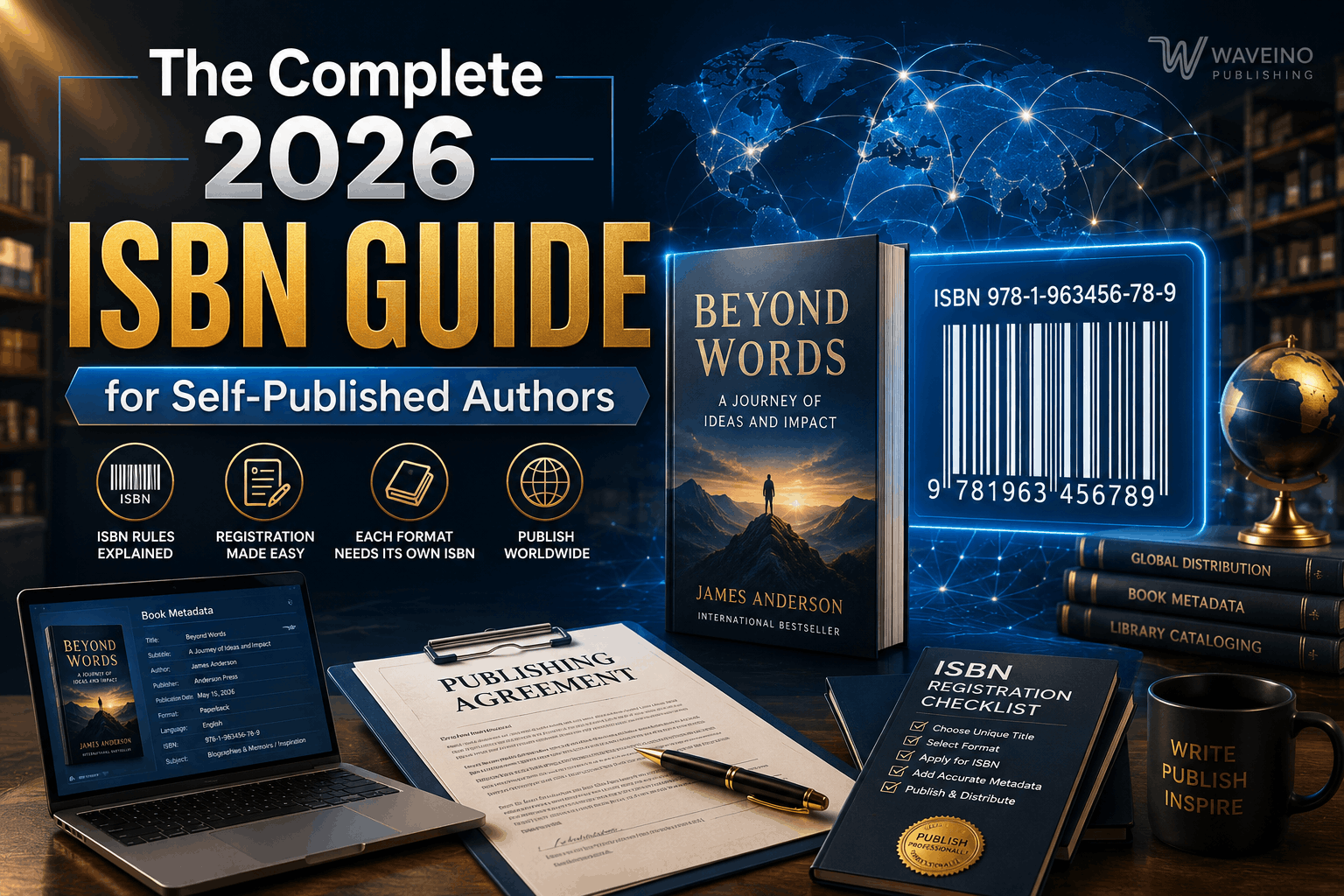
An ISBN is a unique 13-digit identifier assigned to a specific book publication. It helps bookstores, libraries, distributors, wholesalers, and online retailers track and manage book inventory efficiently.
Without a valid ISBN, a book may face limitations in:
- Global distribution
- Library cataloging
- Retail bookstore listings
- Academic indexing
- Professional publishing recognition
For authors aiming for wider reach and credibility, obtaining the correct ISBN remains essential.
Rule 1: Every Book Format Requires Its Own ISBN
One of the most important ISBN rules in 2026 is that each format of a publication must have a separate ISBN.
For example:
- Paperback edition → ISBN #1
- Hardcover edition → ISBN #2
- Ebook edition → ISBN #3
- Audiobook edition → ISBN #4
This distinction helps retailers and distributors identify exactly which version customers are purchasing.
Many first-time authors mistakenly use the same ISBN across multiple formats, which can create distribution and cataloging issues.
Rule 2: Revised Editions Need New ISBNs
Authors frequently update their books with new chapters, research findings, or design changes. If the content changes significantly, a new ISBN is generally required.
Examples that typically require a new ISBN include:
- Updated academic editions
- New research content
- Major chapter revisions
- Expanded editions
- Significant design changes affecting publication identity
Minor typographical corrections usually do not require a new ISBN.
Rule 3: Ebook Versions May Require Separate ISBNs
The growth of digital publishing continues to raise questions about ebook ISBN requirements.
In 2026, industry best practices recommend assigning separate ISBNs when ebooks are distributed through multiple channels or exist in different digital formats.
Examples include:
- EPUB edition
- PDF edition
- Enhanced interactive ebook
While some online platforms may not require an ISBN, having one improves discoverability and professional metadata management.
Rule 4: ISBN Ownership Matters for Self-Published Authors
Many self-publishing platforms offer free ISBNs. However, authors should understand the difference between platform-assigned and author-owned ISBNs.
With a platform-issued ISBN:
- The platform may appear as the publisher of record.
- Publishing flexibility may be limited.
With an author-owned ISBN:
- You retain publisher identity.
- Greater control over metadata.
- Easier multi-platform distribution.
- Enhanced professional branding.
Authors planning long-term publishing careers often prefer owning their ISBNs.
Rule 5: Metadata Accuracy Is More Important Than Ever
Publishing databases have become increasingly dependent on accurate metadata.
When registering an ISBN, ensure the following information is correct:
- Book title
- Subtitle
- Author name
- Publisher name
- Publication date
- Language
- Format
- Subject categories
Incorrect metadata can negatively impact discoverability across bookstores and library systems.
Rule 6: ISBNs Are Not Copyright Protection
A common misconception among new authors is that obtaining an ISBN automatically protects intellectual property.
An ISBN only identifies a publication for commercial and bibliographic purposes.
Authors should separately consider:
- Copyright registration
- Publishing agreements
- Trademark protection
- Licensing arrangements
ISBNs do not establish legal ownership of content.
Rule 7: Academic and Research Books Follow the Same Core Standards
Academic publishers and research institutions continue to rely heavily on ISBN systems.
For scholarly books, accurate ISBN assignment supports:
- Citation tracking
- Library acquisitions
- Academic databases
- International distribution
- Research discoverability
As academic publishing grows globally, proper ISBN management remains critical for research visibility.
Common ISBN Mistakes Authors Should Avoid
Many publishing delays occur because of simple ISBN errors.
Avoid these common mistakes:
- Using one ISBN for multiple formats
- Reusing old ISBNs
- Registering incorrect metadata
- Assuming ISBN equals copyright protection
- Publishing revised editions without new ISBNs
- Relying solely on platform-provided identifiers
Careful ISBN management can prevent costly corrections later.
How ISBNs Support Global Book Distribution
Modern publishing relies heavily on metadata and digital cataloging systems. ISBNs serve as the foundation for identifying books across international markets.
Benefits include:
- Better bookstore visibility
- Easier library integration
- Improved online discoverability
- Accurate sales tracking
- Enhanced distribution opportunities
For authors seeking worldwide readership, ISBN compliance remains a fundamental publishing requirement.
Conclusion
As publishing technologies continue to evolve in 2026, ISBNs remain one of the most important tools for authors and publishers. Understanding the latest ISBN rules can help ensure smooth distribution, accurate cataloging, and professional presentation across global markets. Whether you're publishing a novel, academic textbook, research monograph, or ebook, proper ISBN management is a crucial step toward long-term publishing success.