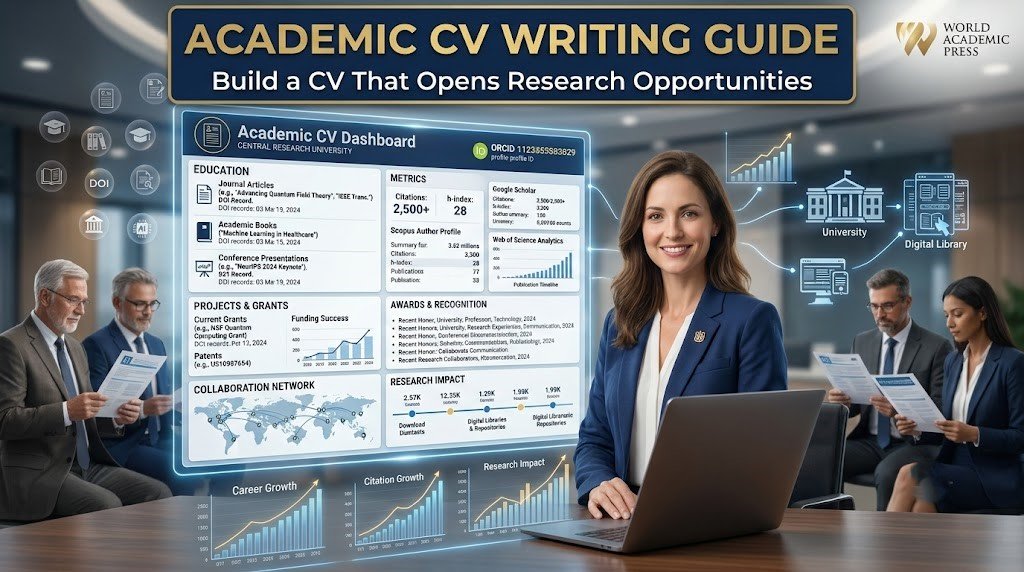
Academic CV Writing Guide (2026)
An academic CV is one of the most important documents in a researcher's career. Whether you're applying for a PhD program, faculty position, research grant, fellowship, conference, or academic promotion, your curriculum vitae represents your academic achievements and professional journey. Unlike a standard resume, an academic CV provides a detailed overview of your education, research, publications, teaching experience, awards, grants, and scholarly contributions.
In 2026, universities and research institutions increasingly look for candidates with well-structured, comprehensive, and up-to-date academic CVs. This guide explains how to create an impressive academic CV that highlights your expertise and strengthens your chances of academic success.
Why an Academic CV Matters
Your academic CV is often the first impression that universities, publishers, funding agencies, and hiring committees have of your professional achievements. A well-written CV demonstrates your qualifications, research experience, and long-term commitment to scholarly excellence.
A strong academic CV helps you:
- Apply for faculty positions.
- Secure research funding.
- Win scholarships and fellowships.
- Support academic promotion.
- Increase professional credibility.
- Showcase research achievements.
1. Begin with Professional Information
Start your CV with your full name, professional title, institutional affiliation, email address, phone number, ORCID iD, Google Scholar profile, and professional website if available. Ensure all information is accurate and up to date.
Related guide: ORCID Profile Optimization Guide.
2. Write a Strong Professional Profile
Include a brief summary describing your research interests, academic expertise, career objectives, and major achievements. This section gives reviewers a quick overview of your qualifications.
3. Highlight Education and Qualifications
List your academic degrees in reverse chronological order. Include the institution, degree title, specialization, graduation year, and thesis title where relevant.
4. Showcase Research Experience
Provide details of research projects, laboratory experience, collaborations, funded projects, and research assistantships. Mention your responsibilities and key contributions.
5. Include Publications
Organize journal articles, books, book chapters, conference papers, and other scholarly works in a consistent citation style. Include DOI links whenever possible to improve credibility and accessibility.
Related article: How Publishing Books Helps Academic Promotion.
6. Add Conference Presentations
List keynote speeches, oral presentations, poster sessions, invited talks, workshops, and seminars. Conference participation demonstrates active involvement in the research community.
Related guide: How Conferences Help Academic Careers.
7. Mention Awards, Grants, and Certifications
Highlight scholarships, fellowships, research grants, academic awards, certifications, and professional recognitions. These achievements strengthen your academic profile and demonstrate excellence.
8. Include Teaching and Professional Service
Describe teaching experience, supervision of students, curriculum development, editorial board memberships, peer-review activities, committee participation, and professional society memberships.
9. Add Research Metrics
Where appropriate, include citation counts, h-index, i10-index, research impact metrics, and links to Google Scholar or institutional profiles. These indicators help demonstrate the influence of your research.
Learn more:
Common Academic CV Mistakes
- Using outdated contact information.
- Including unrelated work experience.
- Inconsistent formatting.
- Missing publication details or DOI links.
- Failing to update recent achievements.
- Poor organization and readability.
Conclusion
A professional academic CV is much more than a list of qualifications—it is a comprehensive record of your scholarly journey. By presenting your education, publications, research experience, teaching, awards, and professional achievements in a clear and organized format, you can significantly improve your chances of securing academic opportunities. Regularly updating your CV ensures it accurately reflects your growing expertise and research impact.
For more expert guidance on academic publishing, researcher development, scholarly communication, and career advancement, visit World Academic Press.