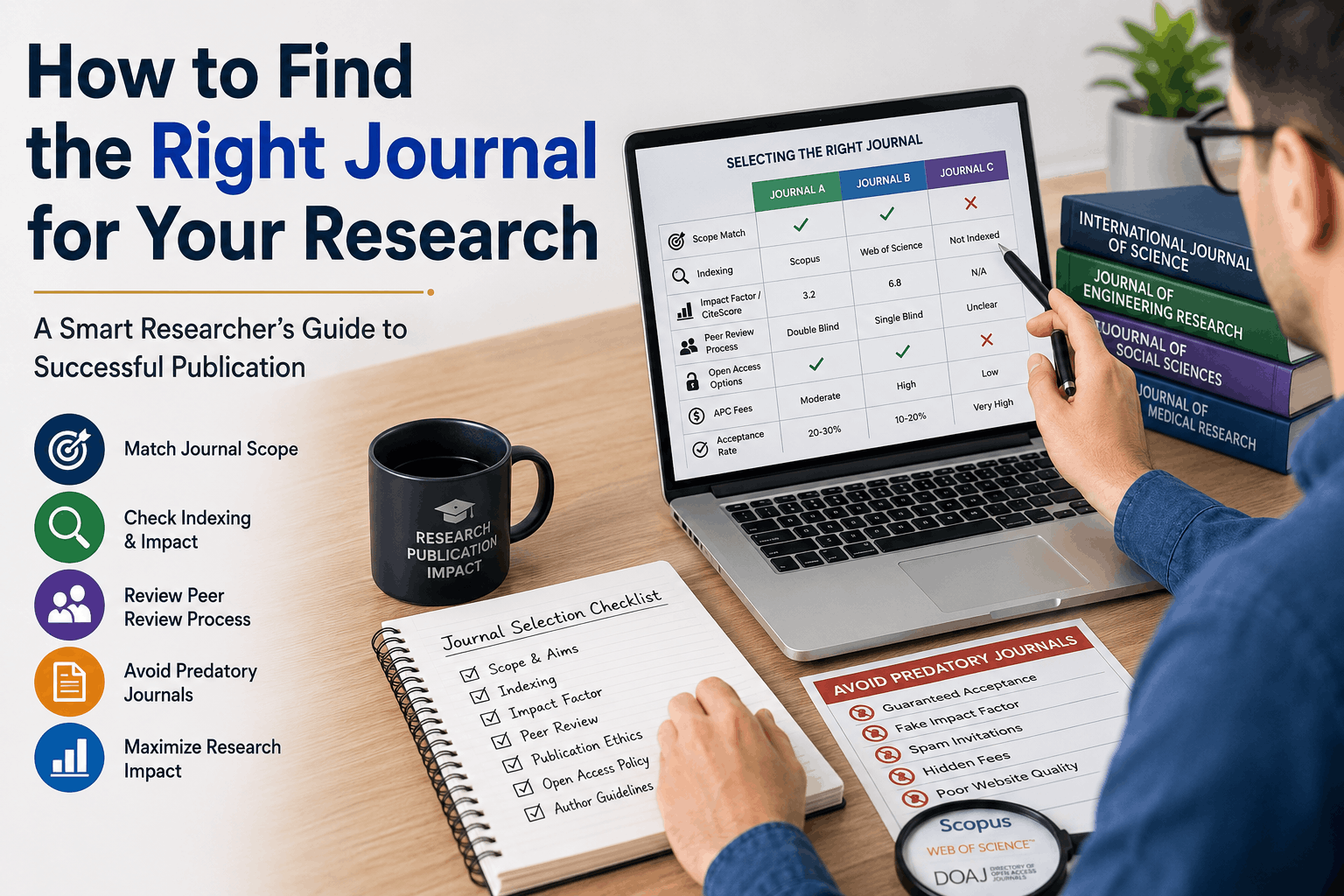
How to Find the Right Journal for Your Research Successfully
Publishing excellent research begins with selecting the right journal. Even high-quality manuscripts can face rejection if submitted to journals that do not match their scope or audience. A thoughtful journal selection strategy increases your chances of acceptance, improves research visibility, and ensures your work reaches the right academic community.
Whether you are a PhD scholar, faculty member, or independent researcher, this guide explains how to identify a suitable journal while avoiding common mistakes.
Why Journal Selection Matters
The journal you choose affects:
- Acceptance probability
- Research visibility
- Citation potential
- Academic reputation
- Career advancement
- Funding and promotion opportunities
Choosing a journal simply because it has a high impact factor is rarely the best strategy. The journal should align with your research objectives and intended readership. Proper scope matching is one of the strongest predictors of successful submission. :contentReference[oaicite:0]{index=0}
1. Match Your Research with the Journal's Scope
Start by reading the journal's Aims & Scope. Review recently published articles from the past two or three years to understand the topics, methodologies, and article types the journal typically accepts.
If your manuscript differs significantly from previously published work, consider another journal rather than risking an immediate desk rejection.
2. Identify Your Target Audience
Ask yourself:
- Who will benefit most from this research?
- Is the work multidisciplinary or highly specialized?
- Should practitioners or researchers be the primary readers?
Publishing in a journal read by your target audience increases readership, citations, and research impact.
3. Check Journal Indexing
Before submission, verify whether the journal is indexed in recognized databases such as:
- Scopus
- Web of Science
- Directory of Open Access Journals (DOAJ)
- Google Scholar
Indexing improves discoverability and enhances the credibility of published research.
4. Review the Peer Review Process
A reputable journal should clearly explain:
- Peer review model
- Editorial workflow
- Average review timeline
- Publication ethics
- Author guidelines
Transparent editorial policies are indicators of trustworthy academic publishing. :contentReference[oaicite:1]{index=1}
5. Evaluate Journal Metrics Carefully
Metrics can provide useful insights, but they should never be the only deciding factor.
Consider:
- Impact Factor
- CiteScore
- SCImago Journal Rank (SJR)
- Source Normalized Impact per Paper (SNIP)
Sometimes a moderately ranked journal with an excellent subject match offers better publication success than a prestigious journal with a broader focus.
6. Understand Open Access Policies
Many journals now offer Open Access publishing.
Before submission, check:
- Article Processing Charges (APCs)
- Copyright policy
- Creative Commons licenses
- Institutional funding availability
Choose the publishing model that aligns with your funding requirements and visibility goals.
7. Avoid Predatory Journals
Predatory publishers often promise unrealistically fast publication while providing little or no genuine peer review.
Warning signs include:
- Spam email invitations
- Guaranteed acceptance
- Hidden publication fees
- Poor website quality
- Fake editorial boards
- False indexing claims
Use trusted evaluation resources and independently verify journal credentials before submitting your manuscript. :contentReference[oaicite:2]{index=2}
8. Study Recently Published Papers
Reading recent publications helps determine whether your manuscript matches:
- Research themes
- Writing style
- Methodology expectations
- Reference formatting
- Article structure
This also provides valuable insights into the editorial standards expected by the journal.
9. Compare Multiple Journal Options
Create a comparison table including:
- Scope
- Indexing status
- Acceptance rate (if available)
- Review time
- Publication fees
- Open Access options
- Impact metrics
Comparing several journals objectively often leads to better publication decisions.
10. Follow Submission Guidelines Carefully
Many manuscripts are delayed—or even rejected—because authors ignore formatting instructions.
Always review:
- Word limits
- Reference style
- Figure requirements
- Ethics statements
- Conflict of interest declarations
- Supplementary materials
How World Academic Press Can Help
Researchers seeking publishing guidance can benefit from the educational resources available on World Academic Press, which offers information on academic publishing, research visibility, and author development. The platform provides publishing guidance, peer-review support, and academic resources designed to help scholars improve their publication journey. :contentReference[oaicite:3]{index=3}
Related Articles from World Academic Press
- How Academic Authors Can Build a Strong Research Profile
- How Academic Books Improve Research Visibility and Citations
- How to Publish a Research Book Successfully in 2026
- WAP Associate Membership: Advance Your Academic Career
Final Thoughts
Selecting the right journal is a strategic decision that can significantly influence your research career. By carefully evaluating a journal's scope, indexing, editorial practices, audience, and publication policies, you improve both your chances of acceptance and the long-term impact of your work.
Investing time in journal selection before submission can save months of unnecessary revisions while ensuring your research reaches the readers who will benefit from it most.