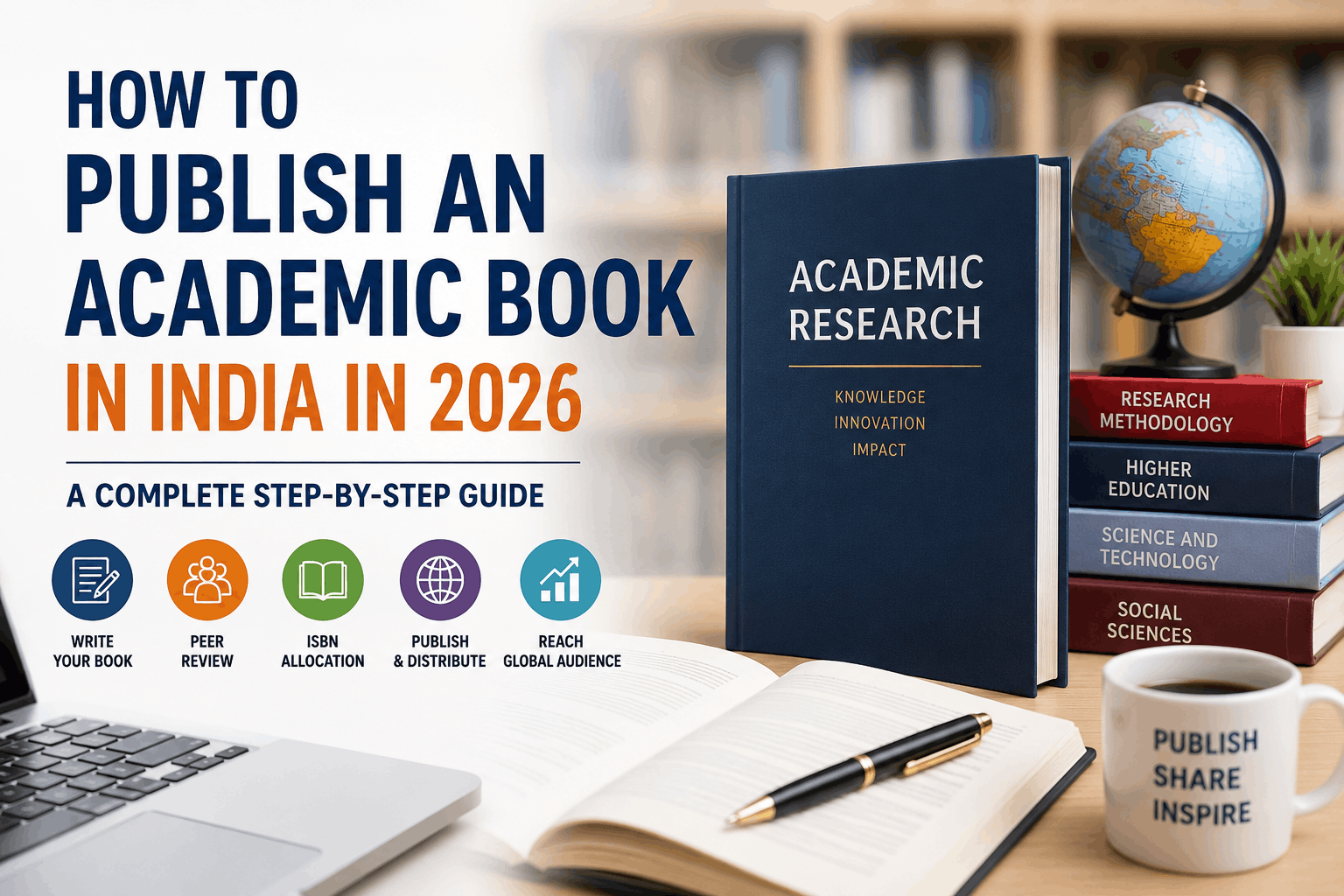
Academic book publishing continues to play a vital role in research dissemination, career advancement, and knowledge sharing. Whether you are a PhD scholar, professor, researcher, or independent academic author, publishing an academic book in India in 2026 can significantly enhance your professional reputation and academic impact.
With modern publishing technologies and specialized academic publishers, the publication process has become more accessible than ever. This guide explains everything you need to know about publishing an academic book successfully.
Why Publish an Academic Book?
An academic book provides researchers with an opportunity to present comprehensive studies, theoretical frameworks, case analyses, and scholarly insights that often exceed the limitations of journal articles.
Publishing an academic book can help:
- Strengthen your academic profile
- Support promotion and tenure applications
- Increase research visibility
- Establish authority in a specific field
- Reach a wider academic audience
- Generate citations and scholarly recognition
Step 1: Choose a Relevant and Valuable Topic
The foundation of a successful academic book is a well-defined topic that addresses current research gaps, emerging trends, or significant academic challenges.
Before writing, evaluate:
- The originality of your research
- Target audience requirements
- Current academic demand
- Long-term relevance of the subject
Selecting a niche topic often improves the chances of publication and reader engagement.
Step 2: Develop a Structured Manuscript
A professional manuscript should follow a logical structure. Most academic books include:
- Title Page
- Abstract or Preface
- Table of Contents
- Introduction
- Literature Review
- Research Methodology
- Findings and Analysis
- Discussion
- Conclusion
- References
- Appendices
Clear organization improves readability and reviewer evaluation.
Step 3: Ensure Academic Quality and Originality
Academic publishers carefully evaluate manuscript quality before acceptance. Authors should verify:
- Original research contributions
- Proper citations and references
- Absence of plagiarism
- Consistent formatting
- Accurate data presentation
Professional proofreading and editing can significantly improve publication outcomes.
Step 4: Select the Right Academic Publisher
Choosing the right publisher is one of the most important decisions. Look for publishers that specialize in academic and scholarly publications.
Consider factors such as:
- Peer-review process
- ISBN allocation
- Editorial support
- Global distribution
- Digital publishing options
- Author services
World Academic Press provides comprehensive academic publishing solutions for researchers, scholars, and educators. Explore their publishing services at:
Step 5: Obtain ISBN and Publication Metadata
An ISBN (International Standard Book Number) is essential for book identification, distribution, and library cataloging.
Professional publishers typically handle:
- ISBN registration
- Metadata preparation
- Catalog information
- Digital indexing support
Proper metadata improves discoverability across academic databases and search engines.
Step 6: Complete Peer Review and Editorial Evaluation
Most reputable academic publishers implement peer review to maintain scholarly standards.
Reviewers evaluate:
- Research significance
- Methodological rigor
- Academic contribution
- Writing quality
- Reference accuracy
Authors may need to revise manuscripts based on reviewer feedback before final approval.
Step 7: Publication, Distribution, and Promotion
After approval, the manuscript moves into production. This stage includes:
- Copyediting
- Typesetting
- Cover design
- Print production
- eBook conversion
- Distribution setup
Successful authors also actively promote their books through academic conferences, professional networks, research communities, and social media platforms.
Benefits of Publishing with a Professional Academic Publisher
Working with an experienced academic publisher provides several advantages:
- Professional editorial support
- Enhanced credibility
- Global academic reach
- Improved discoverability
- ISBN management
- Quality assurance processes
Authors seeking professional guidance can explore the services available through World Academic Press for academic publishing support and scholarly book development.
Learn more:
https://worldacademic.press/about
Final Thoughts
Publishing an academic book in India in 2026 is a valuable investment in your academic career. By selecting a meaningful topic, preparing a high-quality manuscript, working with a reputable publisher, and following established publication standards, researchers can successfully transform their work into impactful scholarly publications.
As academic publishing continues to evolve, researchers who publish quality books will remain at the forefront of knowledge creation and dissemination. The right publishing partner can simplify the process and help maximize the reach and impact of your research.