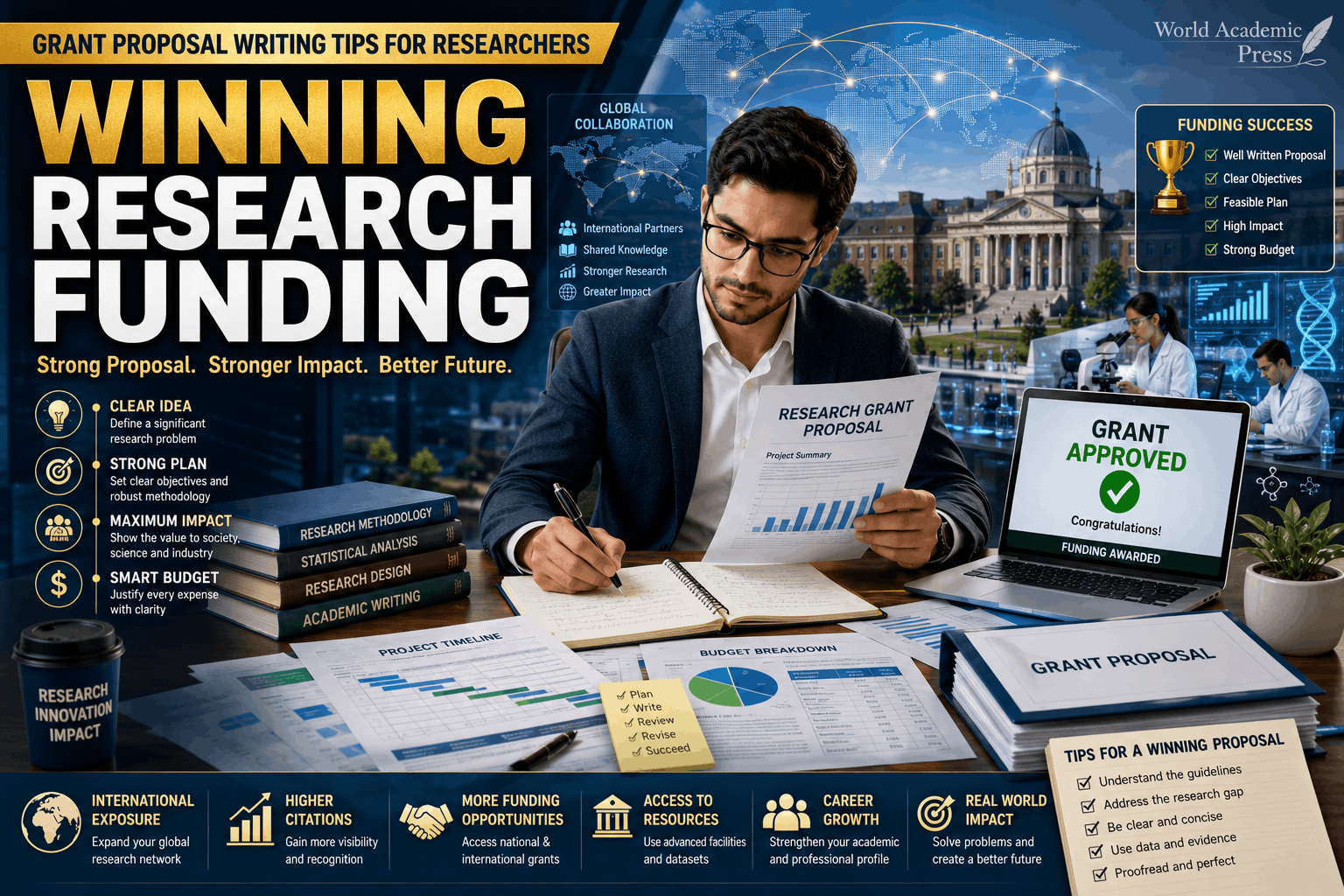
Grant Proposal Writing Tips for Researchers: How to Secure Research Funding Successfully
Securing research funding has become increasingly competitive across universities, research institutions, and funding agencies worldwide. A well-written grant proposal can make the difference between receiving financial support and having a promising research idea overlooked. Successful grant proposals do more than explain a research project—they convince reviewers that the proposed work is important, feasible, impactful, and worthy of investment.
Whether you are an early-career researcher, doctoral student, postdoctoral fellow, or experienced academic, understanding the principles of effective grant proposal writing can significantly improve your chances of obtaining funding.
Why Grant Proposal Writing Matters
Research grants provide essential resources for conducting studies, collecting data, purchasing equipment, hiring research assistants, attending conferences, and disseminating findings. Funding agencies receive thousands of applications every year, making proposal quality a critical factor in the selection process.
A strong proposal demonstrates:
- Research significance
- Scientific rigor
- Clear objectives
- Practical methodology
- Expected impact
- Responsible use of funding
1. Carefully Study the Funding Guidelines
Before drafting a proposal, thoroughly review the funding agency's requirements. Every grant program has specific eligibility criteria, objectives, evaluation metrics, formatting rules, and submission procedures.
Pay close attention to:
- Funding priorities
- Proposal structure
- Budget limitations
- Submission deadlines
- Required supporting documents
- Evaluation criteria
Many proposals are rejected because applicants fail to follow instructions precisely.
2. Start with a Clear and Compelling Research Problem
The research problem forms the foundation of your proposal. Reviewers should immediately understand why the issue deserves investigation and how your project will contribute to existing knowledge.
Clearly explain:
- What problem exists
- Why it matters
- Current research gaps
- Potential benefits of addressing the problem
A well-defined problem statement helps reviewers appreciate the value of your proposed research.
3. Define Specific Research Objectives
Strong grant proposals include measurable and achievable objectives.
Your objectives should be:
- Specific
- Relevant
- Realistic
- Clearly linked to the research problem
Avoid vague statements that make it difficult for reviewers to evaluate project success.
4. Demonstrate a Strong Literature Review
A thorough literature review shows that you understand the current state of research in your field.
Use the review to:
- Identify knowledge gaps
- Highlight unanswered questions
- Position your research contribution
- Justify the need for funding
Funding agencies prefer projects that build upon existing evidence while introducing meaningful innovation.
5. Present a Robust Methodology
The methodology section is often one of the most heavily scrutinized parts of a proposal.
Clearly describe:
- Research design
- Data collection methods
- Sampling procedures
- Analytical techniques
- Ethical considerations
- Risk management strategies
Reviewers need confidence that your approach can realistically achieve the proposed objectives.
6. Highlight Expected Impact
Modern funding agencies increasingly prioritize research with measurable outcomes.
Explain how your research will:
- Advance academic knowledge
- Support policy development
- Benefit society
- Address industry challenges
- Create future research opportunities
Clearly articulated impact statements strengthen the overall competitiveness of your proposal.
7. Create a Realistic Budget
Your budget should align closely with project activities and objectives.
Typical budget categories include:
- Personnel costs
- Equipment purchases
- Travel expenses
- Data collection costs
- Software and licenses
- Publication and dissemination expenses
Every requested expense should be justified and directly connected to project needs.
8. Develop a Clear Project Timeline
A detailed timeline demonstrates project feasibility and planning capability.
Break the research into major phases:
- Literature review
- Data collection
- Analysis
- Report writing
- Publication
Realistic timelines increase reviewer confidence in project execution.
9. Showcase Your Research Experience
Funding agencies evaluate not only the project but also the team's ability to complete it successfully.
Include information about:
- Publications
- Conference presentations
- Previous grants
- Research collaborations
- Technical expertise
Researchers seeking to strengthen their academic profile may find these resources useful:
- How Academic Authors Can Build a Strong Research Profile
- How Academic Books Improve Research Visibility and Citations
10. Seek Feedback Before Submission
Even experienced researchers benefit from external review.
Ask supervisors, colleagues, mentors, or subject experts to evaluate:
- Clarity
- Methodology
- Budget accuracy
- Impact statements
- Overall proposal quality
Constructive feedback can substantially improve proposal strength before submission.
Common Grant Proposal Mistakes
- Ignoring funding guidelines
- Weak research questions
- Poorly defined objectives
- Insufficient literature review
- Unclear methodology
- Unrealistic budgets
- Lack of impact justification
- Last-minute submissions
Related Resources for Researchers
Researchers interested in improving funding success and academic visibility can explore the following guides from World Academic Press:
- How to Apply for Research Grants Successfully
- International Research Collaboration Benefits
- How to Publish a Research Book Successfully in 2026
- Academic Book Publishing: A Complete Guide for Researchers and Faculty Members
Conclusion
Writing a successful grant proposal requires strategic planning, clear communication, strong methodology, and a compelling demonstration of impact. Funding agencies seek projects that address important problems while offering realistic and measurable outcomes. By carefully following guidelines, presenting a persuasive research case, developing a transparent budget, and continuously refining your proposal through feedback, researchers can significantly improve their chances of securing competitive funding. A well-crafted grant proposal is not just an application—it is an investment in the future success of your research career.