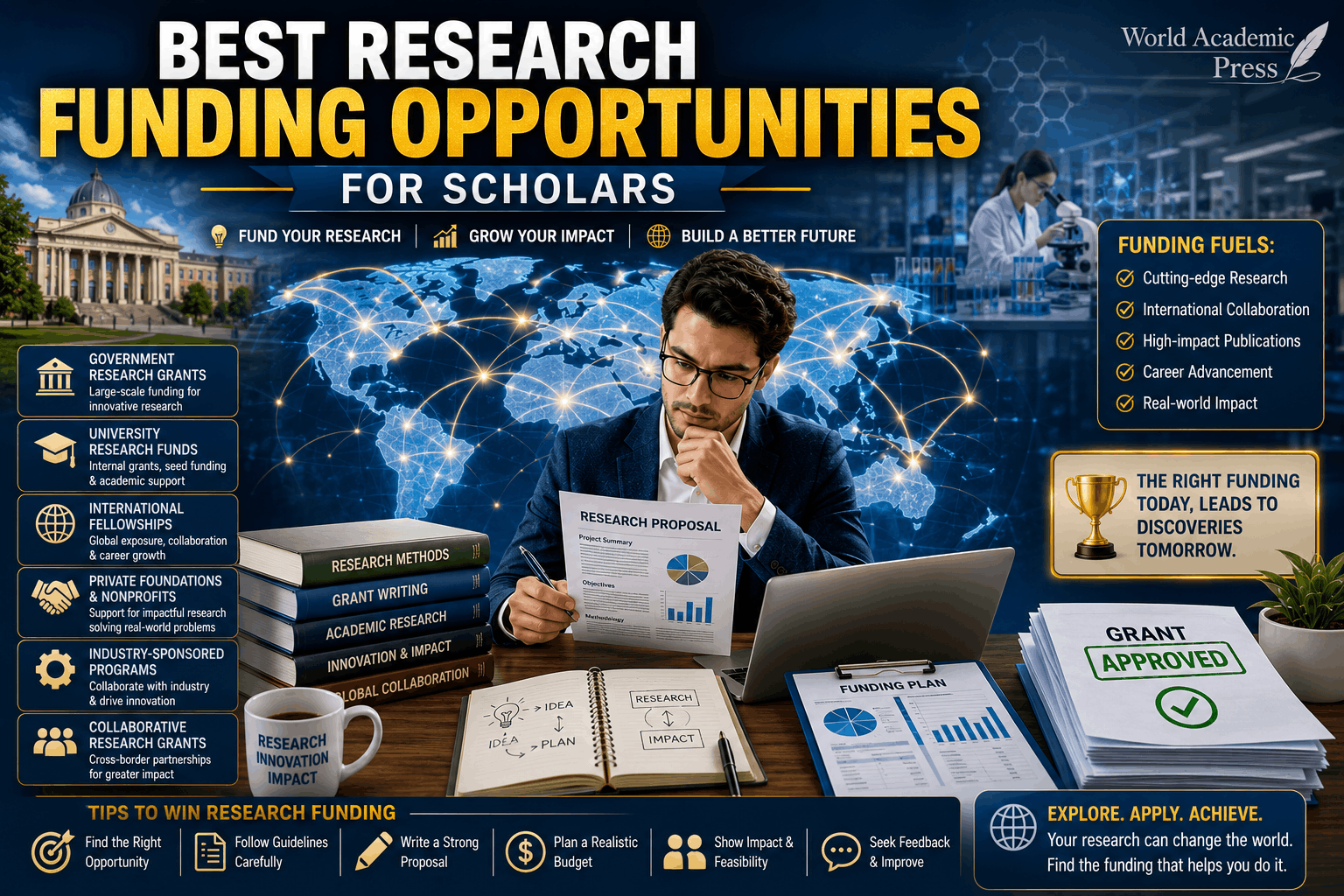
Best Research Funding Opportunities for Scholars: A Complete Guide for 2026
Research funding plays a critical role in advancing academic knowledge, scientific innovation, and societal development. Whether you are a postgraduate student, PhD candidate, postdoctoral researcher, faculty member, or independent scholar, securing financial support can significantly enhance the quality and impact of your research. Funding opportunities help researchers cover expenses related to data collection, laboratory equipment, fieldwork, publication fees, travel, conference participation, and international collaborations.
With increasing competition for grants worldwide, understanding where to find the best funding opportunities has become essential for academic success. This guide explores some of the most valuable research funding sources available to scholars and provides practical tips for maximizing funding success.
Why Research Funding Matters
Research projects often require substantial resources that extend beyond institutional budgets. Funding allows scholars to:
- Conduct large-scale research projects
- Access advanced laboratories and technology
- Hire research assistants
- Travel for fieldwork and conferences
- Collaborate with international experts
- Publish findings in reputable journals and books
- Increase research visibility and impact
Researchers with strong funding records are often better positioned for career advancement, academic promotions, and future grant opportunities.
1. Government Research Funding Programs
Government agencies remain among the largest providers of research funding globally. These programs support research across science, technology, engineering, medicine, social sciences, education, and humanities.
Common government funding sources include:
- National science foundations
- Higher education commissions
- Research councils
- Innovation and technology departments
- Public health research agencies
Government grants often provide substantial funding and are highly respected within academic communities.
2. University Research Grants
Many universities offer internal funding opportunities for faculty members, doctoral candidates, and early-career researchers.
These grants frequently support:
- Pilot studies
- Seed funding projects
- Conference participation
- Research travel
- Publication assistance
- Collaborative initiatives
Internal university grants can also strengthen future applications for larger external funding programs.
3. International Research Fellowships
International fellowships allow researchers to conduct studies abroad, access specialized facilities, and collaborate with leading institutions.
Benefits often include:
- Research stipends
- Travel funding
- Accommodation support
- Professional networking opportunities
- International publication exposure
Such programs are particularly valuable for researchers seeking global academic experience.
4. Private Foundations and Nonprofit Organizations
Many philanthropic organizations fund research addressing major societal challenges.
Popular areas include:
- Public health
- Climate change
- Education
- Social development
- Artificial intelligence
- Sustainability
- Poverty reduction
Foundation grants often prioritize innovation, social impact, and interdisciplinary collaboration.
5. Industry-Sponsored Research Programs
Private companies increasingly invest in academic research partnerships.
Industry funding can provide:
- Research sponsorships
- Technology access
- Specialized datasets
- Commercialization opportunities
- Career development pathways
These collaborations are particularly common in engineering, healthcare, biotechnology, artificial intelligence, and environmental sciences.
6. International Collaborative Research Grants
Many funding organizations encourage cross-border partnerships between researchers and institutions.
International collaborations often receive priority because they:
- Promote knowledge exchange
- Strengthen innovation
- Increase research quality
- Generate broader impact
- Expand global academic networks
Researchers interested in global partnerships should also read:
7. Early-Career Researcher Funding Programs
Many agencies offer dedicated funding opportunities for emerging scholars.
These programs help early-career researchers:
- Establish independent research agendas
- Build publication records
- Develop professional networks
- Gain grant management experience
Such funding often serves as a stepping stone toward larger research grants later in an academic career.
How to Improve Your Funding Success Rate
Securing research funding requires more than identifying opportunities. Researchers should focus on developing competitive applications.
Key strategies include:
- Following application guidelines carefully
- Writing clear and persuasive proposals
- Developing realistic budgets
- Demonstrating research impact
- Building strong academic profiles
- Seeking expert feedback before submission
Helpful resources include:
Strengthening Your Academic Profile for Funding
Funding agencies often evaluate an applicant's research track record alongside the proposed project.
Researchers can improve competitiveness by:
- Publishing scholarly articles
- Writing academic books
- Increasing citation impact
- Participating in conferences
- Building international collaborations
Related World Academic Press resources:
- How Academic Authors Can Build a Strong Research Profile
- How Academic Books Improve Research Visibility and Citations
- How to Publish a Research Book Successfully in 2026
- Academic Book Publishing: A Complete Guide for Researchers and Faculty Members
Common Mistakes Researchers Make When Seeking Funding
- Applying for unsuitable grants
- Ignoring eligibility requirements
- Submitting incomplete applications
- Weak impact statements
- Poorly justified budgets
- Unclear methodologies
- Missing submission deadlines
Avoiding these mistakes can significantly improve funding outcomes.
Conclusion
Research funding opportunities continue to expand across governments, universities, foundations, industries, and international organizations. Scholars who actively pursue funding can accelerate their research, increase academic visibility, and build stronger professional networks. By understanding available funding sources, developing compelling proposals, and maintaining a strong research profile, scholars can improve their chances of securing the financial support needed to advance impactful research. As competition for grants grows, strategic preparation and continuous professional development remain essential for long-term funding success.