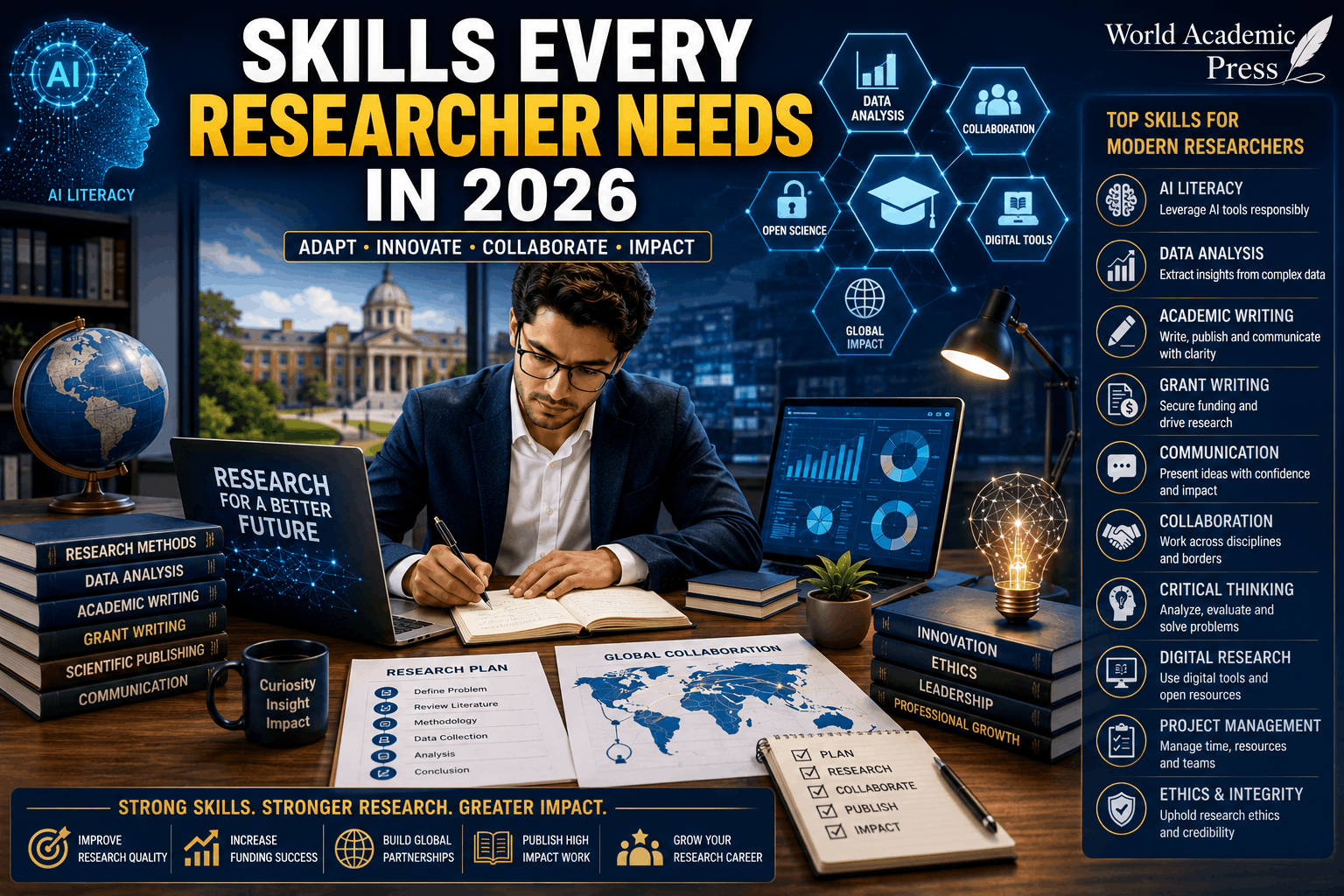
Skills Every Researcher Needs in 2026: A Complete Guide for Academic Success
The research landscape is evolving faster than ever. Advances in artificial intelligence, data science, open-access publishing, global collaboration, and digital communication are transforming how research is conducted, shared, and evaluated. In 2026, researchers are expected to possess far more than subject-matter expertise. Success increasingly depends on a combination of technical, analytical, communication, and professional skills.
Whether you are a PhD student, postdoctoral fellow, faculty member, or independent scholar, developing the right competencies can improve research quality, increase funding opportunities, strengthen publication records, and enhance career growth. Here are the most important skills every researcher should develop in 2026.
1. AI Literacy and Responsible Use of Artificial Intelligence
Artificial intelligence has become an integral part of modern research workflows. Researchers now use AI-powered tools for literature discovery, data analysis, academic writing support, coding assistance, and research organization.
Key AI-related competencies include:
- Using AI tools responsibly and ethically
- Evaluating AI-generated outputs critically
- Understanding AI limitations and biases
- Integrating AI into research workflows efficiently
- Maintaining academic integrity while using AI
Researchers who understand how to leverage AI effectively can significantly improve productivity without compromising research quality.
2. Advanced Data Analysis Skills
Data-driven decision-making continues to dominate academic research. Researchers must be comfortable working with quantitative, qualitative, or mixed-method datasets.
Important skills include:
- Statistical analysis
- Data visualization
- Research software proficiency
- Interpretation of findings
- Data management and organization
The ability to transform raw data into meaningful insights remains one of the most valuable skills across disciplines.
3. Academic Writing Excellence
Strong research is ineffective if it cannot be communicated clearly. Academic writing remains a foundational skill for researchers in every field.
Researchers should focus on:
- Clear and concise writing
- Logical structure
- Evidence-based arguments
- Proper citation practices
- Manuscript preparation
- Book and chapter writing
Publishing remains essential for career growth and scholarly impact.
Related Reading:
- How to Publish a Research Book Successfully in 2026
- Academic Book Publishing: A Complete Guide for Researchers and Faculty Members
4. Grant Writing and Funding Acquisition
Research funding remains highly competitive. Researchers who can write persuasive grant proposals have a significant advantage.
Essential funding-related skills include:
- Identifying funding opportunities
- Writing compelling proposals
- Budget planning
- Impact statement development
- Project management planning
Researchers seeking funding guidance should explore:
- How to Apply for Research Grants Successfully
- Grant Proposal Writing Tips for Researchers
- Best Research Funding Opportunities for Scholars
5. Research Communication Skills
Modern researchers must communicate effectively with multiple audiences, including academics, policymakers, funding agencies, industry partners, media organizations, and the general public.
Communication skills include:
- Public speaking
- Conference presentations
- Science communication
- Research dissemination
- Digital content creation
- Media engagement
Strong communication increases research visibility and societal impact.
6. International Collaboration and Networking
Global research partnerships are becoming increasingly important. Many funding agencies actively encourage international collaboration because it promotes innovation and broader research impact.
Researchers should develop:
- Cross-cultural communication skills
- Virtual collaboration capabilities
- Academic networking strategies
- Partnership development skills
- International project management abilities
Further reading:
7. Critical Thinking and Problem-Solving
Critical thinking remains one of the most important research competencies.
Researchers must be able to:
- Evaluate evidence objectively
- Identify research gaps
- Develop innovative solutions
- Challenge assumptions
- Interpret findings accurately
Strong critical thinking improves both research quality and decision-making.
8. Digital Research Skills
Research increasingly relies on digital platforms and technologies.
Researchers should understand:
- Digital libraries
- Research databases
- Reference management software
- Research collaboration tools
- Cloud-based data storage
- Open science platforms
Digital competence enhances productivity and research efficiency.
9. Project Management Skills
Successful research projects require effective planning and organization.
Important project management skills include:
- Goal setting
- Time management
- Resource allocation
- Team coordination
- Risk assessment
- Progress monitoring
Researchers who manage projects efficiently are often more successful in meeting deadlines and achieving project objectives.
10. Building a Strong Academic Profile
Academic visibility has become increasingly important in a competitive research environment.
Researchers should focus on:
- Publishing consistently
- Increasing citation impact
- Developing professional networks
- Participating in conferences
- Engaging with scholarly communities
Helpful resources include:
- How Academic Authors Can Build a Strong Research Profile
- How Academic Books Improve Research Visibility and Citations
Future-Proofing Your Research Career
The most successful researchers in 2026 will combine traditional academic strengths with modern technological capabilities. Adaptability, lifelong learning, and continuous professional development are becoming essential traits in an increasingly competitive academic environment.
Researchers who invest in skill development today will be better positioned to secure funding, publish impactful work, establish international collaborations, and contribute meaningful solutions to global challenges.
Conclusion
The role of a researcher in 2026 extends far beyond conducting experiments or publishing papers. Today's scholars must be proficient in AI literacy, data analysis, academic writing, grant acquisition, communication, collaboration, project management, and digital research technologies. By developing these essential skills, researchers can increase their academic impact, strengthen career opportunities, and remain competitive in a rapidly evolving research ecosystem. Continuous learning and professional growth will be key drivers of research success in the years ahead.