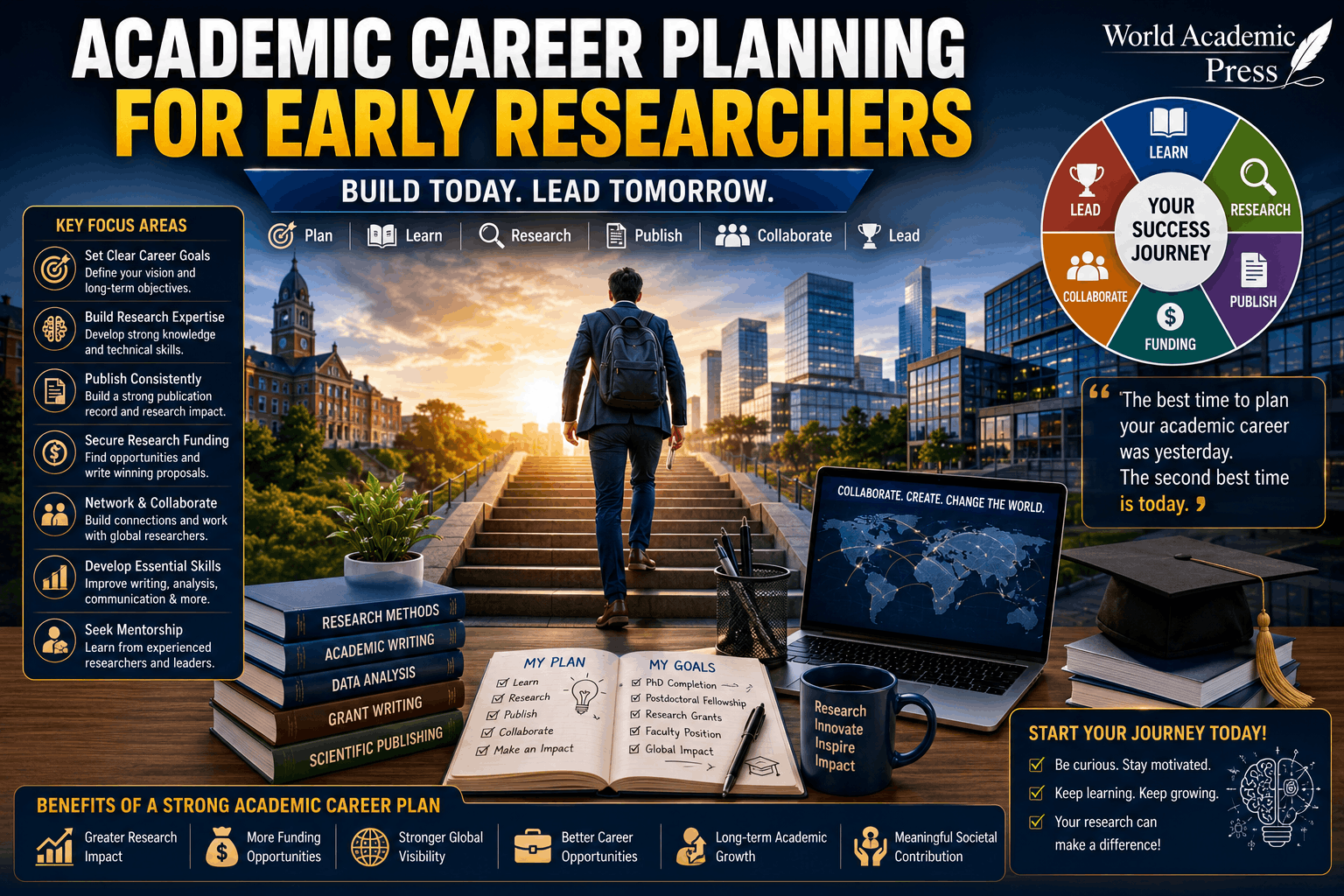
Academic Career Planning for Early Researchers: A Roadmap to Long-Term Success
Starting an academic career can be both exciting and challenging. Early-career researchers often face important decisions regarding research focus, publishing strategies, funding opportunities, networking, and professional development. In today's competitive academic environment, success rarely happens by chance. It requires careful planning, continuous learning, and strategic career development.
Whether you are pursuing a master's degree, PhD, postdoctoral fellowship, or your first faculty position, a well-defined academic career plan can help you build a strong research profile, secure funding, expand professional networks, and achieve long-term scholarly impact.
Why Academic Career Planning Matters
Many researchers focus exclusively on completing their current projects while overlooking long-term career goals. Academic career planning helps researchers:
- Identify clear career objectives
- Develop valuable research skills
- Increase publication output
- Build professional networks
- Secure research funding
- Enhance academic visibility
- Improve career advancement opportunities
A strategic approach allows researchers to make decisions that support both immediate and future career success.
1. Define Your Long-Term Academic Goals
The first step in career planning is understanding where you want your academic journey to lead.
Common career paths include:
- University faculty positions
- Research scientist roles
- Industry research careers
- Government research institutions
- Think tanks and policy organizations
- Academic publishing and consulting
Having a clear vision helps guide decisions related to research topics, collaborations, and professional development.
2. Build Strong Research Expertise
Subject expertise remains the foundation of every successful academic career.
Researchers should focus on:
- Developing deep domain knowledge
- Identifying emerging research trends
- Understanding interdisciplinary opportunities
- Continuously updating technical skills
Specialized expertise often leads to stronger publication records and greater recognition within the academic community.
3. Prioritize Academic Publishing
Publications remain one of the most important indicators of academic achievement. Researchers who publish consistently are more likely to attract funding, collaborations, and career opportunities.
Focus on:
- Peer-reviewed journal articles
- Book chapters
- Conference proceedings
- Academic books
- Review papers
Related Resources:
- How to Publish a Research Book Successfully in 2026
- Academic Book Publishing: A Complete Guide for Researchers and Faculty Members
4. Develop Essential Research Skills
Modern researchers need a diverse skill set beyond subject expertise.
Important competencies include:
- Academic writing
- Data analysis
- Research methodology
- Project management
- AI literacy
- Research communication
- Critical thinking
To explore these competencies in detail, read:
5. Build a Strong Academic Profile
Academic visibility plays a crucial role in career advancement.
Researchers should actively:
- Maintain professional profiles
- Track publications and citations
- Present at conferences
- Engage with scholarly communities
- Participate in academic discussions
Additional Reading:
- How Academic Authors Can Build a Strong Research Profile
- How Academic Books Improve Research Visibility and Citations
6. Secure Research Funding Early
Funding can accelerate career growth by supporting research projects, conference participation, travel, equipment purchases, and collaborations.
Early-career researchers should learn how to identify and apply for grants as soon as possible.
Helpful Guides:
- How to Apply for Research Grants Successfully
- Grant Proposal Writing Tips for Researchers
- Best Research Funding Opportunities for Scholars
7. Build Professional Networks
Academic success often depends on the quality of professional relationships.
Networking can help researchers:
- Find collaborators
- Discover funding opportunities
- Access mentorship
- Increase research visibility
- Learn about career opportunities
Attend conferences, workshops, seminars, and online academic events regularly.
8. Engage in International Collaboration
Research is becoming increasingly global. International collaborations provide access to new expertise, facilities, funding programs, and publication opportunities.
Benefits include:
- Expanded research networks
- Cross-disciplinary innovation
- Higher citation impact
- Improved funding prospects
Learn more here:
9. Seek Mentorship and Guidance
Experienced mentors can provide valuable advice regarding:
- Research direction
- Publishing strategies
- Grant applications
- Career transitions
- Academic challenges
Strong mentorship relationships often accelerate professional growth and reduce common career mistakes.
10. Create a Personal Development Plan
A structured development plan helps researchers track progress and maintain focus.
Your plan should include:
- Publication targets
- Funding goals
- Skill development objectives
- Networking activities
- Conference participation plans
- Long-term career milestones
Review and update the plan regularly as your career evolves.
Common Mistakes Early Researchers Should Avoid
- Neglecting long-term planning
- Focusing solely on publications
- Ignoring networking opportunities
- Avoiding grant applications
- Underestimating skill development
- Working in isolation
- Failing to seek mentorship
A balanced approach to career development often leads to more sustainable success.
Conclusion
Academic career planning is essential for researchers seeking long-term success in an increasingly competitive environment. By defining clear goals, developing research expertise, publishing consistently, securing funding, building professional networks, and embracing international collaboration, early-career researchers can create a strong foundation for future achievements. Academic careers are built over years of consistent effort, strategic decision-making, and continuous learning. Researchers who invest in thoughtful career planning today will be better prepared to achieve meaningful scholarly impact and professional growth in the future.