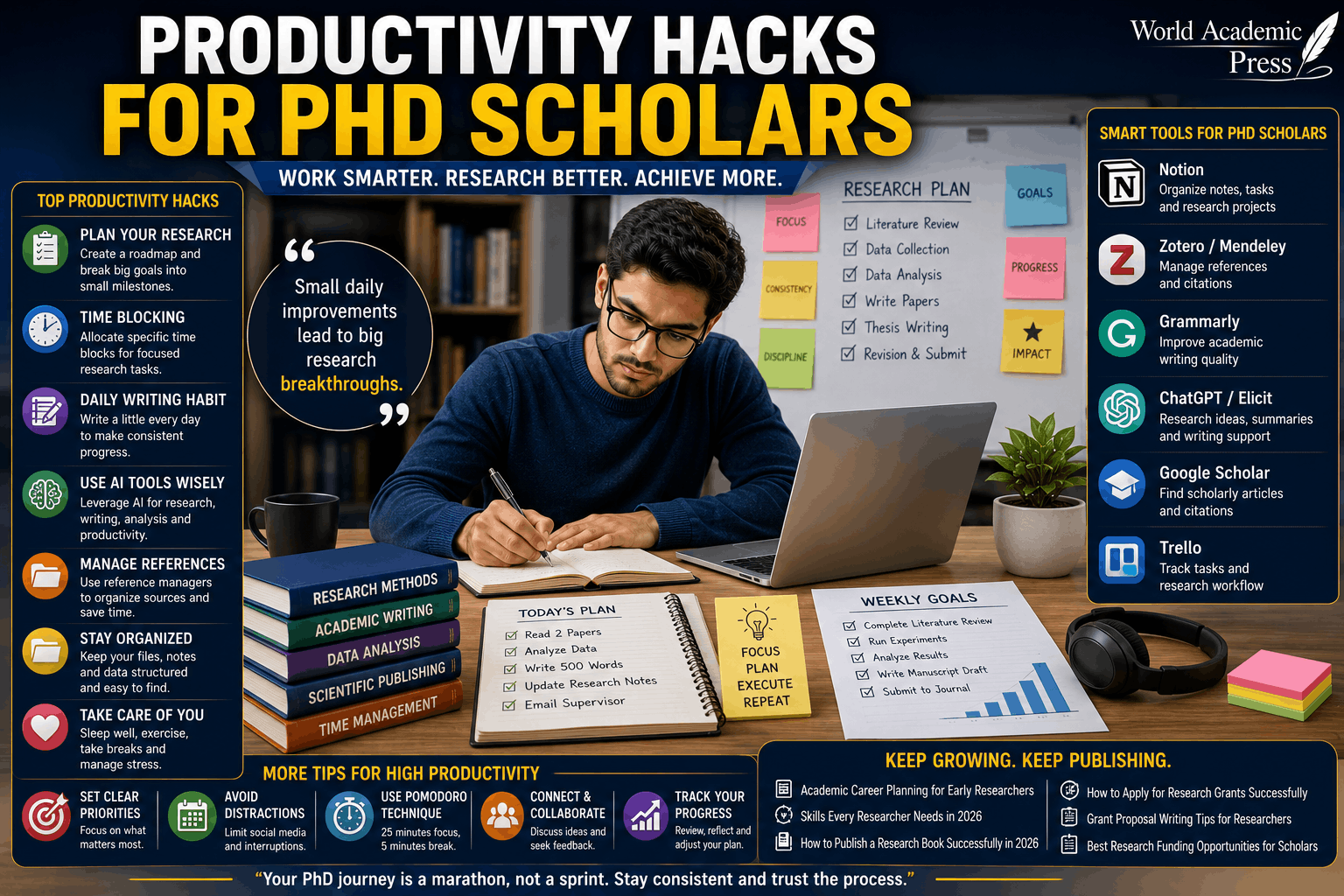
Productivity Hacks for PhD Scholars: How to Work Smarter and Achieve More in 2026
Pursuing a PhD is one of the most intellectually demanding journeys in academia. Doctoral researchers are expected to conduct original research, publish papers, attend conferences, apply for grants, collaborate with scholars, analyze data, and complete a dissertation—often while balancing teaching responsibilities and personal commitments.
With growing academic competition and increasing research expectations, productivity has become a critical factor in doctoral success. However, productivity is not about working longer hours. It is about working strategically, managing time effectively, and using the right tools and systems to maximize research output while maintaining well-being.
Here are some of the most effective productivity hacks for PhD scholars in 2026.
1. Create a Long-Term Research Roadmap
Many PhD students become overwhelmed because they focus only on immediate tasks without a broader plan.
Create a roadmap that includes:
- Literature review milestones
- Data collection phases
- Research publications
- Conference participation
- Grant applications
- Dissertation chapters
- Submission deadlines
Breaking large goals into smaller milestones makes progress easier to track and reduces stress.
2. Use Time Blocking for Research Tasks
Time blocking is one of the most effective productivity techniques for researchers.
Instead of multitasking, allocate specific time periods for:
- Reading literature
- Data analysis
- Academic writing
- Email management
- Meetings
- Grant proposal preparation
Dedicated focus sessions often improve both efficiency and work quality.
3. Follow the 80/20 Principle
The Pareto Principle suggests that 20% of activities often produce 80% of results.
Identify high-impact tasks such as:
- Writing publishable research
- Analyzing critical data
- Applying for funding
- Building academic collaborations
- Developing specialized expertise
Prioritizing these activities helps maximize academic progress.
4. Leverage AI Tools Responsibly
Artificial intelligence is transforming academic workflows in 2026.
Researchers can use AI tools for:
- Literature discovery
- Research organization
- Writing assistance
- Coding support
- Data analysis preparation
- Reference management
However, AI should support critical thinking rather than replace it. Researchers must verify outputs and maintain academic integrity at all times.
Related Reading:
5. Develop a Daily Writing Habit
One of the most common challenges PhD scholars face is academic writing.
Rather than waiting for inspiration, dedicate time to writing every day.
This could include:
- Research notes
- Literature summaries
- Journal manuscripts
- Dissertation chapters
- Conference papers
Consistent writing builds momentum and prevents last-minute deadlines from becoming overwhelming.
6. Master Reference Management Software
Managing hundreds of academic sources manually can waste valuable time.
Reference management tools help researchers:
- Organize citations
- Create bibliographies automatically
- Store PDFs efficiently
- Track reading notes
- Improve writing workflow
A well-organized research library can save countless hours throughout a PhD program.
7. Focus on Publishing Early
Waiting until the final year of a PhD to publish can create unnecessary pressure.
Publishing early offers several benefits:
- Builds academic credibility
- Improves career prospects
- Increases citation opportunities
- Strengthens grant applications
- Provides valuable peer-review experience
Helpful resources:
- How to Publish a Research Book Successfully in 2026
- Academic Book Publishing: A Complete Guide for Researchers and Faculty Members
8. Build a Strong Research Network
Research productivity often improves through collaboration.
Networking can help PhD scholars:
- Access expertise
- Discover opportunities
- Find collaborators
- Receive mentorship
- Gain publication opportunities
Attend conferences, workshops, webinars, and research seminars whenever possible.
Related Guide:
9. Apply for Funding Opportunities
Research funding can significantly improve productivity by providing resources for travel, equipment, data collection, and research assistance.
PhD scholars should actively explore:
- University grants
- Government fellowships
- Research scholarships
- International funding programs
- Collaborative research grants
Funding Resources:
- How to Apply for Research Grants Successfully
- Grant Proposal Writing Tips for Researchers
- Best Research Funding Opportunities for Scholars
10. Protect Your Physical and Mental Well-Being
Productivity is not sustainable without good health.
Researchers should prioritize:
- Adequate sleep
- Regular exercise
- Healthy nutrition
- Scheduled breaks
- Stress management
- Work-life balance
Long-term academic success depends on maintaining both intellectual performance and personal well-being.
11. Build Your Academic Profile Continuously
A strong academic profile creates opportunities throughout your PhD journey and beyond.
Focus on:
- Publishing research
- Increasing citations
- Presenting at conferences
- Developing professional visibility
- Building scholarly relationships
Recommended Reading:
- How Academic Authors Can Build a Strong Research Profile
- How Academic Books Improve Research Visibility and Citations
- Academic Career Planning for Early Researchers
Common Productivity Mistakes PhD Scholars Should Avoid
- Perfectionism delaying progress
- Constant multitasking
- Ignoring deadlines
- Working without a research plan
- Avoiding networking opportunities
- Neglecting health and well-being
- Failing to prioritize important tasks
Recognizing these challenges early can significantly improve doctoral performance.
Conclusion
PhD success is not determined solely by intelligence or hard work. Effective productivity systems, strategic planning, consistent writing habits, strong networking, responsible use of technology, and ongoing professional development all contribute to long-term academic achievement. By implementing these productivity hacks, doctoral scholars can improve research efficiency, reduce stress, increase publication output, and make steady progress toward completing their degrees. In 2026, the most successful researchers will be those who combine deep academic expertise with smart productivity strategies and continuous learning.