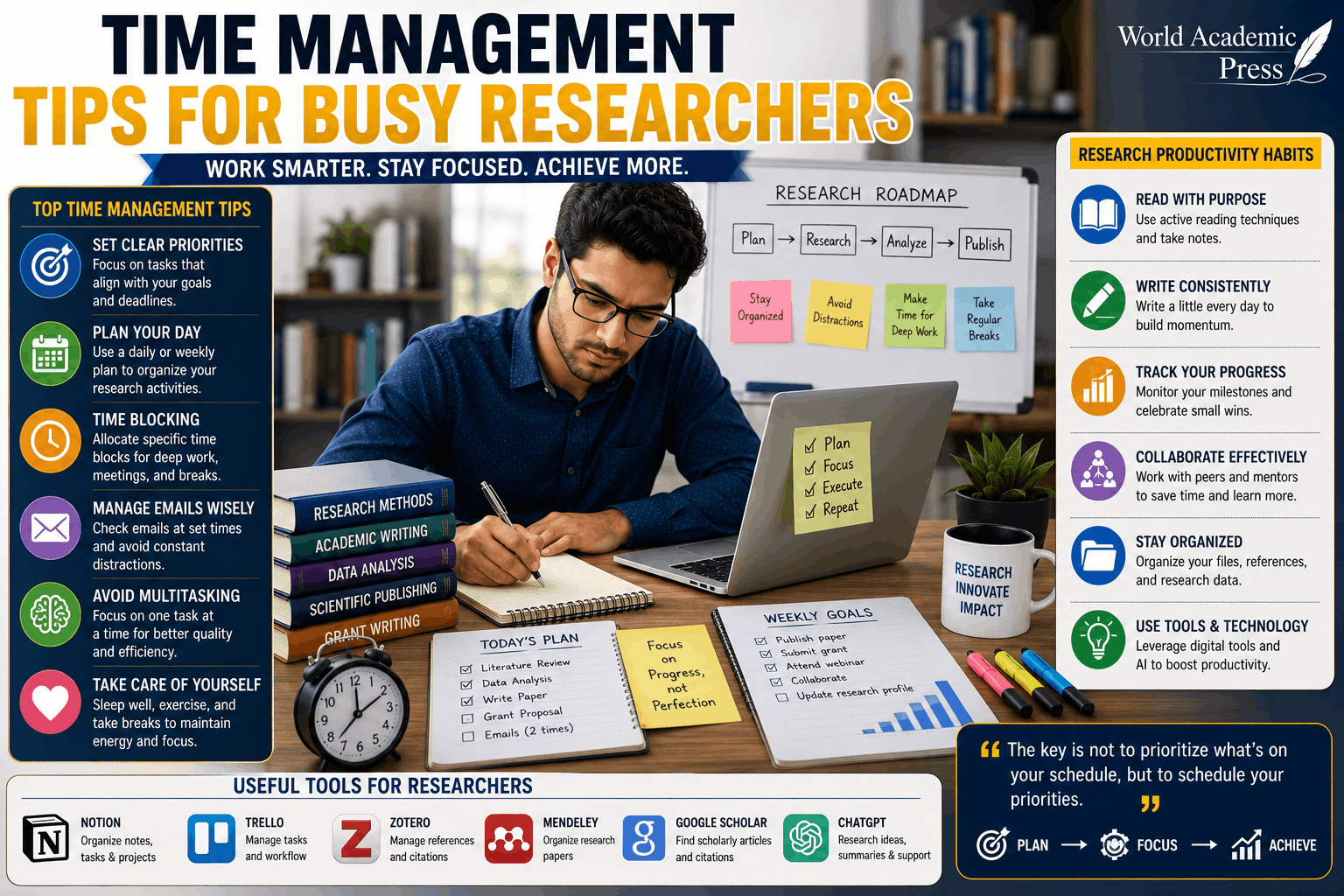
Time Management Tips for Busy Researchers: How to Stay Productive Without Burnout
Modern researchers juggle multiple responsibilities every day. Between conducting experiments, reviewing literature, writing papers, attending meetings, applying for grants, teaching classes, mentoring students, and participating in conferences, managing time effectively has become one of the most valuable skills in academia.
Unfortunately, many researchers find themselves overwhelmed by competing priorities and constant deadlines. Effective time management is not about working longer hours—it is about focusing on high-impact activities, reducing distractions, and creating systems that maximize productivity while protecting personal well-being.
Here are the most effective time management strategies for researchers in 2026.
Why Time Management Matters in Research
Strong time management helps researchers:
- Complete projects on schedule
- Publish more consistently
- Reduce stress and burnout
- Improve research quality
- Increase funding opportunities
- Maintain work-life balance
- Enhance career progression
Researchers who manage their time effectively often achieve greater academic impact without sacrificing personal well-being.
1. Start Each Week with a Research Plan
Successful researchers rarely begin their week without a clear roadmap.
At the beginning of each week:
- Review ongoing projects
- Identify critical deadlines
- Set priority tasks
- Schedule focused work sessions
- Allocate time for unexpected responsibilities
A weekly planning routine helps maintain control over demanding workloads.
2. Prioritize High-Impact Tasks
Not all activities contribute equally to academic success.
Focus first on tasks that have the greatest long-term value, including:
- Research writing
- Data analysis
- Grant applications
- Publication submissions
- Research collaborations
Administrative work and routine emails should not consume your most productive hours.
3. Use Time Blocking
Time blocking is one of the most effective productivity systems for researchers.
Dedicate specific blocks of time to:
- Literature reviews
- Writing manuscripts
- Statistical analysis
- Meetings
- Teaching preparation
- Grant proposal development
Protected focus periods reduce context switching and improve concentration.
4. Schedule Writing Sessions Daily
Academic writing is often postponed because it feels difficult or time-consuming.
Instead of waiting for large blocks of free time, schedule daily writing sessions—even if they are only 30 to 60 minutes long.
Daily writing can include:
- Research papers
- Dissertation chapters
- Book manuscripts
- Literature reviews
- Research notes
Consistent progress is often more effective than occasional intensive writing marathons.
Related Reading:
5. Limit Email Distractions
Email is one of the biggest productivity killers in academia.
Instead of checking emails continuously:
- Schedule designated email times
- Disable unnecessary notifications
- Use filters and folders
- Batch similar responses together
This approach helps preserve uninterrupted research time.
6. Apply the Two-Minute Rule
If a task takes less than two minutes to complete, handle it immediately.
Examples include:
- Quick approvals
- Simple replies
- Calendar updates
- Minor administrative tasks
This prevents small tasks from accumulating into larger distractions.
7. Use AI and Digital Tools Wisely
Technology can significantly improve research efficiency when used responsibly.
Useful applications include:
- Reference management
- Literature discovery
- Research organization
- Writing assistance
- Project tracking
- Data visualization
Researchers should focus on using technology to enhance productivity rather than create additional distractions.
Further Reading:
8. Break Large Projects into Smaller Milestones
Research projects often span months or years, making them feel overwhelming.
Divide major projects into manageable stages:
- Literature review
- Research design
- Data collection
- Analysis
- Writing
- Submission
Small milestones create momentum and make progress easier to measure.
9. Learn to Say No Strategically
Many researchers struggle because they accept too many commitments.
Before agreeing to a new task, ask:
- Does it align with my goals?
- Will it contribute to my research profile?
- Do I have sufficient time available?
Protecting your schedule is essential for long-term productivity.
10. Build Strong Research Collaborations
Effective collaboration can save time and improve research outcomes.
Collaborative research allows scholars to:
- Share expertise
- Divide workloads
- Access resources
- Expand research opportunities
- Increase publication output
Related Resource:
11. Allocate Time for Career Development
Busy researchers often focus exclusively on immediate projects while neglecting long-term career growth.
Schedule regular time for:
- Skill development
- Networking
- Conference participation
- Grant applications
- Academic profile building
Helpful Resources:
- Academic Career Planning for Early Researchers
- How Academic Authors Can Build a Strong Research Profile
12. Manage Research Funding Activities Efficiently
Grant applications require significant time and planning.
Researchers should create dedicated schedules for:
- Funding searches
- Proposal development
- Budget preparation
- Submission deadlines
Funding Guides:
- How to Apply for Research Grants Successfully
- Grant Proposal Writing Tips for Researchers
- Best Research Funding Opportunities for Scholars
Common Time Management Mistakes Researchers Make
- Multitasking constantly
- Failing to prioritize tasks
- Ignoring deadlines until the last minute
- Spending excessive time on email
- Overcommitting to projects
- Working without a structured schedule
- Neglecting personal well-being
Avoiding these habits can dramatically improve productivity and reduce stress.
Conclusion
Time is one of the most valuable resources available to researchers. Effective time management enables scholars to publish more, secure funding, build stronger collaborations, and maintain healthier work-life balance. By prioritizing high-impact activities, using structured planning systems, minimizing distractions, and investing in long-term career development, researchers can achieve greater academic success without burnout. In 2026, the most productive researchers will not necessarily be those who work the longest hours—but those who manage their time most strategically.