Academic Email Writing Guide: How to Write Professional Emails in Academia
Email remains one of the most important communication tools in academia. Researchers, PhD scholars, faculty members, students, journal editors, funding agencies, and academic institutions rely heavily on email for collaboration, publication inquiries, grant applications, conference participation, mentorship requests, and professional networking.
A well-written academic email can create opportunities, strengthen professional relationships, and improve communication efficiency. On the other hand, poorly structured emails may lead to misunderstandings, delayed responses, or missed opportunities. Understanding academic email etiquette is therefore an essential skill for researchers and students in 2026.
Why Academic Email Writing Matters
Academic emails often serve as the first impression between professionals.
Effective email communication helps:
- Build professional credibility
- Improve collaboration opportunities
- Facilitate research networking
- Support publication activities
- Strengthen academic relationships
- Increase response rates
Strong communication skills are becoming increasingly important in modern research environments.
Related Reading:
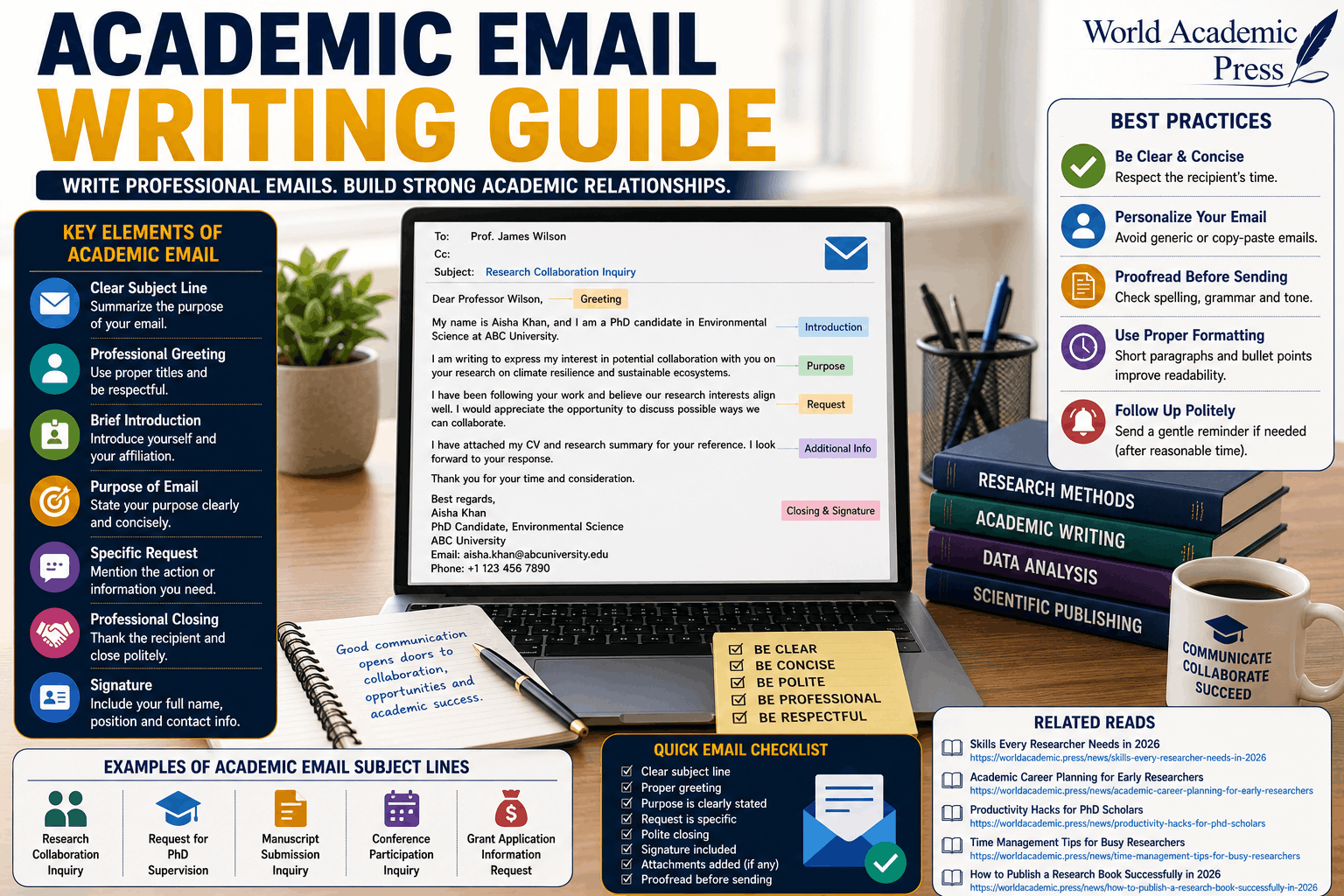
Key Components of an Academic Email
Most professional academic emails should contain the following elements:
- Clear subject line
- Professional greeting
- Brief introduction
- Purpose of the email
- Specific request or action
- Professional closing
- Contact information
Following a structured format improves readability and professionalism.
1. Write a Clear Subject Line
The subject line should immediately communicate the purpose of your email.
Good Examples:
- Research Collaboration Inquiry
- PhD Application Question
- Request for Meeting Regarding Dissertation Progress
- Manuscript Submission Follow-Up
- Conference Participation Inquiry
Avoid:
- Hello
- Urgent
- Important
- Question
- Please Reply
Specific subject lines increase the likelihood of timely responses.
2. Use a Professional Greeting
Always address recipients respectfully.
Examples:
- Dear Professor Smith,
- Dear Dr. Johnson,
- Dear Editorial Team,
- Dear Research Coordinator,
If you are uncertain about titles, use the most professional option available.
3. Introduce Yourself Briefly
When contacting someone for the first time, provide a concise introduction.
Include:
- Your name
- Your institution
- Your academic position
- The context of your communication
Example:
"My name is Sarah Ahmed, and I am a PhD candidate in Environmental Science at XYZ University."
4. State Your Purpose Clearly
Academic professionals often receive hundreds of emails every week.
Clearly explain:
- Why you are writing
- What information you need
- What action is required
Avoid lengthy introductions before explaining the purpose of the email.
5. Keep Emails Concise
Most academic emails should be direct and focused.
Best practices include:
- Use short paragraphs
- Avoid unnecessary details
- Stay focused on one primary objective
- Use bullet points when appropriate
Clear communication increases readability and response rates.
6. Be Professional and Polite
Maintain a respectful tone regardless of the situation.
Avoid:
- Emotional language
- Informal slang
- Excessive punctuation
- Demanding requests
Professionalism is particularly important when communicating with supervisors, journal editors, funding agencies, and senior researchers.
7. Use Professional Sign-Offs
End your email politely.
Examples:
- Kind regards,
- Best regards,
- Sincerely,
- Thank you for your time and consideration.
Include your:
- Full name
- Institution
- Department
- Contact information
Common Academic Email Scenarios
Contacting a Potential Supervisor
When reaching out to a prospective supervisor:
- Research their work beforehand
- Mention shared research interests
- Explain your academic background
- Keep the email concise
Requesting Research Collaboration
Focus on:
- Mutual research interests
- Potential project benefits
- Specific collaboration goals
Researchers interested in collaboration opportunities should also read:
Communicating with Journal Editors
Always:
- Be professional
- Reference manuscript details
- Remain respectful during follow-ups
- Avoid excessive reminders
Email Etiquette for Research Funding Applications
Funding agencies expect professional communication throughout the application process.
When discussing grants:
- Follow official instructions carefully
- Provide requested information clearly
- Meet communication deadlines
- Maintain professional correspondence records
Funding-related resources:
- How to Apply for Research Grants Successfully
- Grant Proposal Writing Tips for Researchers
- Best Research Funding Opportunities for Scholars
Building Academic Relationships Through Email
Professional emails can help researchers build long-term academic relationships.
Use email communication to:
- Maintain professional networks
- Connect with collaborators
- Seek mentorship
- Share research updates
- Develop academic partnerships
Additional Resources:
- Academic Career Planning for Early Researchers
- How Academic Authors Can Build a Strong Research Profile
Common Academic Email Mistakes
- Using vague subject lines
- Writing overly long emails
- Failing to proofread
- Using informal language
- Forgetting attachments
- Sending emails without a clear purpose
- Following up too aggressively
Avoiding these mistakes improves professionalism and communication effectiveness.
How Academic Communication Supports Research Success
Strong communication skills contribute directly to academic advancement. Researchers who communicate effectively are often more successful in securing collaborations, obtaining funding, publishing research, and building professional networks.
Researchers can further improve academic success by exploring:
- Productivity Hacks for PhD Scholars
- Time Management Tips for Busy Researchers
- How Academic Books Improve Research Visibility and Citations
- How to Publish a Research Book Successfully in 2026
Conclusion
Academic email writing is a critical professional skill that influences collaboration opportunities, research funding, publication success, networking, and career development. Clear subject lines, concise messaging, professional etiquette, and respectful communication help researchers build credibility and maintain productive academic relationships. As research becomes increasingly global and collaborative, mastering academic email communication will remain an essential component of scholarly success in 2026 and beyond.