How to Organize Research Files Efficiently: A Complete Guide for Researchers in 2026
Modern researchers generate enormous amounts of information. Literature reviews, datasets, survey responses, laboratory results, manuscripts, grant proposals, presentations, conference materials, and administrative documents can quickly accumulate into thousands of files. Without a proper organization system, valuable time is often wasted searching for documents, managing duplicates, or recovering lost information.
Efficient research file organization is not simply about keeping folders tidy. It directly impacts productivity, collaboration, publication success, and research quality. Researchers who implement structured file management systems can work more efficiently, reduce stress, and focus on producing meaningful scholarly contributions.
This guide explores practical strategies for organizing research files effectively in 2026.
Why Research File Organization Matters
A well-structured file management system helps researchers:
- Find information quickly
- Reduce duplicate files
- Improve collaboration efficiency
- Protect important research data
- Enhance productivity
- Support publication workflows
- Minimize data loss risks
Strong organizational habits save hundreds of hours over the course of a research project.
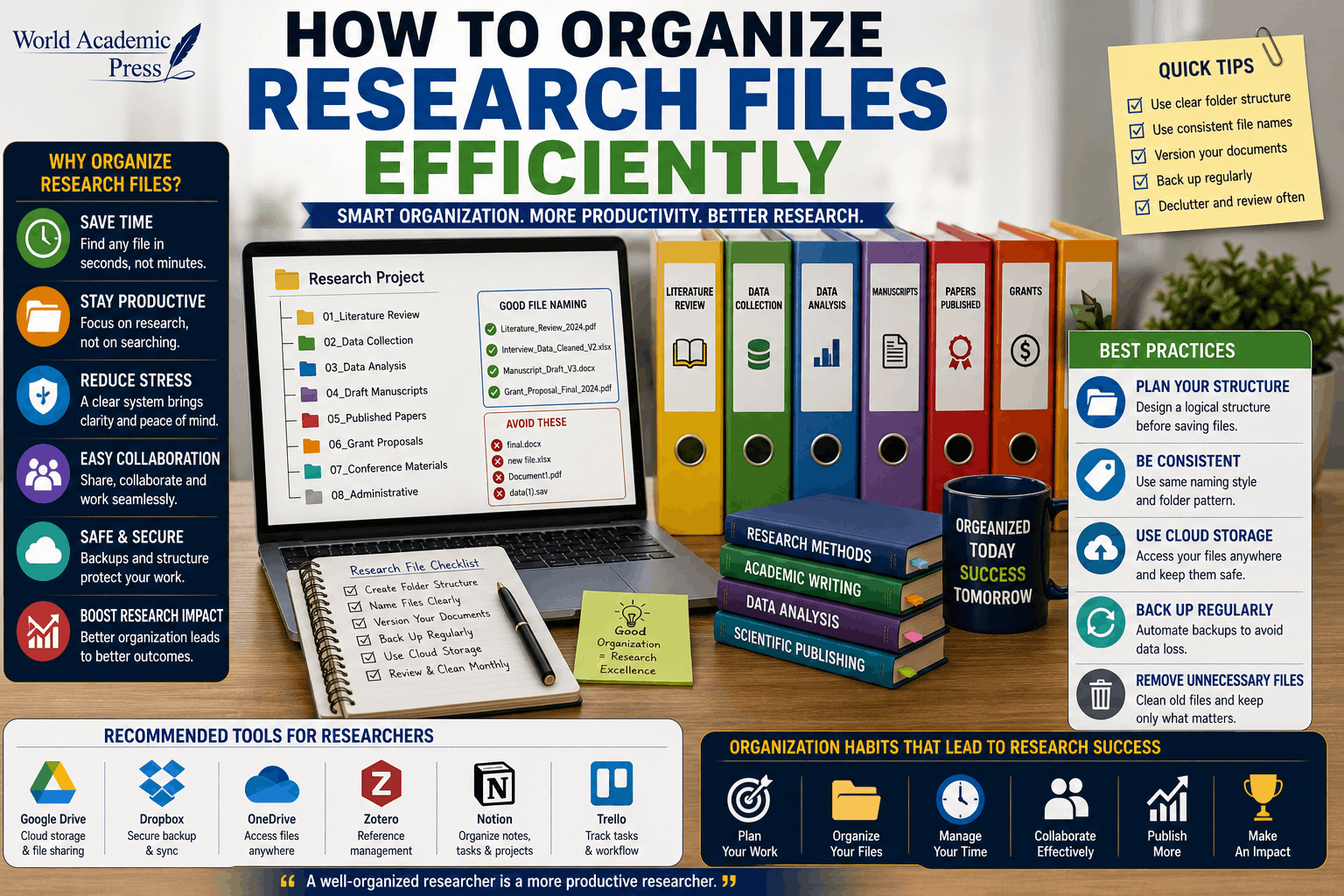
1. Create a Standardized Folder Structure
The foundation of effective research organization is a consistent folder hierarchy.
Consider using a structure similar to:
Research Project
│
├── Literature Review
├── Research Proposal
├── Ethics Documents
├── Data Collection
├── Data Analysis
├── Draft Manuscripts
├── Published Papers
├── Conference Materials
├── Grant Applications
└── Administrative Files
A standardized system ensures every file has a logical location.
2. Use Clear File Naming Conventions
File names should immediately communicate content and version information.
Examples:
- Literature_Review_Draft_2026-07-13.docx
- Survey_Data_Cleaned_V2.xlsx
- Grant_Proposal_Final_2026.pdf
- Conference_Presentation_Tokyo_2026.pptx
Avoid vague names such as:
- Final.docx
- New Version.pdf
- Research File.xlsx
Clear naming conventions eliminate confusion and improve searchability.
3. Separate Active and Archived Projects
Researchers often manage multiple projects simultaneously.
Create separate directories for:
- Active projects
- Completed projects
- Archived publications
- Historical datasets
This prevents clutter and keeps current work easily accessible.
4. Organize Literature Systematically
Academic literature can quickly become overwhelming.
Create dedicated folders for:
- Journal articles
- Review papers
- Books
- Conference proceedings
- Reference materials
Researchers should also maintain notes, summaries, and annotations alongside important references.
Related Reading:
5. Use Reference Management Software
Reference management tools significantly improve research organization.
Benefits include:
- Automated citation generation
- PDF storage
- Literature categorization
- Research note management
- Bibliography creation
These tools reduce administrative workload and improve writing efficiency.
6. Implement Version Control
Research documents often undergo multiple revisions.
Use version identifiers such as:
- V1
- V2
- Reviewed
- Final
- Submitted
- Published
Version control helps prevent accidental overwriting and confusion during collaborative projects.
7. Back Up Research Data Regularly
Data loss can have devastating consequences for research projects.
Researchers should maintain:
- Local backups
- Cloud storage backups
- External drive backups
- Institutional repository copies
A common recommendation is the 3-2-1 backup strategy:
- Three copies of data
- Two storage formats
- One off-site backup
Regular backups are essential for research continuity.
8. Use Cloud-Based Collaboration Tools
Research increasingly involves collaboration across institutions and countries.
Cloud storage systems can help:
- Share documents securely
- Track revisions
- Collaborate in real time
- Reduce duplicate files
- Improve accessibility
Researchers involved in collaborative projects should also explore:
9. Organize Grant and Funding Documents Separately
Funding applications generate large volumes of documentation.
Create dedicated folders for:
- Funding opportunities
- Grant proposals
- Budgets
- Supporting documents
- Submission records
- Funding reports
Helpful Resources:
- How to Apply for Research Grants Successfully
- Grant Proposal Writing Tips for Researchers
- Best Research Funding Opportunities for Scholars
10. Maintain Dedicated Writing and Publication Folders
Research writing benefits from a structured workflow.
Consider organizing publication files into:
- Research notes
- Outlines
- Draft manuscripts
- Peer review responses
- Accepted papers
- Published versions
Related Articles:
- How to Publish a Research Book Successfully in 2026
- Academic Book Publishing: A Complete Guide for Researchers and Faculty Members
11. Schedule Regular File Maintenance
Even the best organization systems require ongoing maintenance.
Schedule monthly reviews to:
- Remove duplicates
- Archive completed projects
- Update folder structures
- Verify backups
- Review naming consistency
Routine maintenance prevents long-term organizational problems.
12. Connect Organization with Productivity
Efficient file management directly improves research productivity.
Researchers who spend less time searching for information can devote more energy to analysis, writing, and innovation.
Further Reading:
- Productivity Hacks for PhD Scholars
- Time Management Tips for Busy Researchers
- Academic Email Writing Guide
- Academic Career Planning for Early Researchers
Common Research File Organization Mistakes
- Saving files on the desktop permanently
- Using inconsistent naming conventions
- Keeping duplicate copies everywhere
- Ignoring backups
- Mixing unrelated projects
- Failing to archive completed work
- Storing data without documentation
Avoiding these mistakes can dramatically improve research efficiency.
Conclusion
Effective research file organization is a fundamental skill for modern scholars. A structured folder system, consistent naming conventions, regular backups, version control, and organized literature management can significantly improve productivity and reduce stress. As research projects become increasingly complex and collaborative, maintaining a reliable file management system becomes essential for academic success. By implementing these best practices, researchers can spend less time searching for files and more time generating impactful research outcomes.