Medical & Health Sciences / Homoeopathy / Infant & Child Care
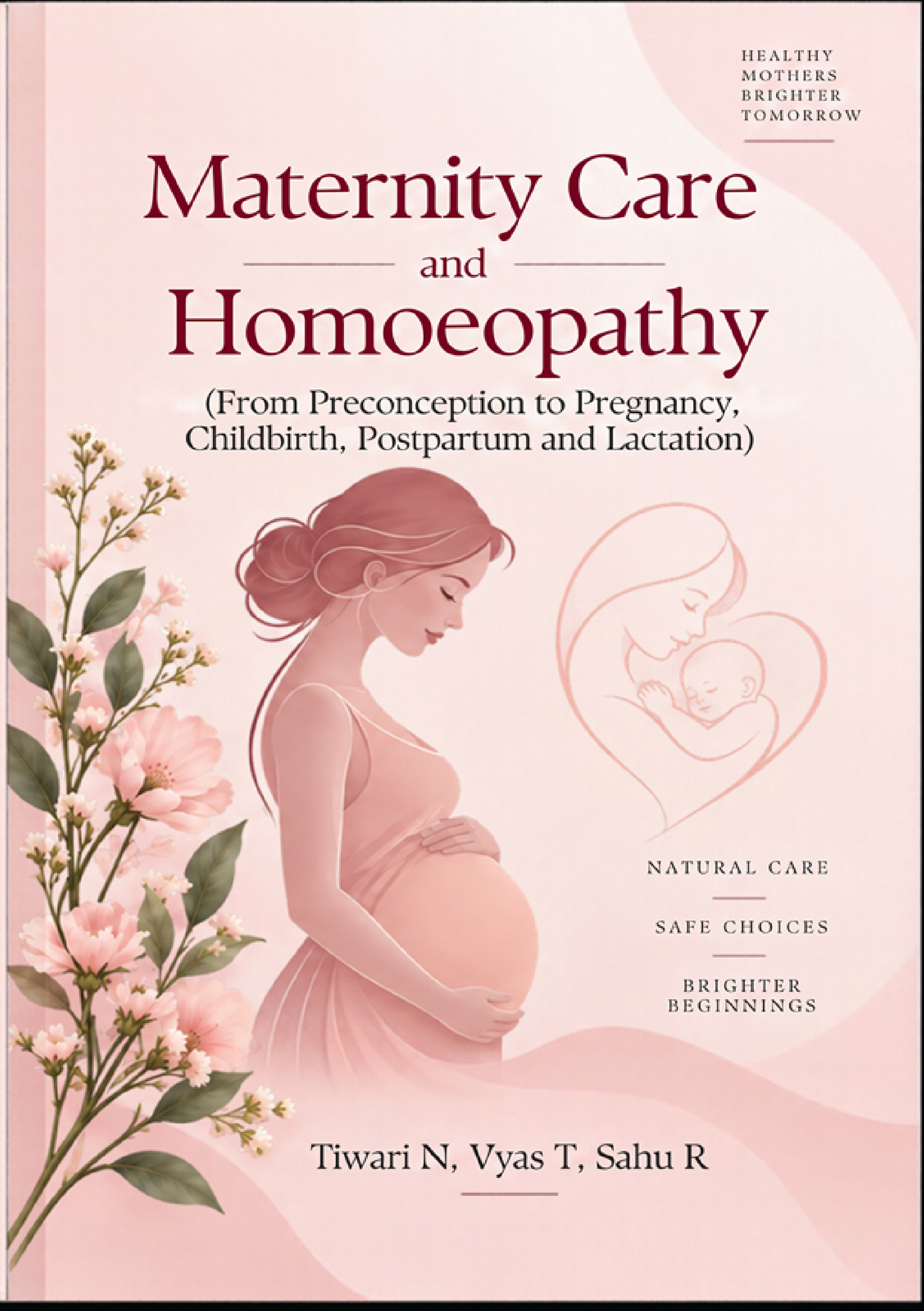
MATERNITY CARE and HOMOEOPATHY From Preconception to Pregnancy, Childbirth, Postpartum and Lactation
AUTHOR:
Dr. Neelam Tiwari, Dr. Tanay Vyas, Dr. Rutambhara Sahu
DATE ISSUED:
Sep 2026
READ:
SUBJECT:
Infant Care; Homoeopathy; Homeopathy; Newborn Care; Child Health; Infant Health; First Year of Life; Infant Growth; Infant Development; Infant Feeding; Breastfeeding; Preventive Care; Clinical Care; Paediatric Care; Child Development; Maternal and Child Health; Homoeopathic Medicine; Natural Care; Safe Beginnings; Healthy Growth; Healthcare Education
JEL CODE:
MED004000
LANGUAGE:
English
ISBN:
978-81-68301-74-0
₹160₹1,230
Digital Edition
Instant PDF Delivery
₹160
Print Edition
Global Shipping
₹860
Description
Maternity is a continuous clinical journey rather than a series of isolated events. The health of a woman before conception influences the earliest weeks of pregnancy. The changes of pregnancy shape the experience of labour, and the quality of care around childbirth affects recovery, emotional wellbeing, breastfeeding and the months that follow. This book has therefore been developed around the full course of maternal care, from preconception to lactation, so that each stage can be understood in relation to the next.
The purpose of Maternity Care and Homoeopathy is to present this journey in a form that is readable, clinically useful and relevant to everyday practice. It has been written primarily for homoeopathic physicians, postgraduate students, teachers and practitioners who meet women during the reproductive and maternal period. At the same time, the language has deliberately been kept clear enough for other health professionals and informed readers who wish to understand how homoeopathic case-taking and therapeutics may be considered within maternal care.
Pregnancy is physiological, but it is never a period in which diagnosis can be set aside. Common symptoms such as nausea, fatigue, backache, swelling, headache, urinary frequency or disturbed sleep may be part of normal adaptation, yet similar complaints may also accompany disease or an obstetric complication. Throughout the book, the clinical condition is therefore considered before the homoeopathic prescription. Maternal assessment, antenatal surveillance, laboratory investigation, ultrasound, vaccination, supplementation, medicines, referral and hospital treatment retain their proper place whenever they are required.
The homoeopathic sections follow the principle of individualisation. Medicines are discussed under the clinical conditions in which they are commonly considered, with short differentiating features drawn from established materia medica and repertorial traditions. The intention is not to create fixed disease-remedy formulas. It is to help the practitioner move from diagnosis to the characteristic symptom picture, select a small number of meaningful rubrics, compare the leading medicines and then confirm the final choice in materia medica.
An equally important aim has been to separate traditional therapeutic knowledge from research evidence. Historical use, repertorial inclusion, clinical experience, observational findings and controlled clinical trials do not carry the same evidentiary weight. Where published research is available, it is discussed in that context. Where the evidence is limited, the text says so. This distinction is particularly important in maternity care because maternal and fetal wellbeing require careful judgement, timely escalation and responsible communication with the wider healthcare team.
The chapters are arranged to follow the woman’s progress. The opening sections establish the clinical and homoeopathic foundations. Preconception care is followed by the three trimesters, common pregnancy complaints, important complications, labour and childbirth, postpartum recovery and lactation. The final part examines the available research and brings the clinical method together through case-taking, repertorisation, remedy differentiation and follow-up. This sequence is intended to allow the book to be read from beginning to end, while still making individual chapters useful for consultation-room reference.
We hope that this work supports a form of practice that is thoughtful, humane and clinically disciplined. The best maternal care respects the woman as an individual while remaining attentive to measurable clinical findings. Homoeopathy can contribute most responsibly when it is practised with careful observation, accurate documentation, appropriate evidence language and a clear understanding of the limits of complementary care.
Secure Payment
Protected Transactions
Instant Access
Digital PDF Ready
World-Wide
Global Shipping
Support
24/7 Author Assistance