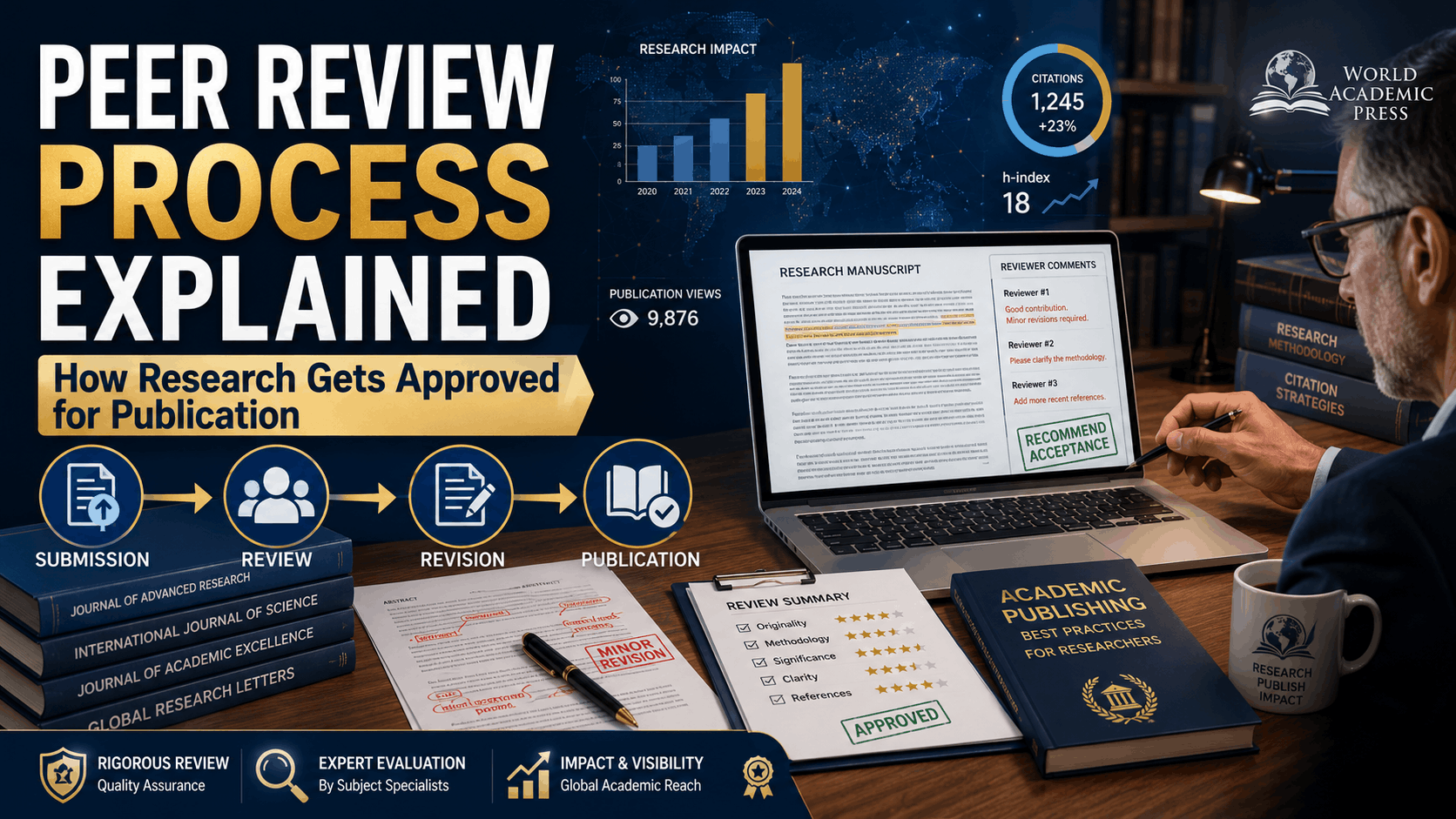
The peer review process is one of the most important quality-control mechanisms in academic publishing. Whether you are submitting a research paper, academic book, conference proceeding, or scholarly manuscript, peer review helps ensure that published work meets accepted academic standards.
For researchers and authors, understanding the peer review process can improve manuscript preparation, increase publication success rates, and strengthen the overall quality of scholarly work.
What Is Peer Review?
Peer review is a process where experts in a particular field evaluate a manuscript before publication.
The purpose is to assess:
- Research quality
- Originality
- Accuracy
- Methodology
- Relevance
- Scholarly contribution
The review helps publishers and editors determine whether a manuscript is suitable for publication.
Why Peer Review Matters
Academic publishing relies on trust and credibility.
Peer review helps:
- Maintain research quality
- Prevent inaccurate information
- Improve academic standards
- Strengthen scholarly credibility
- Ensure research integrity
Without peer review, academic literature would be far less reliable.
Types of Peer Review
Single-Blind Review
Reviewers know the author's identity, but authors do not know the reviewers.
Double-Blind Review
Neither the authors nor reviewers know each other's identities.
Open Peer Review
Both parties are aware of each other's identities, promoting transparency.
Different publishers use different review models depending on their policies.
How the Peer Review Process Works
Step 1: Manuscript Submission
The author submits the manuscript to the publisher or journal.
Step 2: Editorial Screening
Editors review the manuscript to ensure it meets submission requirements and publication scope.
Step 3: Reviewer Assignment
Subject experts are selected to evaluate the manuscript.
Step 4: Reviewer Evaluation
Reviewers examine:
- Research methods
- Data quality
- References
- Conclusions
- Academic contribution
Step 5: Feedback and Recommendations
Reviewers may recommend:
- Acceptance
- Minor revisions
- Major revisions
- Rejection
Step 6: Author Revisions
Authors address reviewer comments and improve the manuscript.
Step 7: Final Decision
Editors make the final publication decision based on reviewer reports.
Benefits of Peer Review for Authors
The peer review process helps authors:
- Improve manuscript quality
- Strengthen arguments
- Correct errors
- Increase credibility
- Enhance publication success
Even critical feedback often leads to stronger publications.
Common Reasons Manuscripts Require Revisions
Many manuscripts receive revision requests due to:
- Weak methodology
- Citation issues
- Insufficient literature review
- Unclear conclusions
- Formatting inconsistencies
Related Reading
Common Mistakes That Delay Book Publication
Understanding common mistakes can help authors prepare stronger submissions.
Peer Review and Academic Book Publishing
While peer review is often associated with journals, many academic books also undergo scholarly evaluation.
Books that undergo peer review often receive:
- Greater academic recognition
- Enhanced credibility
- Stronger institutional acceptance
- Increased scholarly value
Related Reading
Academic Book Publishing: A Complete Guide for Researchers and Faculty Members
This guide explains how academic books move through the publication process.
Choosing a Publisher with Strong Review Standards
Authors should work with publishers that maintain professional editorial and review practices.
Important factors include:
- Qualified reviewers
- Editorial transparency
- Ethical publishing standards
- Academic expertise
Researchers can explore academic publishing opportunities through:
Internal Link: https://worldacademic.press/
How World Academic Press Supports Scholarly Publishing
World Academic Press helps researchers and academic authors through:
- Editorial guidance
- Academic publishing consultation
- Publication support
- Professional publishing standards
- Scholarly publication services
Learn more:
Internal Link: https://worldacademic.press/about-us/
Related Articles
- Academic Book Publishing: A Complete Guide for Researchers and Faculty Members
- How to Choose the Right Academic Publisher for Your Book
Final Thoughts
The peer review process remains one of the foundations of academic publishing. By ensuring that research is carefully evaluated by experts, peer review helps maintain scholarly quality, credibility, and integrity.
For researchers seeking publication success, understanding and embracing the peer review process is essential. Well-reviewed publications not only improve academic reputation but also contribute more effectively to the advancement of knowledge.