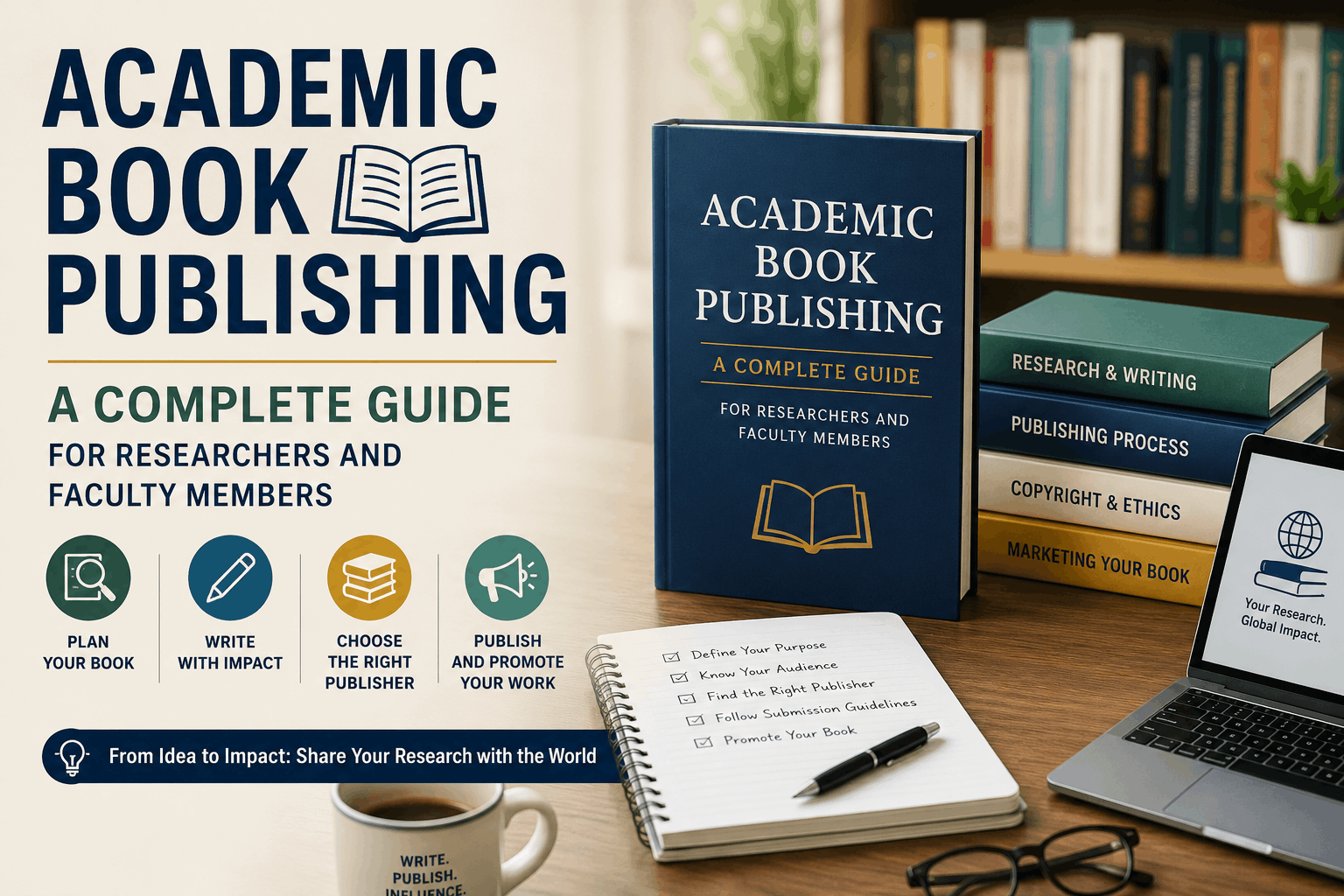
Academic book publishing remains one of the most respected ways for researchers, educators, and scholars to share knowledge with the global academic community. Unlike journal articles, academic books allow authors to explore subjects in greater depth, present comprehensive research findings, and establish themselves as authorities in their fields.
As academic publishing continues to evolve in 2026, understanding the academic book publishing process can help authors maximize their research impact, professional recognition, and career growth.
What Is Academic Book Publishing?
Academic book publishing refers to the process of producing scholarly books that contribute to research, education, and professional knowledge. These publications are typically written by researchers, professors, subject experts, and academic professionals.
Academic books may include:
- Research monographs
- Textbooks
- Edited volumes
- Conference proceedings
- Scholarly reference books
- Professional academic guides
Unlike general publishing, academic book publishing often involves editorial review, peer evaluation, and strict publishing standards.
Why Academic Book Publishing Matters
Publishing an academic book offers numerous benefits for researchers and faculty members.
Enhanced Academic Credibility
A published academic book demonstrates expertise and establishes authority within a specific discipline.
Increased Research Visibility
Books often reach wider audiences, including researchers, educators, students, libraries, and institutions.
Career Advancement Opportunities
Academic publications can support:
- Faculty promotions
- Tenure evaluations
- Leadership opportunities
- Research funding applications
Long-Term Scholarly Impact
Unlike many short-form publications, academic books can remain influential for years and continue contributing to future research.
The Academic Book Publishing Process
Understanding the publishing journey can help authors prepare effectively.
Step 1: Select a Strong Research Topic
Choose a topic that:
- Addresses a research gap
- Provides original insights
- Has academic relevance
- Appeals to your target audience
A focused and valuable topic improves publication potential.
Step 2: Prepare a High-Quality Manuscript
Your manuscript should include:
- Clear structure
- Proper citations
- Accurate references
- Strong methodology
- Well-supported arguments
A professionally prepared manuscript reduces editorial revisions and publication delays.
Step 3: Choose the Right Academic Publisher
Selecting an experienced publisher is critical.
When evaluating publishers, consider:
- Editorial support
- ISBN services
- Peer-review processes
- Publishing standards
- Distribution networks
Researchers can explore academic publishing opportunities through World Academic Press:
Step 4: Editorial Review and Publication
Once submitted, manuscripts typically undergo:
- Editorial assessment
- Peer review
- Copyediting
- Proofreading
- Typesetting
- Final publication
These stages ensure quality and academic integrity.
The Importance of ISBN in Academic Publishing
Every academic book should have an ISBN (International Standard Book Number).
ISBN benefits include:
- Global identification
- Library cataloging
- Improved discoverability
- Easier distribution
Related Reading
ISBN vs DOI: What Every Researcher Must Know
Understanding both identifiers helps authors improve publication visibility and accessibility.
Academic Publishing vs Self Publishing
Many first-time authors compare academic publishing with self-publishing.
Academic publishing offers:
- Greater credibility
- Peer review opportunities
- Professional editorial support
- Academic recognition
For a detailed comparison, read:
Self Publishing vs Academic Publishing: Which Is Better?
Choosing the right publishing route depends on your goals and audience.
Common Challenges in Academic Book Publishing
Authors frequently face challenges such as:
- Manuscript preparation
- Citation management
- Formatting issues
- Publication delays
- Publisher selection
Fortunately, these challenges can often be avoided with proper planning.
Related Reading
Common Mistakes That Delay Book Publication
This guide explains how authors can streamline the publication process.
Benefits of Academic Book Publishing for Faculty Members
Faculty members who publish academic books often experience:
- Greater professional recognition
- Improved research visibility
- Career advancement opportunities
- Enhanced teaching resources
- Stronger academic reputation
Related Reading
Benefits of Publishing Academic Books for Faculty Members
This article explores how book publishing supports long-term academic success.
How World Academic Press Supports Academic Authors
World Academic Press helps researchers and educators navigate the academic book publishing process through:
- Professional editorial guidance
- ISBN support
- Academic publishing expertise
- Publication consultation
- Quality publishing standards
Learn more about the organization:
https://worldacademic.press/about-us/
Related Articles
Continue learning about academic publishing:
- ISBN vs DOI: What Every Researcher Must Know
- Self Publishing vs Academic Publishing: Which Is Better?
Final Thoughts
Academic book publishing remains one of the most effective ways for researchers and faculty members to share knowledge, strengthen their academic reputation, and contribute to scholarly advancement. By understanding the publishing process, preparing high-quality manuscripts, and partnering with a reputable academic publisher, authors can maximize the impact of their work and achieve long-term academic success.
As the demand for quality research continues to grow, academic book publishing will remain an essential tool for knowledge dissemination and professional development.