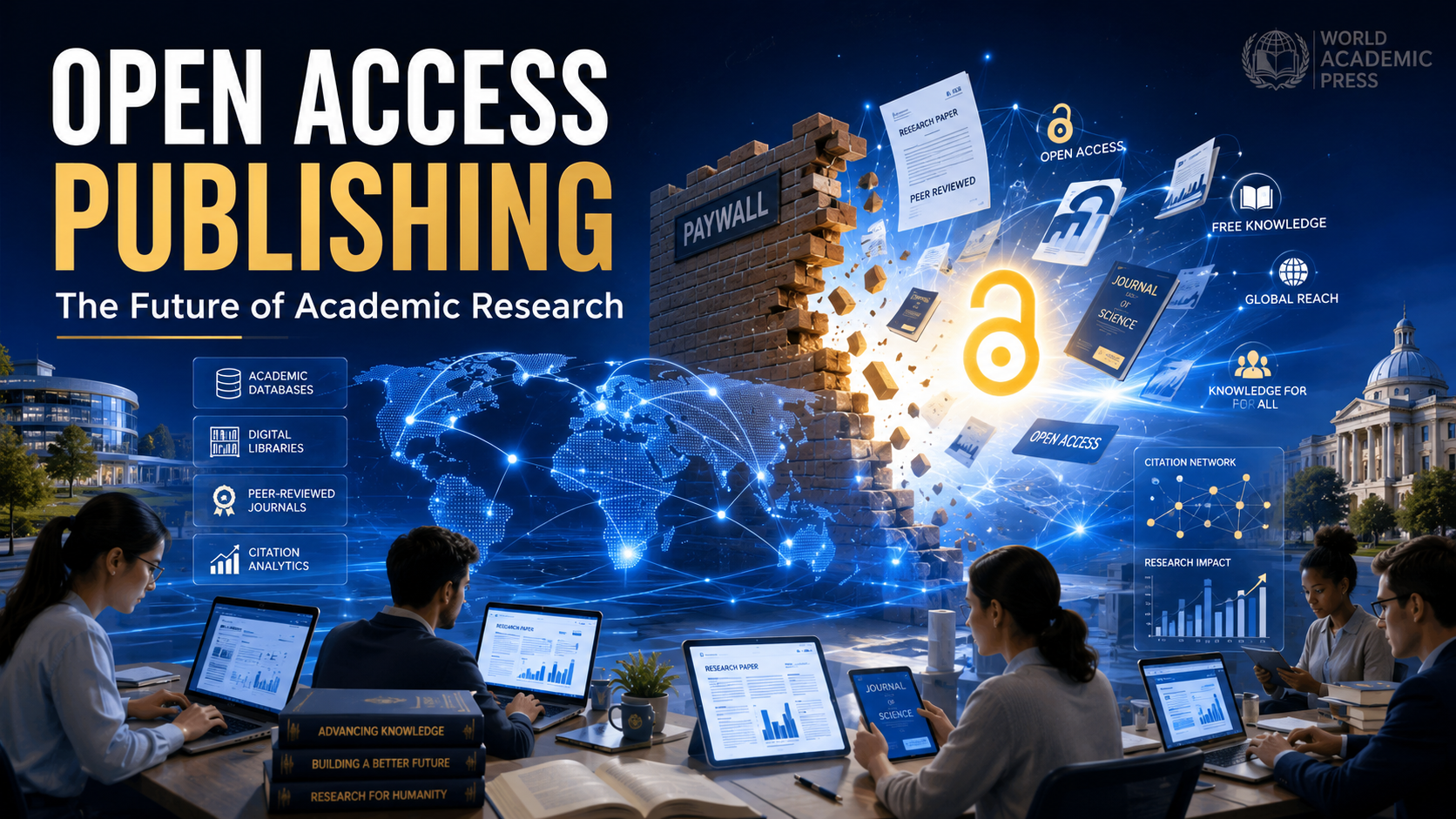
The academic publishing landscape has evolved significantly over the past decade, and one of the most important developments has been the growth of open access publishing. Researchers, institutions, funding organizations, and policymakers increasingly support open access because it makes scholarly knowledge more accessible to readers worldwide.
As research becomes more collaborative and global, open access publishing is playing a vital role in expanding the reach and impact of academic work. Understanding its benefits, challenges, and future potential can help researchers make informed publishing decisions.
What Is Open Access Publishing?
Open access publishing is a publishing model that allows readers to access scholarly content without subscription fees or paywalls.
Unlike traditional publishing models, open access publications are freely available online, enabling researchers, students, educators, and professionals to access information regardless of their institution or location.
Open access content may include:
- Research papers
- Academic books
- Conference proceedings
- Scholarly reports
- Educational resources
Why Open Access Publishing Is Growing
The demand for unrestricted access to research continues to increase.
Researchers want their work to:
- Reach larger audiences
- Increase citations
- Support global collaboration
- Improve knowledge sharing
- Contribute to societal development
Open access publishing helps achieve these goals by removing barriers to information access.
Key Benefits of Open Access Publishing
Increased Research Visibility
One of the biggest advantages of open access publishing is greater visibility.
Research that is freely accessible can reach:
- Researchers worldwide
- Universities
- Libraries
- Policymakers
- Industry professionals
Greater visibility often results in broader academic influence.
Higher Citation Potential
Studies frequently show that openly accessible research receives more attention than content restricted behind paywalls.
Benefits may include:
- More downloads
- Greater readership
- Increased citations
- Wider academic recognition
For authors seeking maximum impact, open access can be a valuable publishing strategy.
Improved Knowledge Sharing
Open access supports the free exchange of ideas across disciplines and geographic boundaries.
Researchers from developing regions can access important findings without facing expensive subscription costs.
This helps create a more inclusive global research environment.
Open Access and Academic Career Growth
Publishing openly accessible research can help scholars:
- Expand professional visibility
- Build academic reputation
- Attract collaborations
- Demonstrate research impact
For faculty members and researchers, visibility is often a key factor in long-term academic success.
Related Reading
Research Publication: Why It Matters for Academic Success
Understanding publication strategies can help researchers maximize their scholarly influence.
Challenges of Open Access Publishing
While open access offers many benefits, authors should also understand potential challenges.
Publication Fees
Some open access publishers charge Article Processing Charges (APCs) to cover publication costs.
Researchers should carefully review publishing agreements and fee structures before submission.
Publisher Selection
Not all publishers maintain the same quality standards.
Authors should evaluate:
- Editorial practices
- Peer review processes
- Publication ethics
- Academic reputation
Related Reading
How to Choose the Right Academic Publisher for Your Book
Selecting the right publisher remains critical regardless of the publishing model.
The Role of Peer Review in Open Access Publishing
Quality open access publishing still relies on rigorous peer review.
Peer review helps ensure:
- Research accuracy
- Methodological quality
- Scholarly credibility
- Ethical standards
Related Reading
Peer Review Process Explained: Why It Matters in Academic Publishing
Understanding peer review helps researchers identify trustworthy publishing opportunities.
Open Access Publishing and Academic Books
Open access is no longer limited to journal articles.
Many academic publishers now support open access books, allowing authors to share scholarly content with wider audiences.
Benefits include:
- Greater accessibility
- Increased educational use
- Expanded global reach
- Improved research dissemination
Related Reading
Academic Book Publishing: A Complete Guide for Researchers and Faculty Members
This guide explains how academic books contribute to research visibility and scholarly impact.
Future Trends in Open Access Publishing
The future of academic publishing is increasingly connected to open access models.
Emerging trends include:
- Institutional open access policies
- Increased funding support
- Open educational resources
- Digital-first publishing
- Global research collaboration
As technology continues to transform scholarly communication, open access publishing is expected to play an even larger role in knowledge dissemination.
How World Academic Press Supports Academic Authors
World Academic Press helps researchers, educators, and scholars navigate modern publishing opportunities through professional academic publishing support.
Services include:
- Academic publishing guidance
- Editorial assistance
- Publication consultation
- Scholarly publishing support
- Professional publishing standards
Learn more about the organization:
https://worldacademic.press/about-us/
Related Articles
- How to Choose the Right Academic Publisher for Your Book
- Peer Review Process Explained: Why It Matters in Academic Publishing
- Benefits of Publishing Academic Books for Faculty Members
Final Thoughts
Open Access Publishing has transformed how research is shared and accessed around the world. By removing barriers to knowledge, it helps researchers increase visibility, improve citation potential, and contribute to a more connected academic community.
As open access continues to expand, authors who understand its benefits and challenges will be better positioned to maximize the reach and impact of their scholarly work.