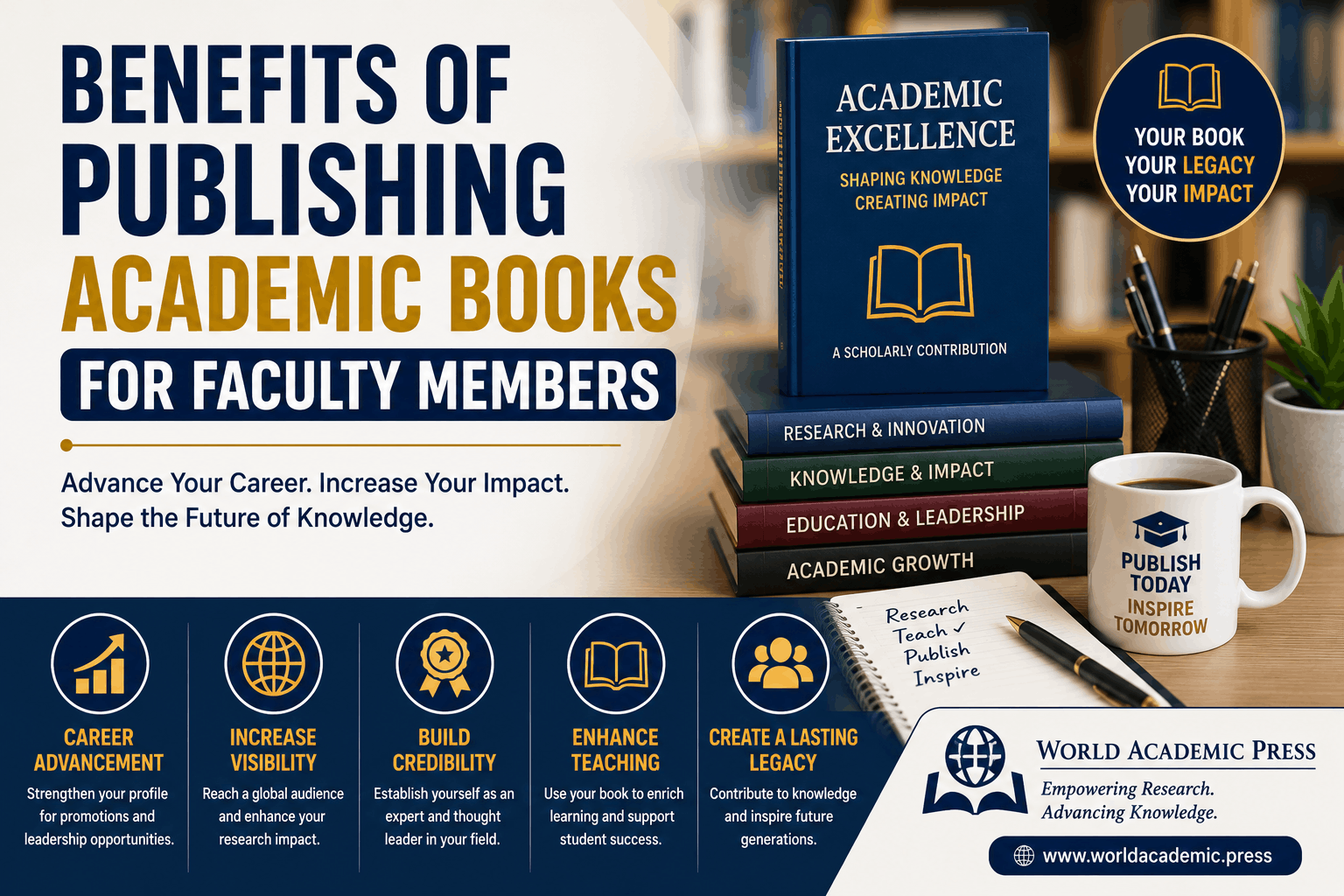
For faculty members, academic publishing is more than a professional achievement—it is an important contribution to education, research, and scholarly development. While journal articles remain valuable, academic books provide an opportunity to explore topics in greater depth and establish long-term academic influence.
In 2026, academic institutions increasingly recognize the value of scholarly books in faculty evaluations, promotions, and research impact assessments. As a result, academic book publishing continues to be a strategic investment for educators and researchers.
Strengthening Academic Reputation
One of the most significant benefits of publishing academic books is the enhancement of professional credibility.
A published book demonstrates:
- Subject matter expertise
- Research capability
- Scholarly contribution
- Academic leadership
- Commitment to knowledge advancement
Faculty members who publish books are often viewed as authorities within their disciplines.
Supporting Career Advancement
Many universities consider scholarly publications during promotion and tenure evaluations.
Publishing academic books can contribute to:
- Academic promotions
- Leadership opportunities
- Research recognition
- Professional awards
- Institutional reputation
A strong publication record often distinguishes faculty members in competitive academic environments.
Increasing Research Visibility
Research findings published in academic books can reach audiences beyond traditional journal readers.
Books help faculty members:
- Share comprehensive research
- Reach international audiences
- Increase citation opportunities
- Expand academic influence
- Improve research accessibility
Greater visibility often leads to new research collaborations and academic opportunities.
Creating a Lasting Academic Legacy
Unlike many short-form publications, academic books often remain valuable references for years.
A well-written scholarly book can:
- Influence future research
- Support classroom learning
- Guide policymakers
- Serve as a foundational reference
- Impact multiple generations of students
Publishing a book allows faculty members to leave a lasting contribution to their field.
Enhancing Teaching Effectiveness
Faculty-authored books can directly support teaching activities.
Benefits include:
- Customized course materials
- Improved classroom resources
- Better curriculum alignment
- Enhanced student learning experiences
Many educators use their published works to supplement lectures and academic programs.
Building Professional Recognition
Academic books can increase visibility within scholarly communities.
Published authors may receive invitations for:
- Conferences
- Academic panels
- Research collaborations
- Guest lectures
- Editorial positions
These opportunities further strengthen professional networks and academic influence.
Contributing to Institutional Growth
Faculty publications not only benefit individual authors but also enhance the reputation of their institutions.
Universities often value faculty book publications because they:
- Improve institutional rankings
- Demonstrate research excellence
- Attract students and researchers
- Strengthen academic credibility
A strong publishing culture benefits both faculty members and academic institutions.
Academic Publishing vs Other Forms of Publication
While blogs, reports, and articles have their place, academic books offer several unique advantages:
- Greater depth of analysis
- Long-term academic value
- Higher scholarly recognition
- Comprehensive coverage of research topics
For faculty members seeking meaningful academic impact, book publishing remains one of the most respected forms of scholarly communication.
Choosing the Right Academic Publisher
Selecting an experienced academic publisher is critical for publication success.
Faculty members should look for publishers that provide:
- Editorial support
- ISBN services
- Professional production
- Academic publishing expertise
- Global distribution opportunities
Researchers and educators can explore professional academic publishing services through World Academic Press: https://worldacademic.press/
How World Academic Press Supports Faculty Authors
World Academic Press works with researchers, educators, and scholars to support high-quality academic publishing.
Authors benefit from:
- Academic publishing guidance
- Editorial assistance
- ISBN allocation support
- Professional publishing standards
- Research-focused publication services
Learn more about the organization:
https://worldacademic.press/about-us/
Related Reading
For authors planning their publishing journey, explore these guides:
- How to Publish an Academic Book in India in 2026
- ISBN vs DOI: What Every Researcher Must Know
- Self Publishing vs Academic Publishing: Which Is Better?
Final Thoughts
Publishing academic books offers numerous benefits for faculty members, from career advancement and research visibility to long-term scholarly impact. In an increasingly competitive academic landscape, a published book remains one of the strongest indicators of expertise and intellectual contribution.
Faculty members who invest in academic book publishing not only enhance their professional profiles but also contribute valuable knowledge that can influence students, researchers, and educators for years to come.