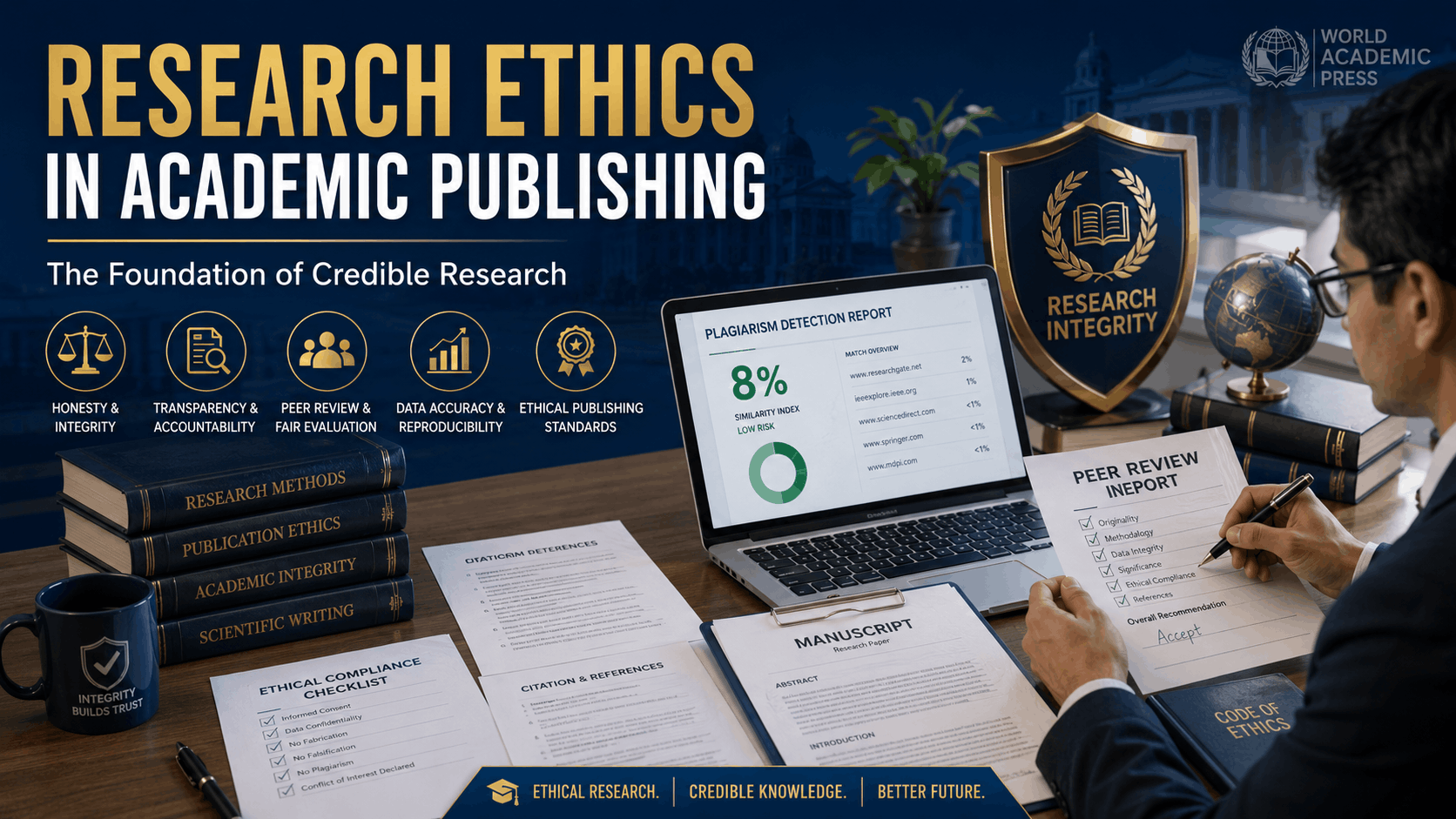
Research ethics form the foundation of trustworthy academic publishing. Whether publishing a research paper, academic book, conference proceeding, or scholarly article, researchers have a responsibility to ensure that their work meets ethical standards and contributes honestly to the advancement of knowledge.
In today's increasingly interconnected academic environment, maintaining strong research ethics is essential for preserving credibility, protecting participants, and ensuring the integrity of scholarly communication.
What Are Research Ethics?
Research ethics refer to the principles and standards that guide responsible research conduct and academic publishing.
These principles help researchers:
- Maintain honesty in reporting findings
- Protect research participants
- Avoid misconduct
- Ensure transparency
- Promote accountability
- Preserve scholarly integrity
Ethical research strengthens confidence in academic publications and supports the reliability of scientific knowledge.
Why Research Ethics Matter
Ethical publishing is critical because academic research influences:
- Education
- Public policy
- Healthcare
- Technology
- Business decisions
- Future research
When ethical standards are ignored, inaccurate or misleading information can affect entire academic disciplines.
Researchers who follow ethical practices help maintain trust within the scholarly community.
Core Principles of Research Ethics
Honesty
Researchers must present findings truthfully without fabrication, falsification, or selective reporting.
Transparency
Methods, data, and research processes should be clearly documented whenever possible.
Accountability
Authors are responsible for the accuracy and reliability of their published work.
Respect for Participants
Research involving human participants should prioritize informed consent, privacy, and confidentiality.
Fair Attribution
All sources, collaborators, and contributors must receive proper acknowledgment.
Common Ethical Issues in Academic Publishing
Plagiarism
Plagiarism occurs when authors use another person's ideas, words, or work without proper citation.
Examples include:
- Copying text directly
- Improper paraphrasing
- Using unpublished work without permission
Plagiarism can damage reputations and result in publication rejection.
Data Fabrication
Fabrication involves creating data that never existed.
This is considered one of the most serious forms of research misconduct.
Data Falsification
Falsification occurs when researchers manipulate data or results to support desired conclusions.
Duplicate Publication
Publishing the same research in multiple places without disclosure is generally considered unethical.
Improper Authorship
Authorship should accurately reflect contributions made to the research.
All contributors should receive appropriate recognition.
Research Ethics and Peer Review
The peer review process plays an important role in maintaining publication ethics.
Reviewers help identify:
- Methodological concerns
- Citation problems
- Ethical issues
- Research inconsistencies
Related Reading
Peer Review Process Explained: Why It Matters in Academic Publishing
Understanding peer review helps authors appreciate the role of quality control in scholarly publishing.
Ethical Considerations for Academic Books
Authors publishing academic books should ensure:
- Original content
- Accurate citations
- Proper permissions
- Transparent research methods
- Responsible data usage
Related Reading
Academic Book Publishing: A Complete Guide for Researchers and Faculty Members
This guide explains how academic books contribute to scholarly communication while maintaining publication standards.
The Importance of Citation and Attribution
Proper citation supports both ethical publishing and academic credibility.
Benefits include:
- Recognizing previous research
- Avoiding plagiarism
- Strengthening scholarly discussions
- Supporting research transparency
Researchers should consistently follow accepted citation styles and reference standards.
How Ethical Publishing Supports Academic Careers
Researchers who follow ethical standards often benefit from:
- Stronger professional reputations
- Increased trust from peers
- Greater publication opportunities
- Improved research credibility
- Long-term academic success
Ethics are not simply publication requirements—they are essential components of scholarly excellence.
Related Reading
Research Publication: Why It Matters for Academic Success
Understanding how ethical publishing contributes to academic growth can help researchers build lasting scholarly influence.
Choosing an Ethical Academic Publisher
Authors should work with publishers that prioritize:
- Publication integrity
- Editorial transparency
- Peer review standards
- Ethical publishing policies
- Author support
Researchers can explore professional academic publishing support through:
How World Academic Press Supports Ethical Publishing
World Academic Press is committed to supporting researchers, educators, and scholars through professional academic publishing standards.
Authors benefit from:
- Editorial guidance
- Publication support
- Ethical publishing practices
- Academic publishing consultation
- Professional scholarly services
Learn more:
https://worldacademic.press/about-us/
Related Articles
- Open Access Publishing: Benefits, Challenges, and Future Trends
- Peer Review Process Explained: Why It Matters in Academic Publishing
Final Thoughts
Research Ethics are fundamental to the credibility, reliability, and impact of academic publishing. By following ethical principles, researchers contribute to trustworthy scholarship, strengthen their professional reputations, and help advance knowledge responsibly.
As academic publishing continues to evolve, maintaining ethical standards will remain essential for authors seeking meaningful and lasting scholarly impact.