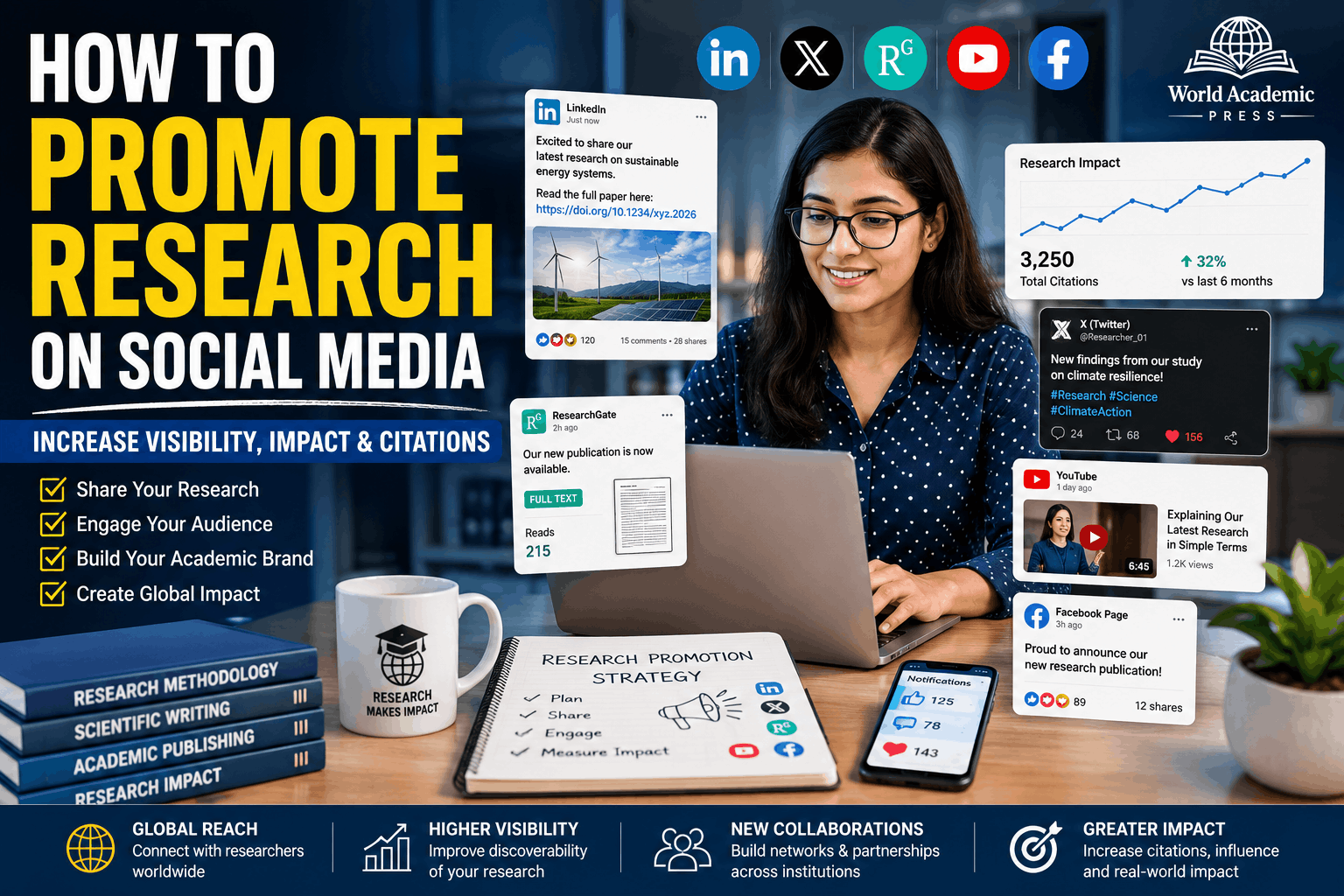
How to Promote Research on Social Media: A Complete Guide for Researchers in 2026
Publishing a research paper is only the beginning of the scholarly communication process. Even outstanding research can remain unnoticed if it is not actively shared with the right audience. In 2026, social media has become an essential tool for researchers to increase visibility, engage with the global academic community, and encourage responsible dissemination of scientific knowledge.
When used professionally and ethically, platforms such as LinkedIn, X (formerly Twitter), ResearchGate, YouTube, and institutional channels can help researchers reach fellow academics, policymakers, industry experts, journalists, and students. Effective promotion not only improves discoverability but can also contribute to greater readership, collaborations, and citation opportunities.
Why Social Media Matters for Researchers
Academic communication is no longer limited to journals and conferences. Social platforms allow researchers to share findings quickly and interact directly with interested audiences.
- Increase research visibility
- Reach international audiences
- Build professional credibility
- Encourage research discussions
- Attract collaborators
- Support citation growth
- Expand professional networks
Research visibility is closely linked to long-term scholarly impact. Read more in Academic Research Visibility: Why It Matters for Researchers.
Choose the Right Social Media Platforms
Ideal for sharing publications, conference presentations, project milestones, funding announcements, and professional achievements.
X (Twitter)
Popular among researchers for discussing new publications, conference updates, and emerging research trends using relevant academic hashtags.
ResearchGate
Designed specifically for researchers to share publications, answer questions, and connect with scholars in similar fields.
YouTube
Useful for publishing research explainers, laboratory demonstrations, webinar recordings, and conference presentations.
Institutional Websites
University news pages and departmental websites often receive strong search visibility and add credibility to research announcements.
Create Reader-Friendly Research Content
Avoid simply posting the paper title and link. Instead, explain why the research matters.
Good posts usually include:
- A simple research summary
- The main findings
- Real-world applications
- A visual abstract or infographic
- A direct link to the publication
Researchers who simplify complex ideas often receive higher engagement.
Use High-Quality Visuals
Visual content consistently performs better than text-only posts.
Consider sharing:
- Infographics
- Research workflow diagrams
- Publication cover images
- Conference photographs
- Charts and graphs
- Short educational videos
Optimize Every Post
Each social media update should include:
- Relevant keywords
- Clear language
- Appropriate hashtags
- Research DOI (when available)
- Institutional tags
- Collaborator mentions
Persistent identifiers improve discoverability and citation tracking. Learn more in Why DOI Matters: The Foundation of Research Discoverability and Citation Tracking.
Maintain a Professional Research Profile
Your social media profile should reflect your academic identity.
Include:
- Professional photograph
- Institutional affiliation
- Research interests
- Google Scholar profile
- ORCID ID
- Research website
A complete research profile improves credibility and helps collaborators find your work. Related guide: How Academic Authors Can Build a Strong Research Profile.
Share Research Consistently
Do not promote a publication only once.
Instead, create multiple posts highlighting:
- Research findings
- Interesting statistics
- Methodology insights
- Practical applications
- Conference presentations
- Publication milestones
Consistent sharing keeps research visible long after publication.
Increase Discoverability Through Academic SEO
Research promotion works best when combined with discoverability strategies.
Use descriptive titles, relevant keywords, structured metadata, and internal links where appropriate.
Further reading:
These practices improve the likelihood that both search engines and researchers will discover your work.
Engage With the Academic Community
Social media should be used for meaningful engagement rather than one-way promotion.
- Comment on relevant research
- Share colleagues' publications
- Participate in webinars
- Join academic discussions
- Answer research-related questions
Constructive engagement strengthens professional relationships and expands your academic network.
Track Your Research Impact
Monitor the effectiveness of your promotion efforts using metrics such as:
- Article downloads
- Citation growth
- Profile views
- Shares and reposts
- ResearchGate reads
- Altmetric attention
Researchers interested in improving citation performance should also read How Researchers Can Increase Citation Counts in 2026.
Build a Strong Long-Term Research Portfolio
Every publication, presentation, dataset, and outreach activity contributes to your professional reputation.
Maintaining an organized research portfolio helps demonstrate your academic achievements and supports funding applications, promotions, and collaborations.
Related resource:
A comprehensive portfolio makes it easier for institutions and collaborators to evaluate your expertise.
Common Mistakes to Avoid
- Posting without context
- Ignoring visual content
- Using excessive hashtags
- Sharing only once
- Neglecting researcher profiles
- Not responding to comments or questions
- Promoting without linking to the original publication
Conclusion
Social media has become a powerful extension of scholarly communication. Researchers who strategically share their work, engage with academic communities, and optimize posts for discoverability can significantly increase the reach and influence of their publications. Combined with strong research quality, ethical promotion, and professional networking, social media can support higher visibility, stronger collaborations, and sustainable academic impact throughout a research career.