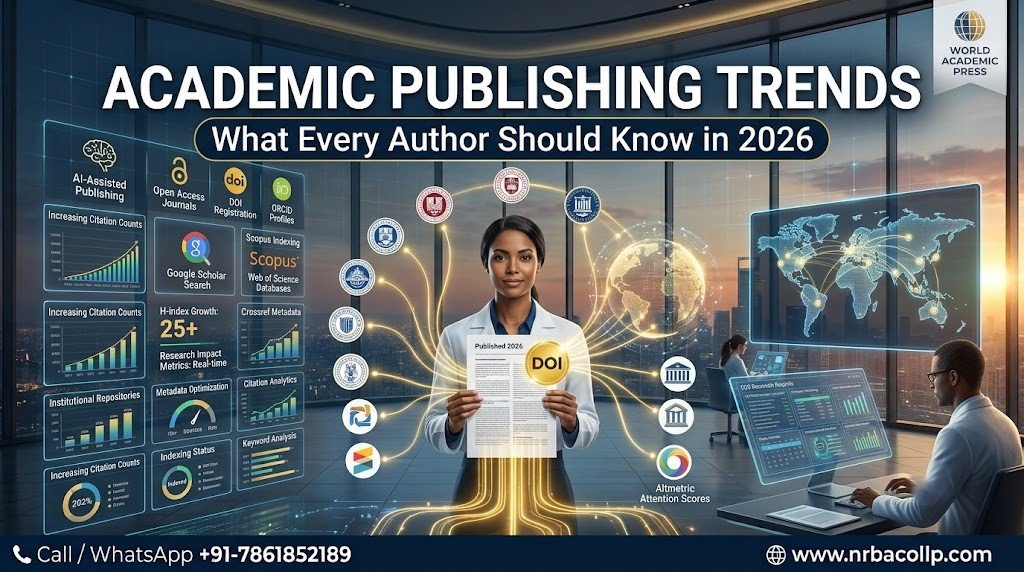
Academic Publishing Trends Every Author Should Know (2026)
The academic publishing landscape is evolving faster than ever before. New technologies, changing funding policies, artificial intelligence, Open Access initiatives, and digital research platforms are transforming how scholarly work is published, discovered, evaluated, and cited. Authors who understand these developments are better positioned to maximize the reach and impact of their research.
In 2026, academic publishing is no longer just about getting a manuscript accepted by a journal. Success depends on discoverability, research integrity, metadata optimization, digital identifiers, ethical publishing practices, and global accessibility. Whether you are publishing your first research paper or managing an extensive publication portfolio, keeping pace with current trends can significantly improve your academic visibility and career growth.
Why Academic Publishing Is Changing
The rapid growth of digital technologies and international collaboration has reshaped scholarly communication. Researchers now expect faster publication timelines, improved transparency, wider accessibility, and stronger research impact.
Publishers are also adopting advanced technologies that improve peer review, indexing, citation tracking, plagiarism detection, and metadata management.
1. Open Access Continues to Expand
One of the biggest trends in academic publishing is the continued growth of Open Access publishing. Governments, funding agencies, and universities increasingly encourage researchers to make their work freely available to readers worldwide.
Both Gold and Green Open Access models are becoming more common, allowing researchers to improve accessibility while increasing readership and potential citations.
Read our related guide: Open Access Publishing: Benefits, Challenges, and Future Trends.
2. Research Discoverability Is Becoming a Priority
Publishing quality research alone is no longer enough. Authors must ensure their work is discoverable through academic databases, search engines, repositories, and citation indexes.
Publishers increasingly optimize metadata, keywords, structured abstracts, and digital identifiers to improve search visibility.
Related reading: What Makes Research Discoverable Online?
3. Artificial Intelligence Is Supporting Publishing
Artificial intelligence is becoming an important tool throughout the publishing process. AI assists researchers with language improvement, manuscript formatting, reference management, plagiarism detection, literature reviews, and journal recommendations.
Publishers also use AI to improve editorial workflows, identify ethical concerns, and streamline peer review.
Although AI enhances productivity, human expertise remains essential for research quality, interpretation, and ethical decision-making.
4. Persistent Digital Identifiers Are Essential
Persistent identifiers such as DOI, ORCID, and ISBN have become fundamental components of scholarly publishing.
- DOIs improve citation tracking and long-term accessibility.
- ORCID uniquely identifies researchers.
- ISBNs support academic book publishing.
Learn more: Why DOI Matters: The Foundation of Research Discoverability and Citation Tracking.
5. Academic SEO Is Driving Research Visibility
Search Engine Optimization is no longer limited to commercial websites. Academic SEO helps research appear in Google Search, Google Scholar, and scholarly databases.
Researchers are increasingly optimizing:
- Titles
- Abstracts
- Keywords
- Metadata
- Internal links
- Research landing pages
SEO-friendly publishing improves long-term discoverability and readership.
6. Research Metrics Are Becoming More Comprehensive
Traditional citation counts remain important, but publishers and institutions increasingly evaluate research using multiple indicators.
These include:
- Citation counts
- h-index
- Downloads
- Altmetrics
- Social engagement
- Policy citations
- Global readership
Researchers should monitor multiple metrics rather than relying solely on citation numbers.
7. Ethical Publishing Standards Are Increasing
Publishers continue strengthening policies related to plagiarism, duplicate publication, AI-generated content, conflicts of interest, image manipulation, and research transparency.
Maintaining research integrity has become more important than ever.
Related guide: Research Ethics Every Scholar Must Follow 2026.
8. Global Research Collaboration Is Growing
Cross-border collaboration is becoming increasingly common. Digital communication tools allow researchers from different countries to work together on multidisciplinary projects.
International collaborations often lead to:
- Higher-quality research
- Greater visibility
- Broader readership
- Increased citation potential
9. Digital Publishing Is Replacing Print-Only Models
Academic publishing continues moving toward digital-first workflows. Many publishers now release online versions before print publication, allowing faster dissemination and citation.
Digital publishing also supports multimedia content, interactive datasets, supplementary files, and enhanced reader experiences.
Related article: Print Book vs eBook Publishing for Researchers.
10. Researchers Are Becoming Active Promoters
Publishing is no longer the final step. Authors actively promote their research through professional websites, institutional repositories, webinars, academic networking platforms, LinkedIn, conferences, podcasts, and research blogs.
Effective promotion significantly improves visibility and citation opportunities.
Read: How Researchers Can Increase Citation Counts in 2026.
Best Practices for Authors in 2026
- Choose reputable indexed journals.
- Optimize titles and abstracts.
- Use relevant keywords.
- Obtain DOI, ORCID, and ISBN where appropriate.
- Publish ethically.
- Consider Open Access options.
- Promote research consistently.
- Maintain researcher profiles.
- Track research metrics.
- Stay updated with publishing technologies.
Conclusion
Academic publishing continues evolving rapidly, creating new opportunities for researchers to increase visibility, improve accessibility, and strengthen scholarly impact. Authors who embrace Open Access, digital publishing, academic SEO, ethical publishing practices, AI-assisted workflows, and research promotion will be better prepared for the future of scholarly communication.
Publishing success in 2026 extends beyond journal acceptance—it depends on ensuring research reaches the widest possible audience and contributes meaningfully to global knowledge.
For more expert resources on academic publishing, research visibility, citation strategies, and scholarly communication, visit World Academic Press.
Related Articles
- Open Access Publishing: Benefits, Challenges, and Future Trends
- How Researchers Can Increase Citation Counts in 2026
- Why DOI Matters: The Foundation of Research Discoverability and Citation Tracking
- Best Citation Styles Explained in 2026
- Print Book vs eBook Publishing for Researchers
- What Makes Research Discoverable Online?
- World Academic Press