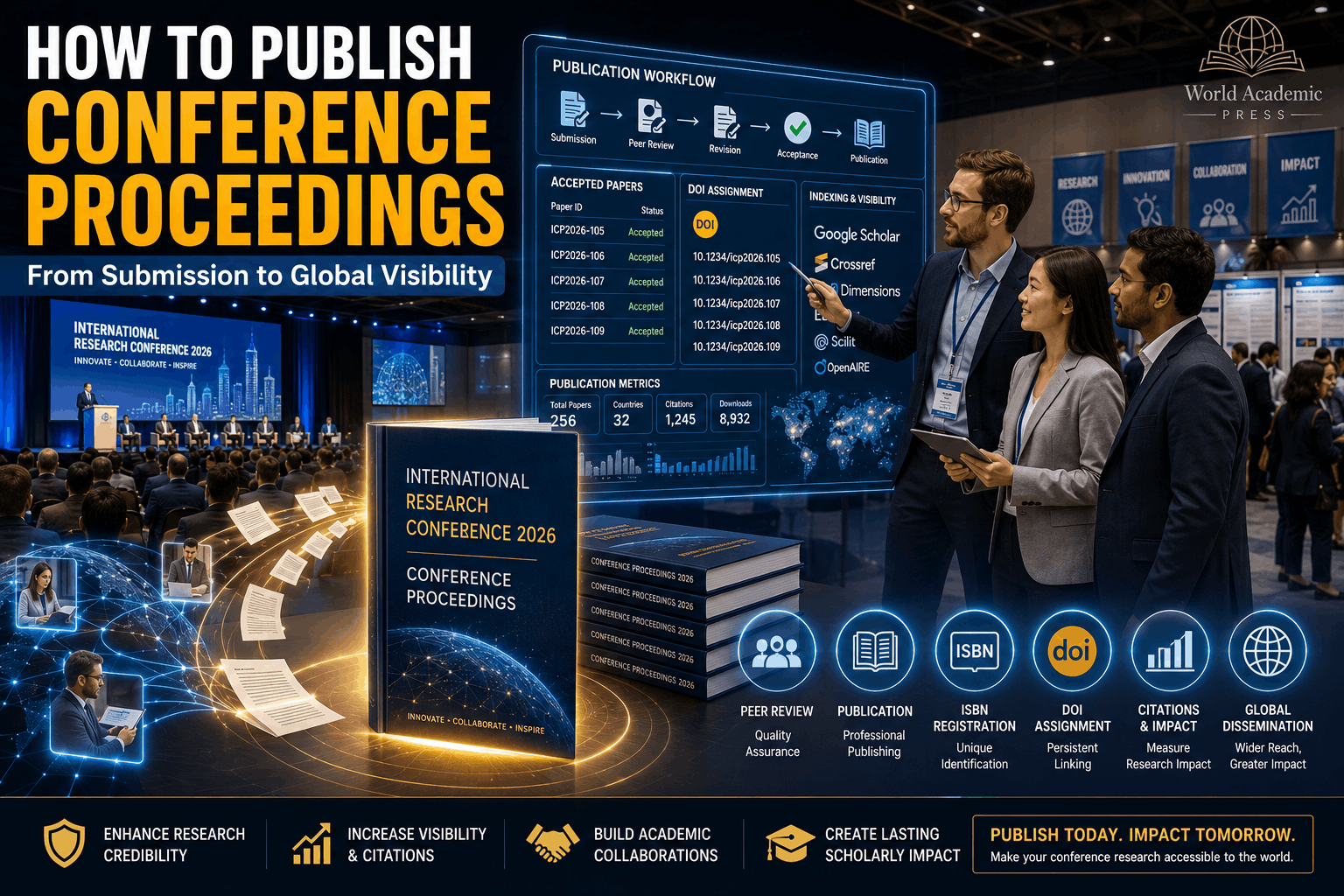
How to Publish Conference Proceedings: A Complete Guide for Researchers and Organizers
Conference proceedings play a vital role in scholarly communication by allowing researchers to share new findings, innovative methodologies, and emerging ideas with the academic community. For conference organizers, publishing proceedings enhances the credibility of an event, increases the visibility of presented research, and creates a permanent academic record of conference contributions.
However, publishing conference proceedings involves much more than simply collecting papers. Organizers must establish submission guidelines, manage peer review, ensure publication quality, assign identifiers, and select appropriate publishing and indexing options. This guide explains the complete process of publishing conference proceedings successfully in 2026.
What Are Conference Proceedings?
Conference proceedings are collections of research papers, abstracts, or presentations submitted and accepted for an academic conference. They serve as an official record of the research presented during the event.
Proceedings may include:
- Full research papers
- Extended abstracts
- Review papers
- Case studies
- Technical reports
- Poster presentation summaries
Many disciplines use conference proceedings as an important channel for sharing cutting-edge research before journal publication.
Why Publish Conference Proceedings?
Publishing conference proceedings offers benefits for both organizers and researchers.
For Conference Organizers
- Enhances conference credibility
- Increases academic visibility
- Creates a permanent scholarly record
- Attracts future participants
- Supports indexing opportunities
For Researchers
- Disseminates findings quickly
- Expands professional visibility
- Builds publication records
- Encourages academic networking
- Supports future journal submissions
Step 1: Establish Clear Submission Guidelines
The publication process begins with detailed author guidelines.
Conference organizers should specify:
- Paper format requirements
- Word limits
- Citation styles
- Submission deadlines
- Review criteria
- Ethical standards
Clear instructions improve submission quality and simplify editorial management.
Step 2: Implement a Peer Review Process
Peer review remains one of the most important quality assurance mechanisms in academic publishing.
Conference papers should be evaluated for:
- Originality
- Research quality
- Methodological rigor
- Relevance to conference themes
- Academic contribution
A transparent review process strengthens the credibility of the proceedings.
Related Reading:
Step 3: Prepare Accepted Manuscripts
After acceptance, papers should undergo editorial review to ensure consistency and publication quality.
This stage typically includes:
- Formatting checks
- Language editing
- Reference verification
- Metadata preparation
- Plagiarism screening
Maintaining high editorial standards improves reader experience and scholarly credibility.
Step 4: Assign ISBN and DOI Identifiers
Professional conference proceedings should include appropriate identifiers.
ISBN identifies the proceedings volume as a publication, while DOIs provide persistent links for individual papers.
Benefits include:
- Improved discoverability
- Reliable citation tracking
- Permanent access links
- Greater academic visibility
Related Article:
Step 5: Select a Publishing Platform
Conference organizers can publish proceedings through:
- Academic publishers
- University presses
- Professional societies
- Institutional repositories
- Dedicated conference publication platforms
The choice depends on conference scope, budget, visibility goals, and indexing requirements.
Step 6: Focus on Research Visibility
Publishing proceedings is only the beginning. Researchers must also be able to discover the content.
Visibility strategies include:
- Search engine optimization
- Metadata optimization
- DOI registration
- Repository deposits
- Academic networking
Related Resources:
- Academic Research Visibility: Why It Matters for Researchers
- What Makes Research Discoverable Online?
- Strategies to Improve Academic Visibility in 2026
Step 7: Consider Indexing Opportunities
Indexed conference proceedings often receive greater academic attention.
Potential indexing options may include:
- Google Scholar
- Institutional repositories
- Subject-specific databases
- Library catalogs
- Academic search platforms
Indexing improves discoverability and can contribute to future citations.
Step 8: Promote Published Proceedings
After publication, organizers should actively promote proceedings.
Promotion methods include:
- Conference websites
- Email newsletters
- Academic social media
- Research communities
- Institutional communication channels
Active dissemination increases readership and engagement.
How Proceedings Contribute to Research Impact
Conference proceedings can significantly enhance a researcher's academic profile.
Published conference papers often:
- Generate citations
- Lead to journal publications
- Create collaboration opportunities
- Increase professional visibility
- Demonstrate research productivity
Related Reading:
- How Researchers Can Increase Citation Counts in 2026
- How Academic Authors Can Build a Strong Research Profile
- Research Portfolio Development Tips (2026)
Common Mistakes to Avoid
- Poor submission guidelines
- Weak peer-review procedures
- Lack of plagiarism screening
- Missing metadata
- Failure to assign DOIs
- Ignoring discoverability strategies
- Insufficient promotion after publication
Avoiding these issues improves the quality and impact of published proceedings.
Conference Proceedings vs Journal Publications
| Feature | Conference Proceedings | Journal Articles |
|---|---|---|
| Publication Speed | Faster | Slower |
| Research Stage | Emerging findings | Comprehensive studies |
| Review Process | Often shorter | Typically more extensive |
| Purpose | Knowledge sharing | Formal scholarly contribution |
Conclusion
Publishing conference proceedings is an important responsibility that helps preserve scholarly contributions and expand research visibility. By implementing rigorous peer review, maintaining editorial quality, assigning DOI identifiers, optimizing discoverability, and actively promoting published content, conference organizers can create proceedings that provide lasting value to researchers and the broader academic community. Well-published proceedings not only strengthen conference reputation but also support citation growth, collaboration opportunities, and long-term research impact.