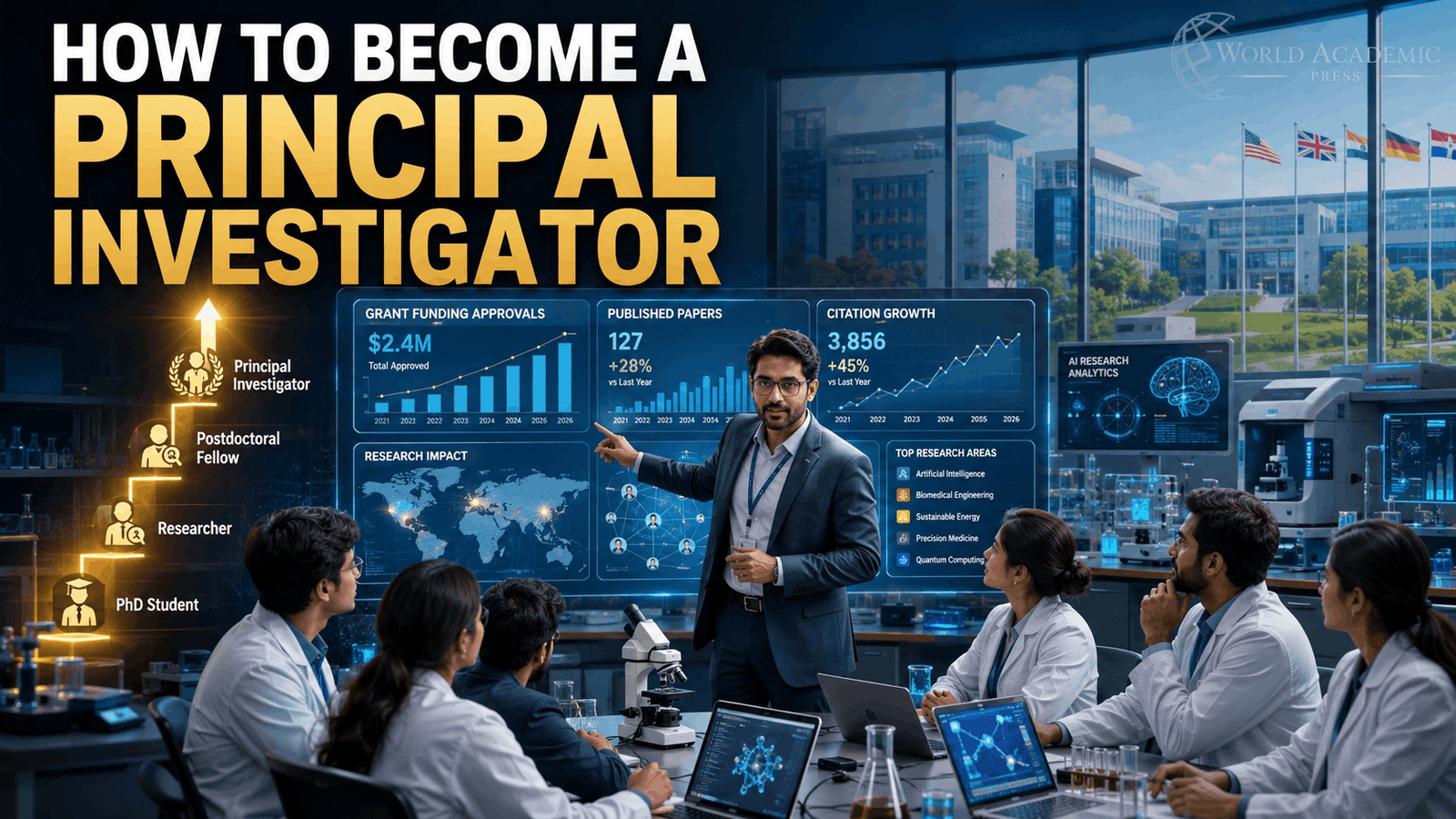
How to Become a Principal Investigator: A Complete Career Guide
A Principal Investigator (PI) is the driving force behind successful research projects. From developing innovative research ideas to securing funding, leading multidisciplinary teams, publishing impactful findings, and mentoring future researchers, the PI plays a critical leadership role in academia.
In today's competitive research environment, becoming a Principal Investigator requires much more than earning a PhD. Researchers must demonstrate scientific expertise, publication success, leadership ability, grant-writing skills, and the capacity to manage complex research projects.
This guide explains the skills, qualifications, and career path needed to become a successful Principal Investigator in 2026.
Who Is a Principal Investigator?
A Principal Investigator is the lead researcher responsible for planning, managing, and delivering a research project. Universities, research institutes, hospitals, government organizations, and industry laboratories appoint Principal Investigators to oversee funded research and ensure projects meet scientific, ethical, and financial requirements.
A PI typically:
- Designs research projects
- Applies for research grants
- Leads research teams
- Publishes research findings
- Supervises PhD scholars and junior researchers
- Manages project budgets
- Builds national and international collaborations
- Ensures compliance with ethical standards
1. Build a Strong Academic Foundation
Most Principal Investigators begin their careers by completing undergraduate and postgraduate studies before earning a PhD in their chosen discipline.
During this stage, researchers should focus on:
- Developing subject expertise
- Learning research methodologies
- Participating in research projects
- Presenting at academic conferences
- Building technical competencies
Choosing a meaningful research area early can significantly influence future success.
Related Reading:
2. Publish High-Quality Research Consistently
A strong publication record is one of the most important qualifications for becoming a PI. Universities and funding agencies evaluate publication quality, originality, and research impact when selecting research leaders.
Researchers should aim to publish:
- Peer-reviewed journal articles
- Conference papers
- Review articles
- Academic books
- Book chapters
Publishing through reputable academic publishers also strengthens professional credibility.
Related Articles:
- How to Turn Your PhD Thesis into a Published Book
- How Academic Authors Can Build a Strong Research Profile
3. Develop Research Leadership Skills
Leading research requires more than technical knowledge. Principal Investigators manage people, resources, and long-term projects.
Essential leadership skills include:
- Decision-making
- Project planning
- Team management
- Conflict resolution
- Strategic thinking
- Mentorship
Leadership experience can be gained by supervising students, coordinating research activities, and participating in collaborative projects.
4. Learn Grant Writing
Securing research funding is one of the primary responsibilities of a PI. Successful researchers understand how to write compelling proposals that clearly communicate research objectives, methodology, expected outcomes, and societal impact.
Grant-writing skills become increasingly valuable as research funding grows more competitive worldwide.
5. Strengthen Your Research Profile
Academic institutions increasingly evaluate researchers based on their overall research profile rather than publications alone.
A strong profile should include:
- Research publications
- Conference presentations
- Citation metrics
- Professional memberships
- Research projects
- Awards and recognitions
Related Reading:
6. Improve Research Visibility
Publishing excellent research is only part of academic success. Your work must also be discoverable by scholars around the world.
Researchers can improve visibility by:
- Publishing in indexed journals
- Using descriptive titles and keywords
- Creating researcher profiles
- Obtaining DOI identifiers
- Sharing research through academic platforms
Related Articles:
- Academic Research Visibility: Why It Matters for Researchers
- Why DOI Matters: The Foundation of Research Discoverability and Citation Tracking
- What Makes Research Discoverable Online?
- Strategies to Improve Academic Visibility in 2026
7. Increase Research Impact Through Citations
Citation performance is an important indicator of research influence. Funding agencies and academic institutions often consider citation metrics during promotions and grant evaluations.
Researchers should focus on producing original, high-quality work while improving discoverability through ethical research promotion.
Related Reading:
8. Build Collaborative Networks
Today's research challenges are increasingly interdisciplinary and international. Building strong collaborations allows Principal Investigators to access diverse expertise, advanced facilities, and larger funding opportunities.
Researchers should actively:
- Attend conferences
- Join research associations
- Collaborate across institutions
- Participate in multidisciplinary projects
- Engage with international research communities
9. Master Scientific Writing
A Principal Investigator spends considerable time writing research proposals, journal manuscripts, project reports, and funding applications.
Strong scientific writing improves publication success and enhances communication with funding organizations and collaborators.
Related Guides:
- How to Write a Literature Review: A Complete Guide for Researchers
- How to Write a Research Paper Faster: Proven Strategies for Scholars
10. Continue Professional Development
Successful Principal Investigators never stop learning. They continuously update their knowledge of emerging technologies, funding opportunities, publishing practices, and research methodologies.
Continuous professional development helps researchers remain competitive and lead innovative research projects throughout their careers.
Common Challenges Future Principal Investigators Face
- Limited research funding
- Building an independent publication record
- Managing multiple research projects
- Balancing teaching and research responsibilities
- Developing leadership experience
- Building international collaborations
Addressing these challenges early prepares researchers for long-term success in academic leadership.
Conclusion
Becoming a Principal Investigator requires years of academic preparation, consistent publishing, effective leadership, and a commitment to research excellence. Researchers who build strong publication records, improve research visibility, develop grant-writing skills, and establish professional collaborations are well positioned to lead impactful research projects. By investing in continuous learning and strategic career development, aspiring researchers can successfully transition into Principal Investigator roles and contribute meaningfully to global scientific advancement.