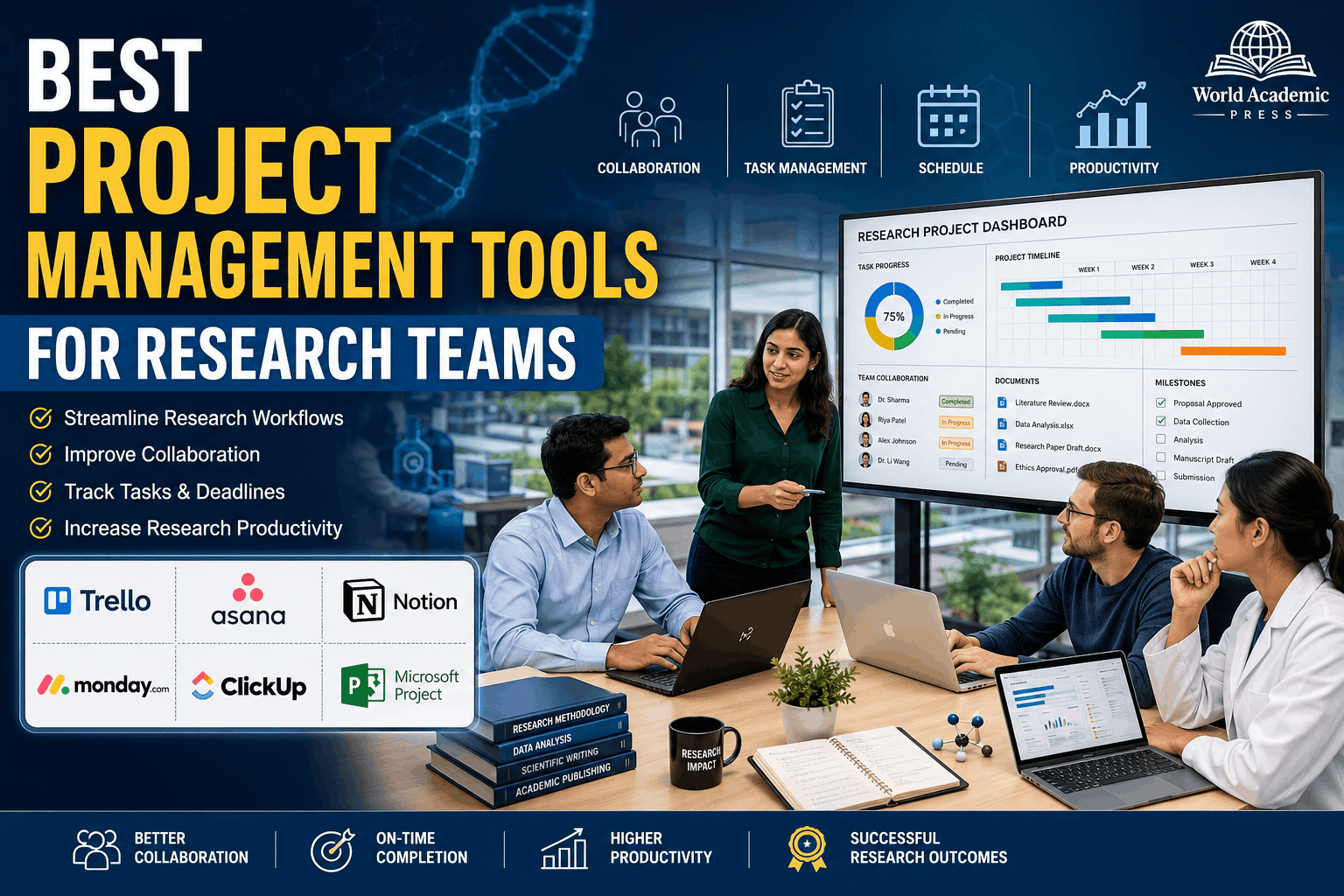
Best Project Management Tools for Research Teams in 2026
Modern research projects are more complex than ever before. Research teams often span multiple institutions, countries, and disciplines while managing large datasets, publication deadlines, grant requirements, ethical approvals, and collaborative workflows. Without an effective project management system, even the most promising research initiatives can suffer from missed deadlines, communication gaps, and organizational challenges.
Project management tools help researchers organize tasks, monitor progress, improve collaboration, and ensure projects remain on schedule. Whether you are leading a university research lab, managing a funded research project, or collaborating with international scholars, selecting the right project management platform can significantly improve research productivity.
Why Research Teams Need Project Management Tools
Research projects involve multiple moving parts that require careful coordination.
Project management software helps research teams:
- Track project milestones
- Manage deadlines
- Coordinate collaborators
- Store project documentation
- Monitor research progress
- Improve team communication
- Reduce administrative workload
- Increase productivity
Researchers who implement structured project management systems often complete projects more efficiently and experience fewer organizational bottlenecks.
1. Trello
Trello remains one of the most popular project management tools for academic researchers due to its simplicity and visual interface.
Key Features:
- Kanban boards
- Task tracking
- Deadline management
- Research workflow visualization
- Team collaboration
Best For:
Small research groups, graduate students, and collaborative academic projects.
2. Asana
Asana offers advanced project planning features suitable for larger research teams.
Key Features:
- Task assignments
- Timeline management
- Project dashboards
- Workflow automation
- Progress tracking
Best For:
Multi-institution research collaborations and funded research projects.
3. Notion
Notion has become increasingly popular among researchers because it combines project management, note-taking, documentation, and knowledge management in a single platform.
Key Features:
- Research databases
- Literature tracking
- Meeting notes
- Task management
- Knowledge repositories
Best For:
Researchers seeking an all-in-one workspace.
4. ClickUp
ClickUp offers extensive customization options that make it suitable for complex research workflows.
Key Features:
- Custom workflows
- Research dashboards
- Goal tracking
- Task dependencies
- Collaboration tools
Best For:
Large-scale academic projects with multiple stakeholders.
5. Microsoft Project
Microsoft Project remains a powerful solution for large research initiatives that require detailed planning and reporting.
Key Features:
- Gantt charts
- Resource management
- Budget tracking
- Risk analysis
- Advanced reporting
Best For:
Government-funded projects and institutional research programs.
6. Monday.com
Monday.com provides a highly visual project management experience suitable for collaborative research environments.
Key Features:
- Workflow automation
- Team collaboration
- Progress tracking
- Research project monitoring
- Custom dashboards
Best For:
Cross-functional research teams and interdisciplinary projects.
Essential Features Researchers Should Look For
When selecting project management software, researchers should evaluate:
- Collaboration capabilities
- Document storage
- Task management
- Timeline visualization
- Reporting features
- Integration with academic tools
- Data security
- Ease of use
The best platform depends on the size and complexity of the research project.
Managing Research Data Efficiently
Project management tools become even more effective when paired with strong research data organization practices.
Researchers should maintain:
- Structured file systems
- Version control processes
- Regular backups
- Standardized naming conventions
Related Reading:
Project Management and Research Visibility
Well-managed research projects are more likely to produce publishable outcomes, attract collaborations, and achieve greater academic impact.
Strong project management contributes to:
- Faster publication timelines
- Improved research quality
- Enhanced collaboration
- Higher citation potential
Related Articles:
- Academic Research Visibility: Why It Matters for Researchers
- How Researchers Can Increase Citation Counts in 2026
- What Makes Research Discoverable Online?
- Strategies to Improve Academic Visibility in 2026
Supporting Publication Success Through Better Organization
Project management tools help researchers maintain organized workflows from literature review through publication.
Researchers can use these tools to track:
- Manuscript drafts
- Journal submissions
- Peer-review revisions
- Conference presentations
- Publishing schedules
Related Resources:
- How to Write a Literature Review: A Complete Guide for Researchers
- How to Write a Research Paper Faster: Proven Strategies for Scholars
- How to Turn Your PhD Thesis into a Published Book
Project Management for Future Principal Investigators
Researchers aspiring to lead funded projects and research groups must develop strong project management capabilities.
Effective management skills help future research leaders:
- Secure grants
- Manage budgets
- Coordinate teams
- Deliver project outcomes
- Increase institutional impact
Related Reading:
Common Mistakes Research Teams Make
- Using multiple disconnected tools
- Failing to assign responsibilities
- Ignoring project milestones
- Poor documentation practices
- Lack of communication protocols
- Not tracking deadlines effectively
A structured project management approach can prevent these issues and improve overall research efficiency.
Conclusion
Project management has become an essential component of successful research. Whether using Trello, Asana, Notion, ClickUp, Microsoft Project, or Monday.com, researchers can significantly improve collaboration, organization, and productivity by implementing the right system. As research becomes increasingly interdisciplinary and international, project management tools will continue to play a critical role in helping research teams achieve their goals, publish impactful findings, and maximize academic success.