How to Ensure Research Accuracy: Best Practices for Researchers
Research accuracy is the foundation of credible academic work. Whether conducting qualitative or quantitative research, accurate data collection, analysis, and reporting help produce trustworthy findings that can be replicated and applied confidently. Errors in research can lead to misleading conclusions, reduced credibility, and rejection during publication. By following proven research practices, scholars can improve the quality and reliability of their studies.
Why Research Accuracy Matters
- Produces reliable findings.
- Improves publication success.
- Builds academic credibility.
- Supports evidence-based decisions.
- Increases research reproducibility.
Best Practices to Ensure Research Accuracy
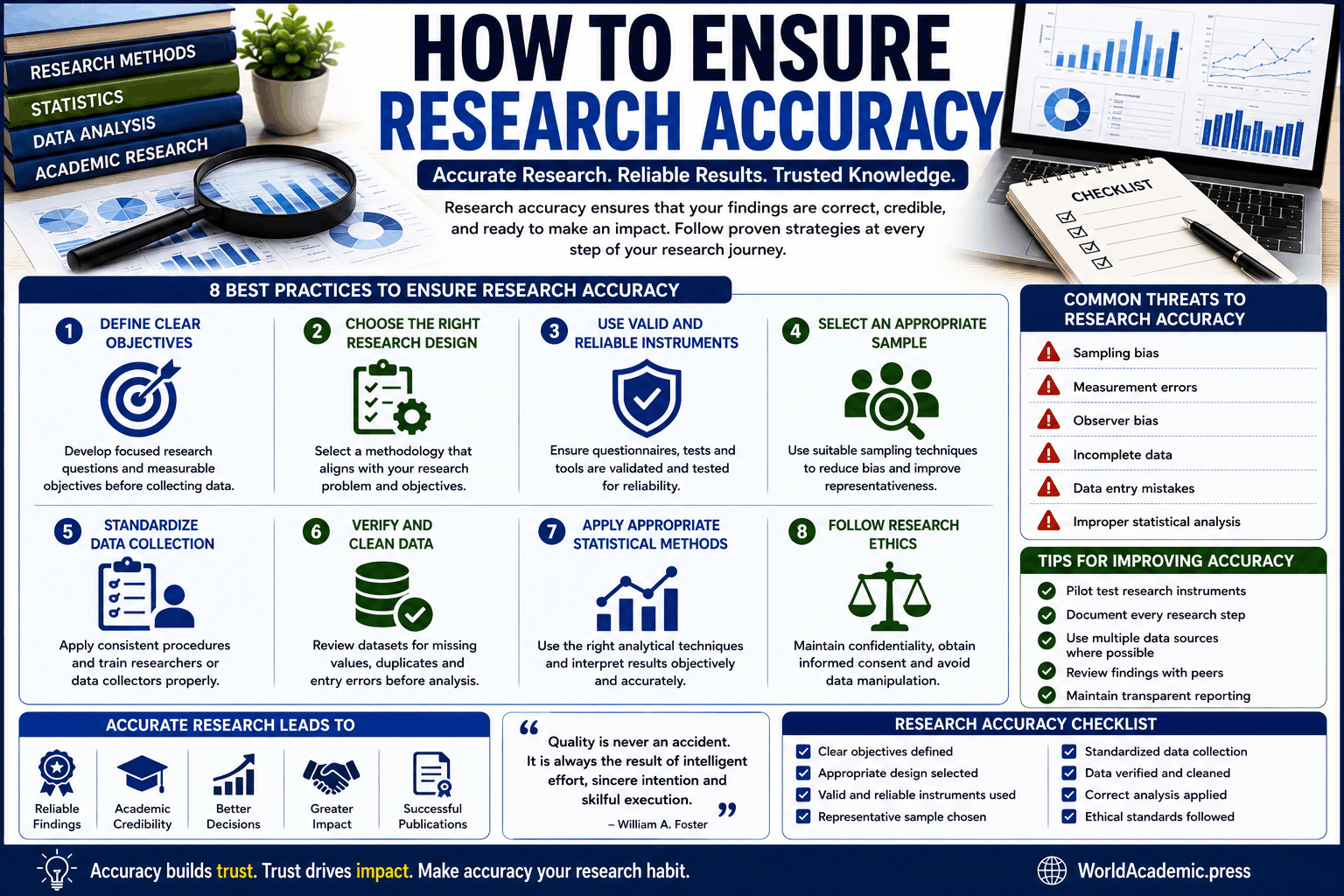
1. Define Clear Research Objectives
Develop focused research questions and measurable objectives before collecting data.
2. Choose the Right Research Design
Select a methodology that aligns with your research problem and objectives.
3. Use Valid and Reliable Instruments
Questionnaires, interview guides, and assessment tools should be tested for validity and reliability.
4. Select an Appropriate Sample
Use suitable sampling techniques to reduce bias and improve representativeness.
5. Standardize Data Collection
Apply consistent procedures and provide proper training to researchers or data collectors.
6. Verify and Clean Data
Review datasets for missing values, duplicate records, and entry errors before analysis.
7. Apply Appropriate Statistical Methods
Use suitable analytical techniques and interpret results objectively.
8. Follow Research Ethics
Maintain participant confidentiality, obtain informed consent, and avoid data manipulation.
Common Threats to Research Accuracy
- Sampling bias
- Measurement errors
- Observer bias
- Incomplete data
- Data entry mistakes
- Improper statistical analysis
Tips for Improving Accuracy
- Pilot test research instruments.
- Document every research step.
- Use multiple data sources where possible.
- Review findings with peers.
- Maintain transparent reporting.
Related Research Methodology Articles
- Historical Research Methods
- Action Research in Education
- Case Study Research Explained
- Focus Group Discussions in Research
- How to Create Effective Survey Questions
- Interview Methods in Qualitative Research
- Questionnaire Design Tips for Researchers
- Probability vs Non-Probability Sampling
- Sampling Techniques in Research
- Meta-Analysis in Research: A Beginner's Guide
- How to Conduct a Systematic Literature Review
- Types of Research Designs Explained
- Research Proposal Mistakes to Avoid
Improve Your Research Visibility
- Academic Research Visibility: Why It Matters for Researchers
- What Makes Research Discoverable Online?
- Strategies to Improve Academic Visibility in 2026
- How Researchers Can Increase Citation Counts in 2026
- How Academic Authors Can Build a Strong Research Profile
- Research Portfolio Development Tips (2026)
Conclusion
Ensuring research accuracy requires careful planning, reliable methods, ethical practices, and thorough data verification. By selecting appropriate research designs, using valid instruments, applying consistent procedures, and reporting findings transparently, researchers can produce credible studies that contribute meaningful knowledge to their fields. Accurate research not only strengthens publication quality but also enhances long-term academic impact.