How to Interpret Research Results
Interpreting research results is one of the most important stages of the research process. After collecting and analyzing data, researchers must explain what the findings mean, whether they support the research objectives, and how they contribute to existing knowledge. Accurate interpretation helps readers understand the significance of the study and supports evidence-based decision-making.
Why Interpretation Matters
- Answers the research questions.
- Supports valid conclusions.
- Explains practical implications.
- Improves research credibility.
- Guides future studies.
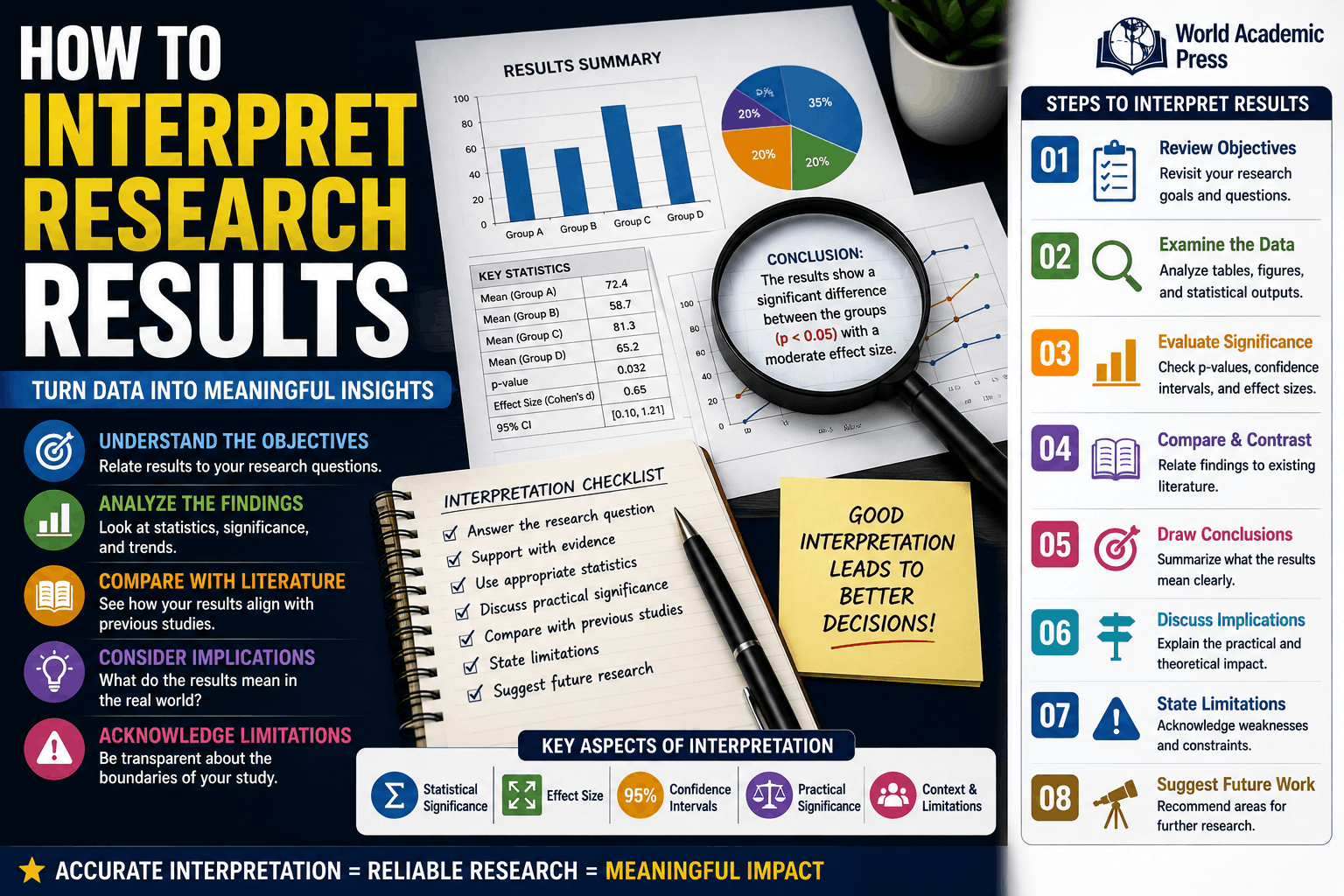
Steps to Interpret Research Results
1. Review the Research Objectives
Compare the findings with your original research questions and objectives.
2. Examine Statistical Results
Evaluate p-values, confidence intervals, effect sizes, and descriptive statistics before drawing conclusions.
3. Compare with Previous Studies
Discuss whether your findings support or differ from existing literature and explain possible reasons.
4. Consider Practical Significance
Statistical significance should be evaluated alongside the real-world importance of the results.
5. Identify Study Limitations
Acknowledge factors such as sample size, methodology, or data quality that may affect interpretation.
Common Mistakes
- Confusing correlation with causation.
- Overgeneralizing findings.
- Ignoring contradictory evidence.
- Misinterpreting p-values.
- Failing to discuss limitations.
Best Practices
- Interpret results objectively.
- Use clear and simple language.
- Support conclusions with evidence.
- Include tables and visualizations where appropriate.
- Relate findings to existing research.
Related Research Methodology Articles
- Historical Research Methods
- Action Research in Education
- Case Study Research Explained
- Focus Group Discussions in Research
- How to Create Effective Survey Questions
- Interview Methods in Qualitative Research
- Questionnaire Design Tips for Researchers
- Probability vs Non-Probability Sampling
- Sampling Techniques in Research
- Meta-Analysis in Research: A Beginner's Guide
- How to Conduct a Systematic Literature Review
- Types of Research Designs Explained
- Research Proposal Mistakes to Avoid
- Validity and Reliability in Research
- How to Ensure Research Accuracy
- Statistical Tools Every Researcher Should Know
- Basics of SPSS for Academic Research
- Introduction to R Programming for Researchers
- Using Excel for Research Data Analysis
- Hypothesis Testing Explained
- Common Statistical Errors in Research
Improve Your Research Visibility
- Academic Research Visibility: Why It Matters for Researchers
- What Makes Research Discoverable Online?
- Strategies to Improve Academic Visibility in 2026
- How Researchers Can Increase Citation Counts in 2026
- How Academic Authors Can Build a Strong Research Profile
- Research Portfolio Development Tips (2026)
Conclusion
Interpreting research results requires more than reporting statistical values. Researchers should connect findings to their objectives, compare results with previous studies, discuss practical significance, and acknowledge study limitations. A balanced and evidence-based interpretation strengthens research credibility and helps readers understand the true value of the study while contributing meaningful insights to the academic community.