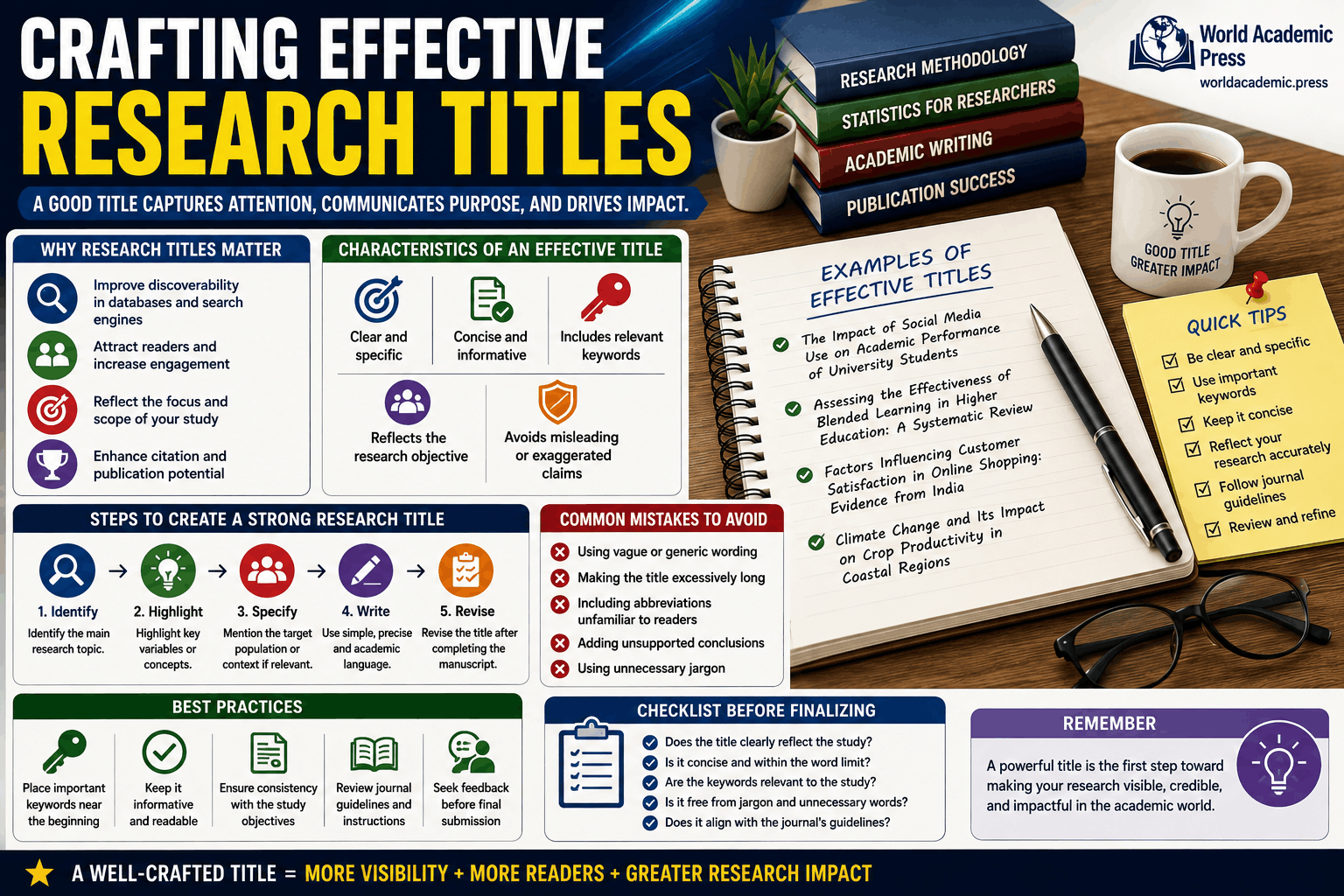
Crafting Effective Research Titles
A research title is often the first element readers, reviewers, and journal editors notice. A clear, informative, and engaging title improves the visibility of your paper, helps search engines index your work, and encourages readers to explore the full study. An effective title should accurately represent the research while remaining concise and keyword-rich.
Why Research Titles Matter
- Create a strong first impression.
- Improve discoverability in academic databases.
- Increase search engine visibility.
- Help readers understand the study quickly.
- Enhance citation and publication potential.
Characteristics of an Effective Research Title
- Clear and specific.
- Concise without unnecessary words.
- Includes important research keywords.
- Reflects the study's objective.
- Avoids misleading or exaggerated claims.
Steps to Create a Strong Research Title
- Identify the main research topic.
- Highlight the key variables or concepts.
- Mention the target population or context if relevant.
- Use simple and precise academic language.
- Revise the title after completing the manuscript.
Common Mistakes to Avoid
- Using vague or generic wording.
- Making the title excessively long.
- Including abbreviations unfamiliar to readers.
- Adding unsupported conclusions.
- Using unnecessary jargon.
Best Practices
- Keep the title informative and readable.
- Place important keywords near the beginning.
- Match the title with the study objectives.
- Review journal title guidelines.
- Seek feedback before submission.
Related Research Writing & Methodology Articles
- Historical Research Methods
- Action Research in Education
- Case Study Research Explained
- Focus Group Discussions in Research
- How to Create Effective Survey Questions
- Interview Methods in Qualitative Research
- Questionnaire Design Tips for Researchers
- Probability vs Non-Probability Sampling
- Sampling Techniques in Research
- Meta-Analysis in Research: A Beginner's Guide
- How to Conduct a Systematic Literature Review
- Types of Research Designs Explained
- Research Proposal Mistakes to Avoid
- Validity and Reliability in Research
- How to Ensure Research Accuracy
- Statistical Tools Every Researcher Should Know
- Basics of SPSS for Academic Research
- Introduction to R Programming for Researchers
- Using Excel for Research Data Analysis
- Hypothesis Testing Explained
- Common Statistical Errors in Research
- How to Interpret Research Results
- Writing the Discussion Section of a Research Paper
- How to Write a Research Abstract
Improve Your Research Visibility
- Academic Research Visibility: Why It Matters for Researchers
- What Makes Research Discoverable Online?
- Strategies to Improve Academic Visibility in 2026
- How Researchers Can Increase Citation Counts in 2026
- How Academic Authors Can Build a Strong Research Profile
- Research Portfolio Development Tips (2026)
Conclusion
A well-crafted research title is essential for attracting readers, improving search visibility, and increasing publication success. By making the title concise, descriptive, and aligned with the study's objectives, researchers can communicate the value of their work more effectively. Investing time in creating a strong title is a simple yet powerful step toward maximizing the impact of academic research.